Innago review covering features, pricing, use cases, pros, cons, and alternatives to help landlords decide if Innago is the right property management software in 2025.
Introduction
Managing rental properties has become significantly more complex in recent years. Between rising compliance requirements, tenant communication expectations, digital payments, and maintenance coordination, landlords are increasingly expected to operate with the efficiency of professional property managers. This shift has driven strong demand for cloud-based property management software designed to simplify daily operations.
Innago operates within this growing category of landlord-focused platforms. Rather than positioning itself as an enterprise solution for large property management firms, the platform emphasizes simplicity, accessibility, and cost transparency for independent landlords and small-to-mid-sized portfolios.
This Innago review explores how the platform works, what problems it aims to solve, and whether it delivers enough operational value to justify adoption in 2025, especially compared to more feature-dense or higher-cost competitors.
🔍 What Is Innago?
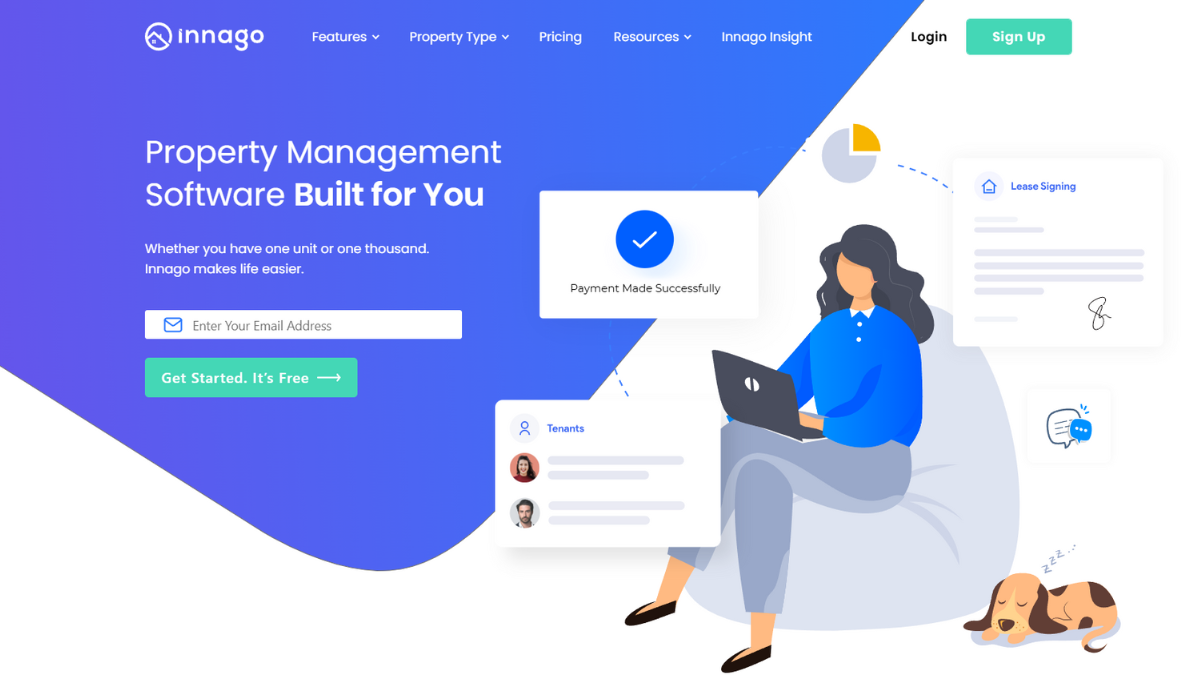
Innago is a web-based property management platform designed to help landlords manage residential rental properties from a single centralized system. The software focuses on core operational tasks such as rent collection, tenant screening, lease management, maintenance requests, and communication.
Unlike traditional property management software that targets large portfolios or enterprise users, Innago positions itself as a practical solution for independent landlords, real estate investors, and small property managers who want digital tools without complex onboarding or high subscription costs.
In this Innago review, it becomes clear that the platform’s core value proposition is accessibility. Innago emphasizes ease of use, minimal setup, and a pricing structure that removes fixed monthly fees, making it appealing to landlords managing anywhere from one unit to several hundred units.
⚙️ How the Platform Works
Innago operates as a fully cloud-based SaaS platform accessible through a standard web browser. There is no desktop software installation required, and landlords can manage properties remotely from any location.
At a structural level, the platform is organized around four primary entities:
-
Properties
-
Units
-
Tenants
-
Financial transactions
Landlords begin by creating property records and assigning units to each property. Tenants are then linked to individual units, allowing rent payments, leases, and maintenance requests to flow through a structured system.
One defining characteristic highlighted in this Innago review is that the platform avoids heavy automation logic or rigid workflows. Instead, it relies on straightforward processes that mirror how landlords already manage rentals manually, but in a digitized format.
This approach lowers the learning curve and reduces setup friction, especially for landlords transitioning from spreadsheets or paper-based systems.
⚙️ Key Features
Online Rent Collection
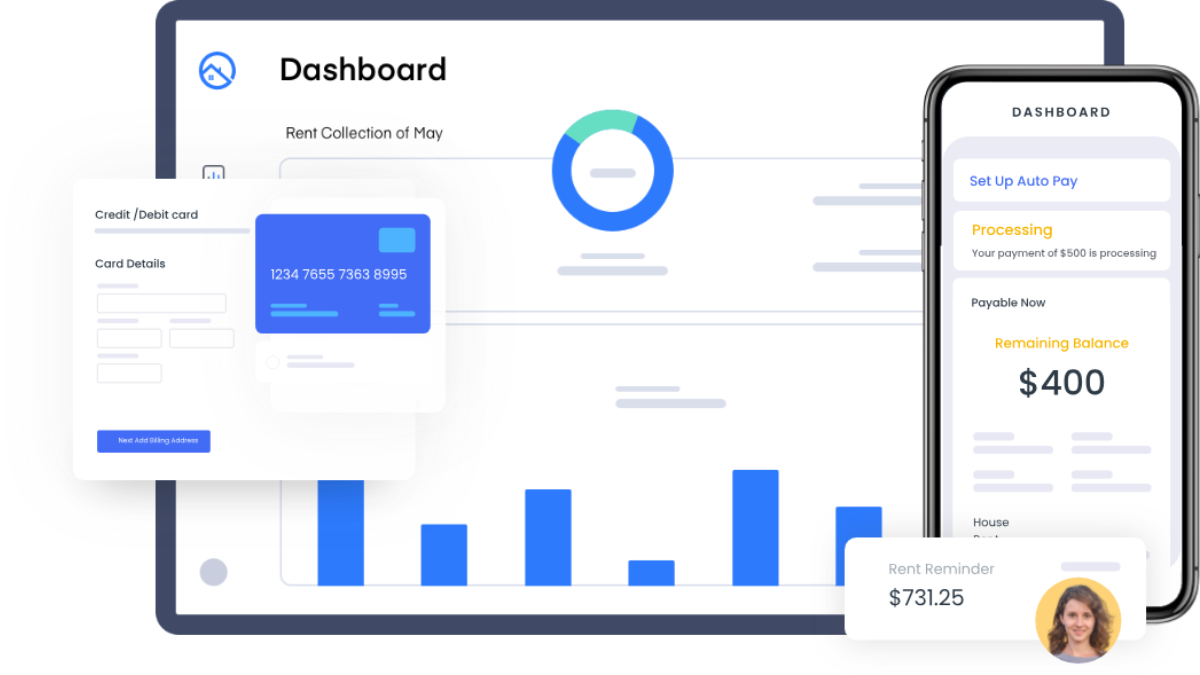
Innago supports online rent payments through bank transfers and card payments. Tenants can pay rent electronically, while landlords receive funds directly into their linked bank accounts.
The system automatically records transactions, applies late fees when configured, and provides basic payment tracking. This eliminates manual deposit tracking and reduces reconciliation errors.
In this Innago review, online rent collection stands out as one of the platform’s most practical and widely used features, particularly for landlords managing multiple tenants.
Tenant Screening
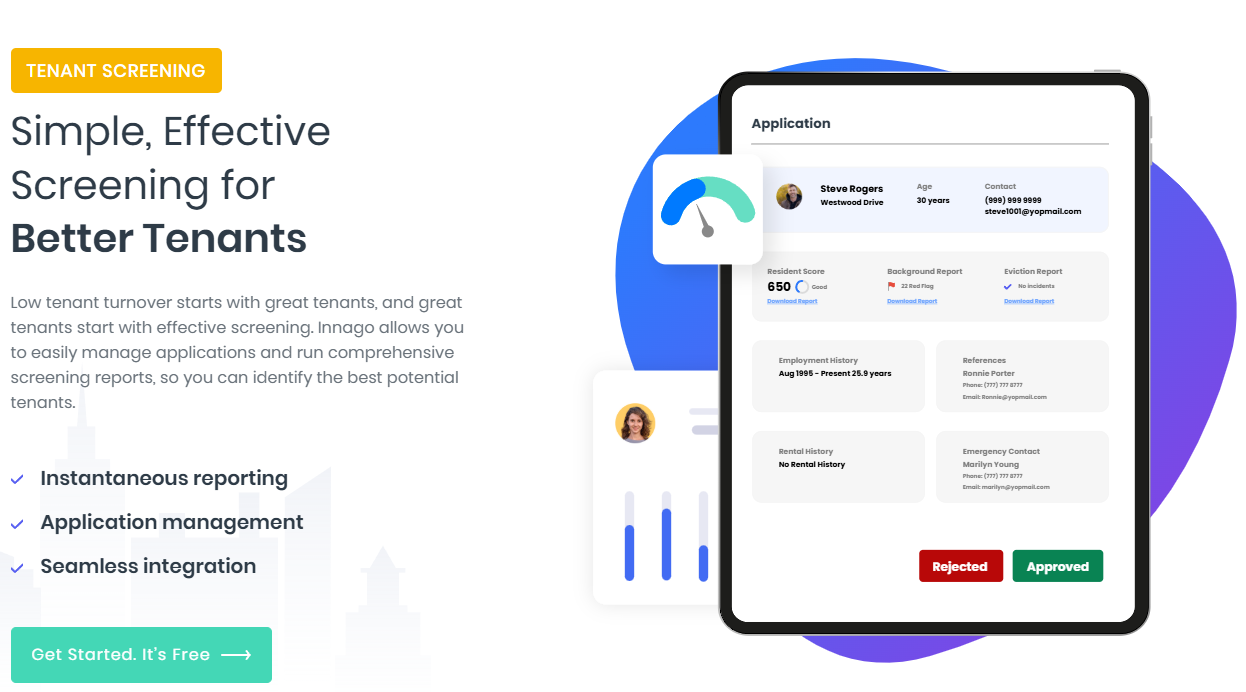
Innago offers integrated tenant screening tools that allow landlords to request background checks, credit reports, and eviction history directly from prospective tenants.
Rather than charging landlords upfront for screenings, the cost is typically passed to applicants. This structure helps landlords reduce operational expenses while still accessing essential risk assessment data.
Tenant screening results are delivered within the platform and linked to the applicant profile, keeping records centralized.
Lease Management and E-Signatures
The platform supports digital lease creation, storage, and electronic signing. Landlords can upload custom lease templates or use basic lease documents and send them to tenants for online execution.
Signed leases are stored securely within the tenant record, making them easy to retrieve for reference or compliance purposes.
This Innago review notes that while lease functionality is functional and reliable, it is intentionally minimal and does not include advanced legal customization or jurisdiction-specific automation.
Maintenance Request Management
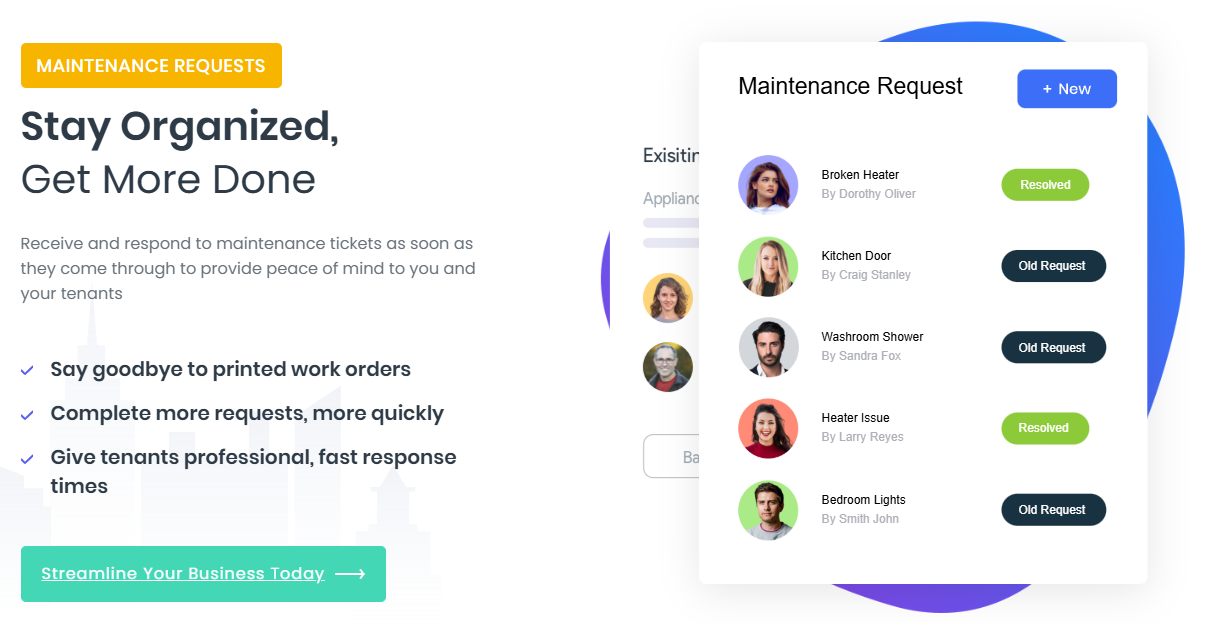
Tenants can submit maintenance requests through their tenant portal, including descriptions and optional attachments. Landlords receive notifications and can track request status from submission to resolution.
Maintenance records are stored within the platform, providing a basic maintenance history for each unit.
While the system lacks vendor marketplaces or automated work order routing, it offers enough structure to prevent maintenance issues from being lost in email threads or text messages.
Tenant and Owner Communication
Innago includes built-in messaging tools that allow landlords to communicate directly with tenants through the platform. Messages are logged within tenant profiles, creating a communication history that can be useful for documentation.
This feature is particularly relevant in disputes or compliance situations, where written communication records matter.
Financial Tracking and Reporting
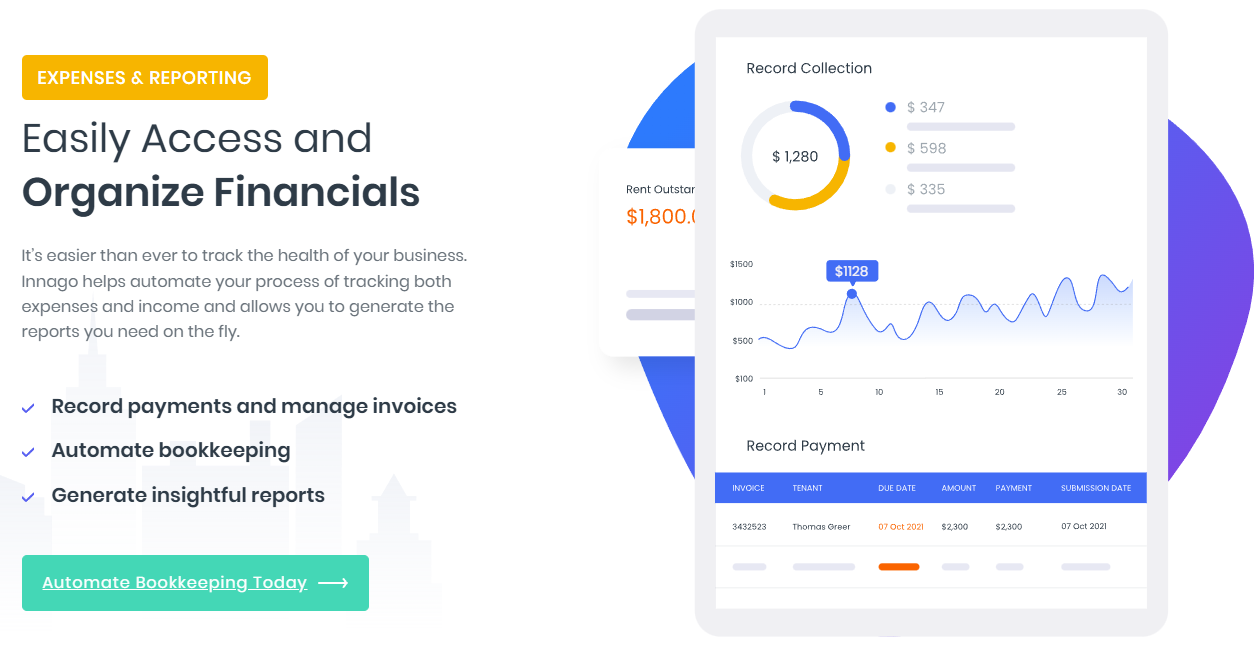
The platform provides basic financial reporting, including rent income summaries, transaction histories, and exportable reports.
Innago does not position itself as a full accounting solution. Instead, it focuses on high-level visibility into income and payment status rather than detailed bookkeeping or tax reporting.
In this Innago review, financial tools are best described as sufficient for operational oversight but not a replacement for dedicated accounting software.
💰 Pricing and Plans
One of Innago’s most distinctive characteristics is its pricing model. The platform markets itself as free for landlords, with no monthly subscription fees for core functionality.
Instead of charging landlords directly, Innago generates revenue through:
-
Transaction fees on rent payments
-
Tenant-paid screening fees
-
Optional premium payment processing options
This usage-based pricing model lowers the barrier to entry and allows landlords to scale usage without committing to fixed software costs.
From a cost-control perspective, this approach can be attractive for small landlords or investors with fluctuating portfolios. However, as this Innago review highlights, transaction fees can accumulate over time for high-volume portfolios, potentially narrowing the cost advantage compared to flat-fee competitors.
✅ Pros and ❌ Cons
Pros
-
No mandatory monthly subscription fees
-
Simple interface with minimal learning curve
-
Integrated tenant screening
-
Online rent collection with automated tracking
-
Suitable for independent landlords and small portfolios
-
Cloud-based access with remote management capability
Cons
-
Limited accounting and financial reporting depth
-
No advanced automation or workflow customization
-
Not designed for large enterprise property managers
-
Fewer third-party integrations compared to competitors
-
Feature set may feel basic for experienced property managers
This Innago review finds the platform balanced but intentionally restrained, prioritizing simplicity over feature density.
🎯 Who Is This Tool Best For?
Innago is best suited for:
-
Independent landlords managing single-family or small multi-unit properties
-
Real estate investors seeking a low-cost digital management solution
-
Property owners transitioning from manual or spreadsheet-based systems
-
Landlords who value simplicity over advanced customization
It may not be ideal for:
-
Large property management firms with complex workflows
-
Commercial property portfolios
-
Users requiring advanced accounting, budgeting, or compliance automation
-
Managers who rely heavily on third-party integrations
Understanding these boundaries is essential when evaluating Innago as part of a long-term property management strategy.
🔄 Innago vs Alternatives
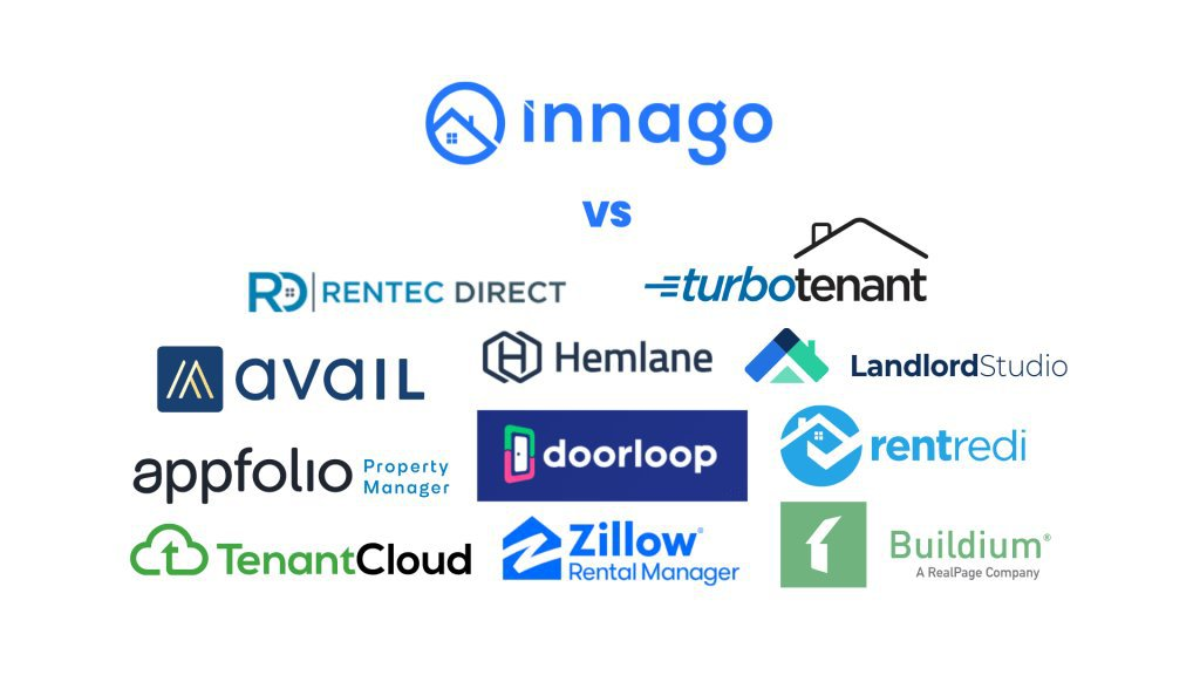
When compared to other property management platforms, Innago occupies a specific niche.
Platforms like Buildium or AppFolio offer significantly deeper feature sets, including advanced accounting, owner reporting, and enterprise-grade automation. However, they typically come with higher monthly fees and steeper learning curves.
Other tools such as Avail or RentRedi also target independent landlords, but may emphasize different strengths such as marketing listings or mobile-first experiences.
In this Innago review, the platform is best viewed not as a direct replacement for enterprise software, but as a streamlined alternative for landlords who want operational efficiency without complexity.
🤔 Is Innago Worth It?
Whether Innago is worth using depends largely on portfolio size, management style, and expectations.
For landlords managing a small to medium number of residential units, Innago delivers solid value by digitizing essential tasks without imposing subscription costs. The platform reduces administrative friction while remaining accessible to non-technical users.
For larger or more complex operations, the lack of advanced reporting and automation may limit long-term scalability. In such cases, higher-cost platforms may offer better operational leverage despite increased expense.
This Innago review suggests that Innago is most valuable as a foundational management tool rather than an all-encompassing property management ecosystem.
🏁 Final Verdict
Innago positions itself as a practical, no-frills property management platform designed for independent landlords and small property managers. Its strengths lie in accessibility, cost transparency, and ease of use rather than feature depth or enterprise capabilities.
By focusing on core landlord workflows and removing subscription barriers, Innago lowers the threshold for digital property management adoption. While it may not satisfy advanced operational needs, it effectively serves its intended audience.
For landlords seeking a simple, modern way to manage rentals without committing to expensive software, Innago remains a credible option in 2025.
FAQ
What type of properties does Innago support?
Innago primarily supports residential rental properties, including single-family homes and small multi-unit buildings.
Does Innago charge monthly fees?
No. Innago uses a transaction-based pricing model instead of monthly subscriptions.
Can tenants pay rent online through Innago?
Yes. Tenants can pay rent electronically through the platform, with payments tracked automatically.
Is Innago suitable for large property portfolios?
Innago can handle multiple units, but it is not designed for enterprise-level property management operations.
Does Innago replace accounting software?
No. Innago provides basic financial tracking but does not replace dedicated accounting platforms.
Want more unbiased, expert-level software reviews?
Explore in-depth, independent analyses across SaaS, finance, AI, and automation tools at
Esapplication.com