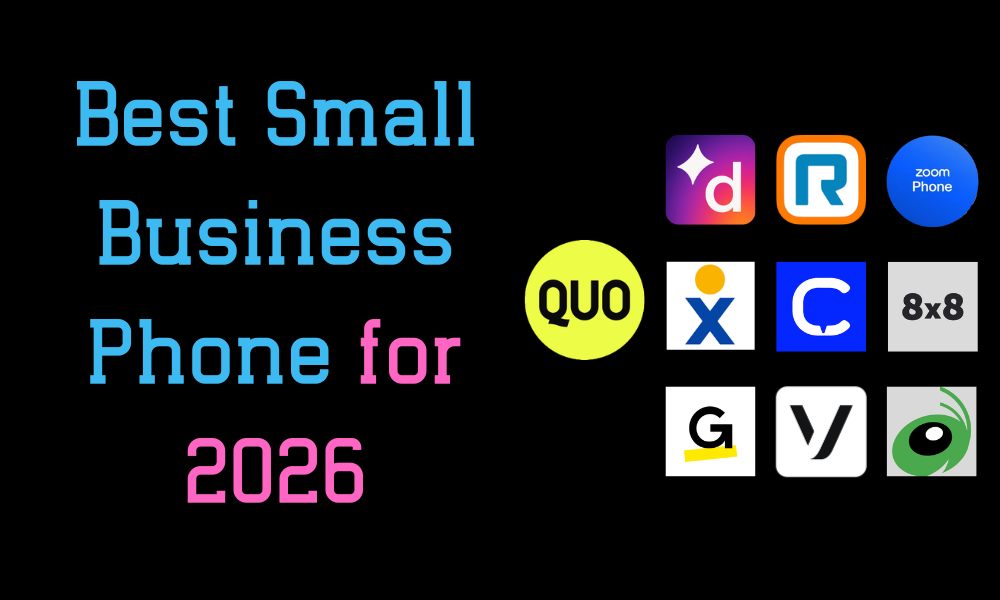
Best Small Business Phone for 2026: The Ultimate AI-Powered Guide
Discover the best small business phone systems for 2026. We compare Quo, Dialpad, RingCentral, and more. Find the perfect AI-driven VoIP solution to scale your business today.
URL Slug: best-small-business-phone-2026
Best Small Business Phone for 2026: The Ultimate AI-Powered Guide
Introduction: Why Your Current Phone System is Costing You Customers
Let’s be honest: if your small business is still relying on a traditional landline or a clunky, outdated VoIP system in 2026, you are actively losing money. In an era where customers expect instant, personalized, and seamless communication, a dropped call or a generic voicemail greeting is no longer just an annoyance—it’s a reason for them to call your competitor.
The landscape of business communication has undergone a seismic shift. The best small business phone systems for 2026 are no longer just about making and receiving calls. They are intelligent, AI-powered command centers designed to automate tedious tasks, provide real-time coaching to your team, and ensure that every customer interaction is a step toward building lasting loyalty.
This isn’t just another listicle. We’ve analyzed the market, scrutinized the top players (including deep dives into platforms like CloudTalk, Dialpad, and RingCentral), and identified the critical features that actually move the needle for small businesses. Whether you’re a solo entrepreneur needing a professional image or a growing startup managing a high volume of support tickets, this guide will help you find the perfect communication partner.
And spoiler alert: while many legacy systems are struggling to adapt, one platform—Quo—is completely rewriting the rules of what a business phone can do.
The 2026 Standard: What Makes a Phone System “The Best”?
Before we dive into the rankings, it’s crucial to understand the new baseline for business communication. The days of comparing systems based solely on “unlimited minutes” are over. In 2026, the true value of a phone system lies in its intelligence and integration capabilities.
Here are the non-negotiable features you must demand:
- AI-First Architecture: We’re not talking about basic chatbots. We mean sophisticated AI agents (like Quo’s Sona) that can handle complex inquiries, summarize calls instantly, and even suggest text responses based on the context of the conversation.
- Seamless Collaborative Inboxes: Your team shouldn’t be working in silos. The best systems allow multiple team members to view, comment on, and respond to calls and texts from a single, shared interface, ensuring no customer falls through the cracks.
- Deep CRM Integration: Your phone system must talk to your CRM (HubSpot, Salesforce, Pipedrive). Automatic call logging and contact syncing are essential to maintain a single source of truth for customer data.
- Uncompromising Call Quality & Reliability: Features mean nothing if the call drops. Look for providers with a proven 99.999% uptime guarantee and robust infrastructure.
- Intuitive, Consumer-Grade UX: Enterprise software shouldn’t require a computer science degree to operate. The best platforms for SMBs are as easy to use as your favorite consumer apps.
Top 11 Small Business Phone Systems for 2026: The Ultimate Showdown
We’ve rigorously tested and compared the top contenders. Here is the definitive ranking of the best small business phone systems for 2026.
#1 Quo: The Undisputed Champion for Modern SMBs
Quo (formerly OpenPhone) isn’t just participating in the AI revolution; it’s leading it. For startups, agencies, and growing small businesses, Quo offers an unparalleled blend of cutting-edge AI, intuitive design, and powerful collaborative features. It’s the system that feels less like a utility and more like an extension of your team.
Why Quo Dominates the 2026 Landscape
While competitors like CloudTalk focus heavily on traditional call center metrics, Quo understands that modern SMBs need agility and intelligence. Quo’s interface is breathtakingly simple, yet it houses incredibly powerful tools. The platform is built around the concept of the shared workspace, where phone numbers aren’t tied to a single desk but are accessible to the entire team, fostering unprecedented collaboration.
The Game-Changer: Sona AI Agent
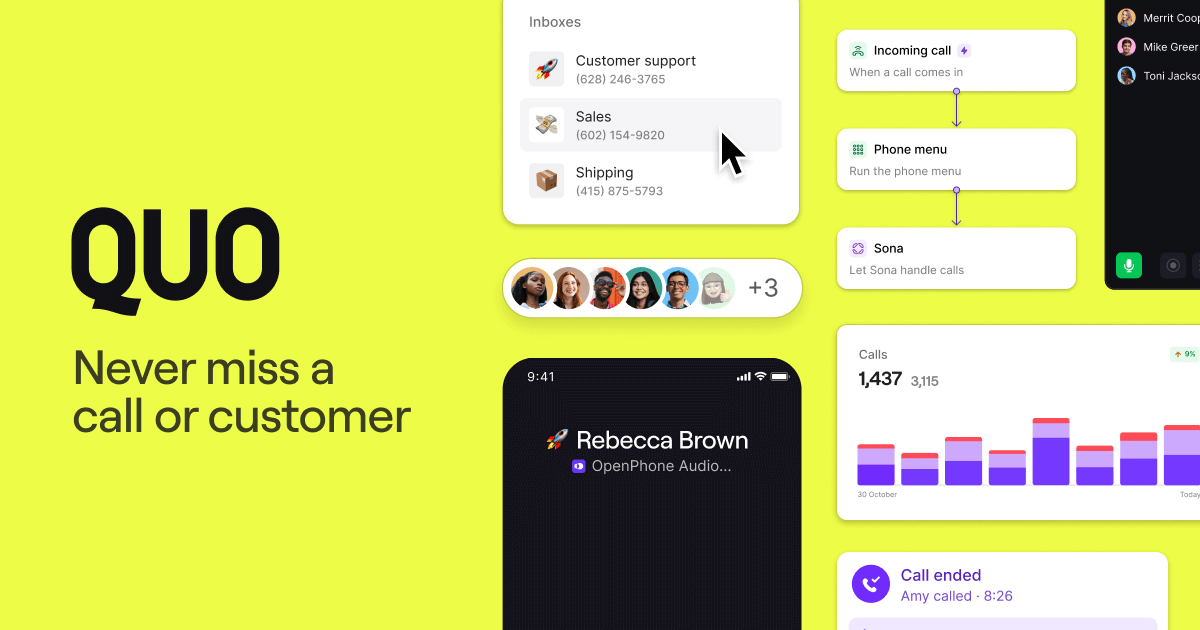
The crown jewel of Quo is Sona, an AI agent that redefines the concept of an auto-attendant. Sona doesn’t just route calls; it resolves them.
Imagine a customer calling your e-commerce store at 2 AM asking about shipping policies. Instead of hitting a generic voicemail, Sona engages them in natural language, accesses your knowledge base, and provides the exact answer. If the issue is complex, Sona intelligently routes the call (or the transcribed message) to the right human agent for the next morning. This is 24/7 customer service without the 24/7 payroll.
Real-World Use Case: The High-Growth Marketing Agency
A boutique marketing agency was struggling to manage client communications across personal cell phones and a clunky legacy VoIP system. Important texts were missed, and clients were frustrated by inconsistent response times. By switching to Quo, they implemented shared numbers for each client account. Now, any account manager can see the full history of calls and texts with a client, jump into a conversation seamlessly, and use AI-suggested responses to reply faster. Client satisfaction skyrocketed, and internal stress plummeted.
Quo Pricing (Annual Billing)
- Starter: $15/user/month (Unlimited US/Canada calls & texts, Sona AI Basic, shared numbers).
- Business: $23/user/month (Adds advanced Sona AI, CRM integrations, group calling, AI call summaries).
- Scale: $35/user/month (Includes AI call tags, dedicated onboarding, priority support).
Pros:
* Industry-Leading AI: Sona AI is the most practical and effective virtual assistant for SMBs.
* Exceptional UX: The most intuitive and modern interface on the market.
* Built for Collaboration: Shared inboxes and internal threads eliminate communication silos.
* Transparent Pricing: Incredible value, especially on the Business tier.
Cons:
* Unlimited calling is currently focused on the US and Canada.
* Highly complex, enterprise-level call center routing (like skill-based routing for 500+ agents) is better suited for RingCentral.
#2 Dialpad: The Best Choice for Sales-Driven Teams
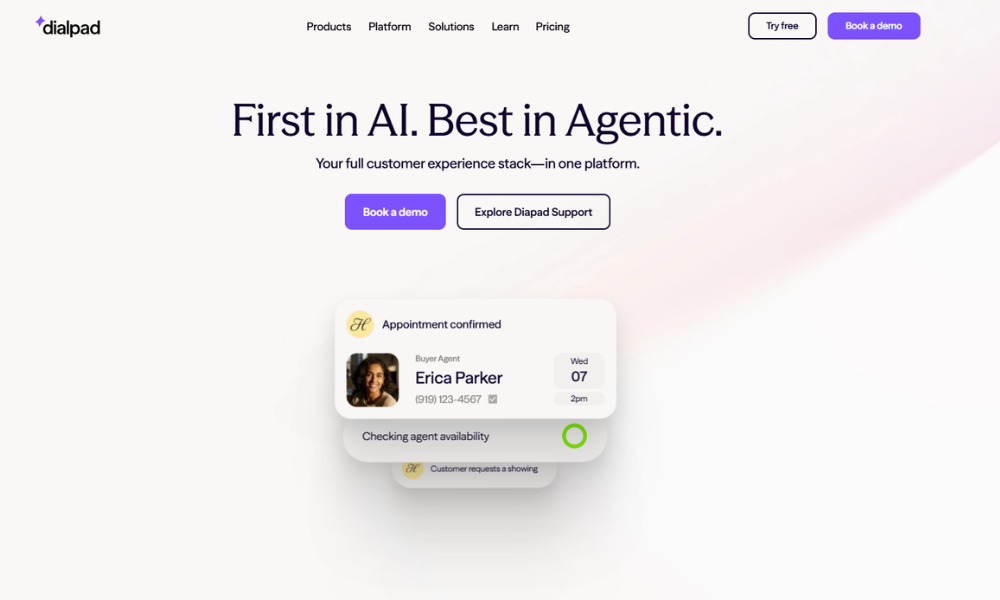
If your small business relies heavily on outbound sales or high-volume support, Dialpad is a formidable contender. Its core strength lies in its “Voice Intelligence” (Vi), which focuses on analyzing conversations in real-time to drive performance.
Why Dialpad Excels in Sales Environments
Dialpad is built to make your human agents better. While Quo excels at automating the front lines with Sona, Dialpad focuses on the live interaction. Its real-time transcription is incredibly fast, and its ability to pop up “battle cards” (suggested talking points) when a competitor is mentioned on a call is a massive advantage for sales reps.
Standout Feature: Real-Time Sentiment Analysis
Managers can view a live dashboard showing the sentiment (positive, negative, neutral) of all ongoing calls. If a call turns negative, a manager can discreetly “barge in” or whisper advice to the agent, potentially saving a deal or rescuing a frustrated customer.
Dialpad vs. Quo: The Verdict
Dialpad is a powerhouse for dedicated sales floors that need deep, real-time coaching tools. However, for the average SMB that needs a versatile, easy-to-use system for general business communication, collaboration, and automated customer service, Quo’s broader feature set and superior UX make it the better all-around choice.
Pricing: Starts at $15/user/month.
#3 RingCentral: The Heavyweight for Scaling Enterprises
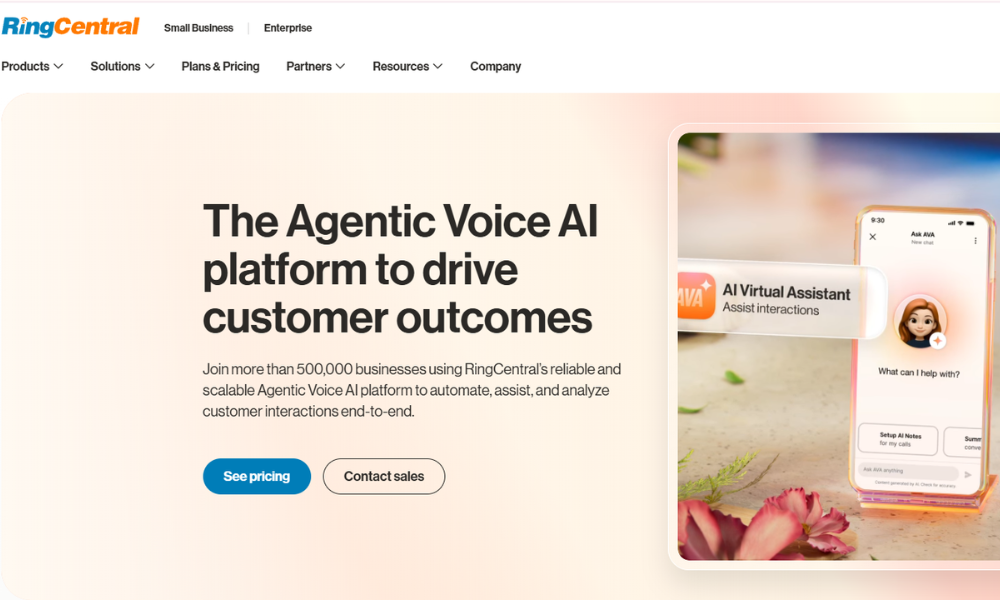
RingCentral is the legacy giant in the Unified Communications as a Service (UCaaS) space. It offers an exhaustive list of features, making it a safe, albeit complex, choice for businesses that anticipate massive scale or have highly intricate routing needs.
Why RingCentral is the Safe Bet for Scale
If you need a system that can handle thousands of employees across dozens of international offices, RingCentral has the infrastructure to support it. It offers deep integrations with almost every enterprise software imaginable and provides robust, multi-level auto-attendants.
Standout Feature: Unmatched Global Reach
RingCentral’s global footprint is massive, offering local numbers and reliable service in over 100 countries, making it ideal for multinational SMBs.
RingCentral vs. Quo: The Verdict
RingCentral is incredibly powerful, but that power comes with complexity and a steeper learning curve. For most small businesses (under 100 employees), RingCentral is often overkill. Quo provides the essential modern features (and superior AI) in a much more agile, user-friendly, and cost-effective package.
Pricing: Starts at $20/user/month.
#4 Zoom Phone: The Budget-Friendly Extension for Zoom Users
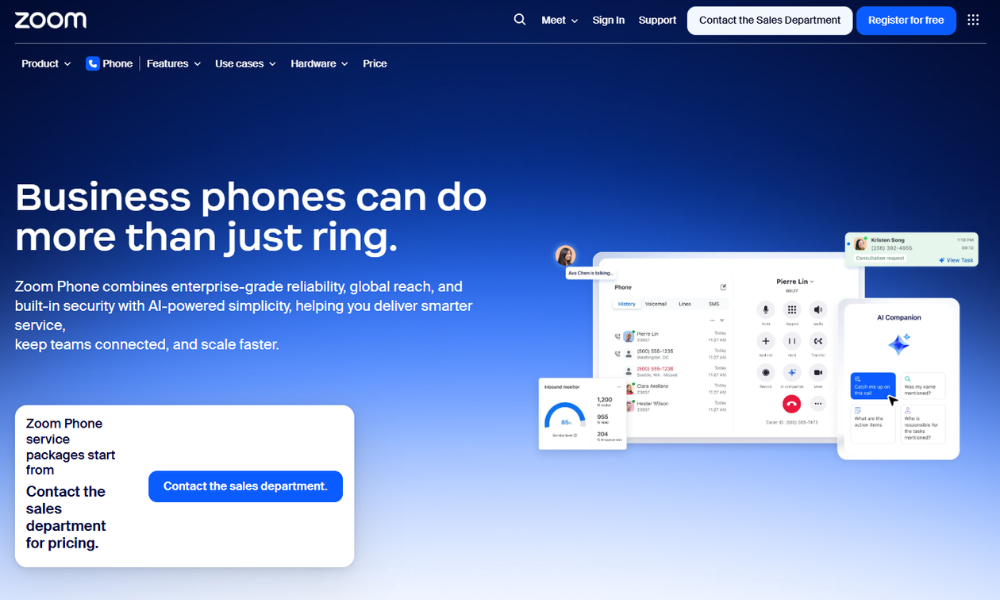
If your team practically lives in Zoom Meetings, Zoom Phone is the logical next step. It seamlessly adds enterprise-grade PBX features to the familiar Zoom interface.
Why Zoom Phone Makes Sense
The primary advantage of Zoom Phone is consolidation. You don’t need to train your team on a new app; the phone system simply appears as a new tab in their existing Zoom client. It’s also one of the most aggressively priced options on the market.
Standout Feature: Call-to-Meeting Elevation
You can seamlessly transition a voice call into a full video meeting with screen sharing with a single click, without dropping the connection.
Zoom Phone vs. Quo: The Verdict
Zoom Phone is fantastic for basic calling and cost savings. However, it severely lags behind in AI capabilities and collaborative features. If you view your phone system as a strategic asset rather than just a utility, Quo’s Sona AI and shared inboxes offer a significantly higher return on investment.
Pricing: Starts at $10/user/month (metered).
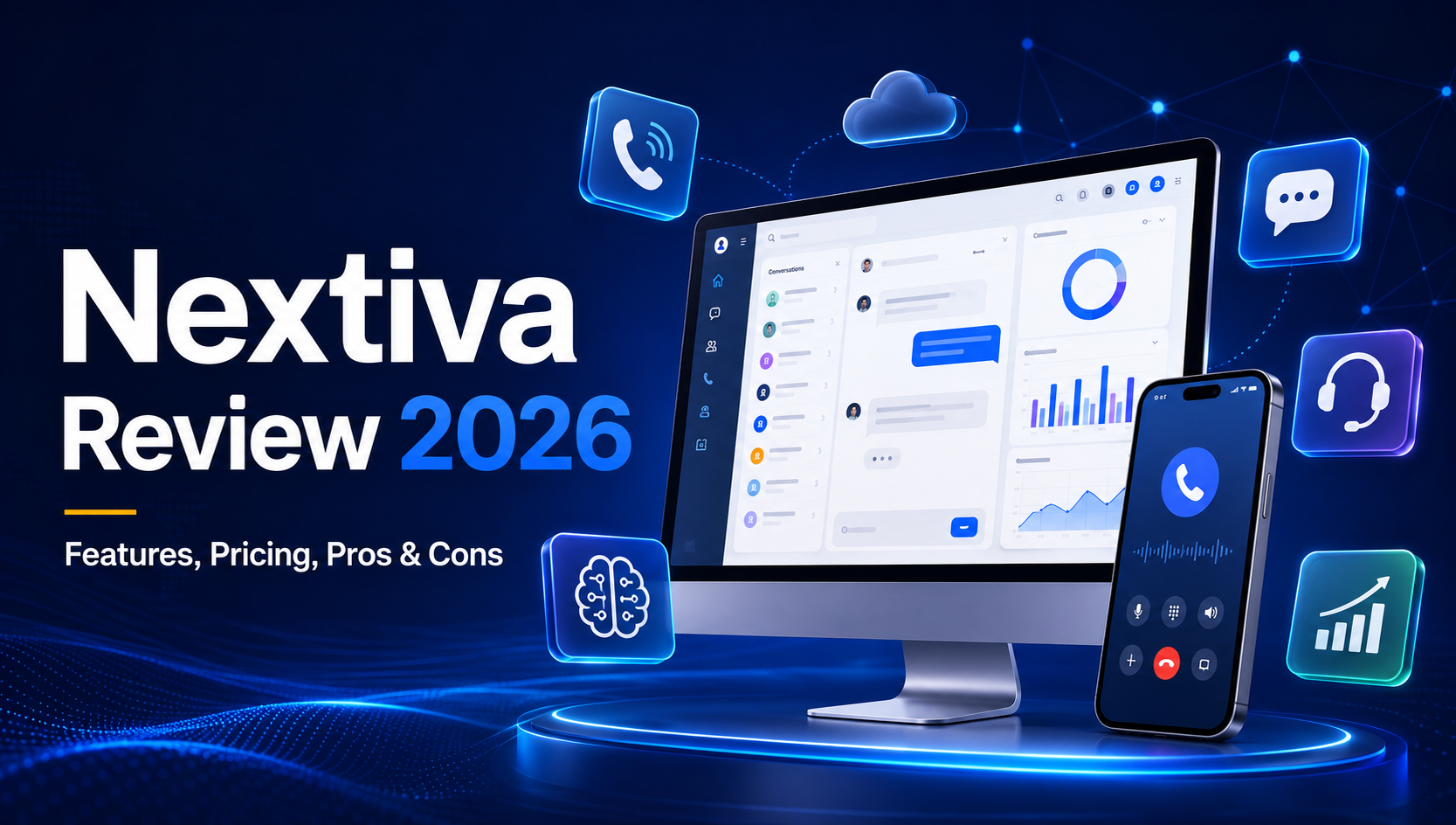
#5 Nextiva: The Champion of Customer Experience
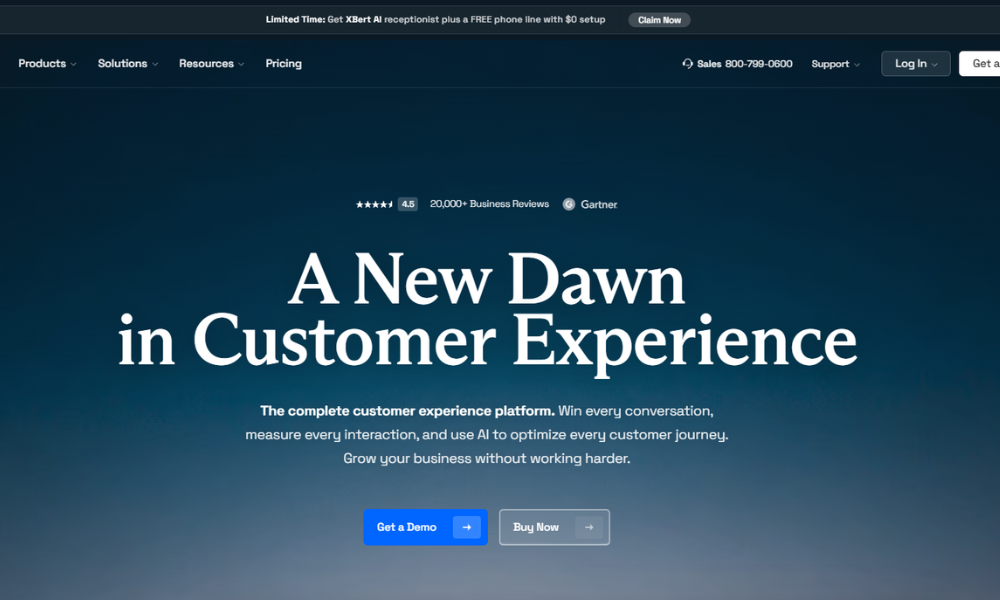
Nextiva positions itself not just as a phone system, but as a customer experience management platform. Its philosophy is built around providing “Amazing Service.”
Why Nextiva Shines in Support
Nextiva’s standout feature is its unified customer view. When a customer calls, the agent sees a complete history of their interactions across voice, email, and chat. This context allows for highly personalized and efficient support.
Nextiva vs. Quo: The Verdict
Nextiva is excellent for dedicated support teams. However, its interface can feel a bit dated compared to modern platforms. Quo offers similar collaborative benefits through its shared inbox, but wraps it in a much more modern, AI-driven, and user-friendly experience.
Pricing: Starts at $19/user/month.
#6 CloudTalk: The Solid Choice for Call Centers
As highlighted in their own blog, CloudTalk is a strong contender for SMBs that operate like traditional call centers. It offers robust features like an AI Sales Dialer and Smart Call Routing.
Why CloudTalk is Good for High Volume
CloudTalk excels in environments where agents are making hundreds of outbound calls a day. Its Power Dialer and analytics dashboards are designed to maximize agent efficiency and track queue metrics meticulously.
CloudTalk vs. Quo: The Verdict
CloudTalk is a specialized tool for call centers. If your business is a modern agency, a tech startup, or a local service provider, CloudTalk’s interface and feature set may feel too rigid. Quo is designed for the modern, collaborative worker, offering a more flexible and intelligent approach to communication.
Pricing: Starts at $25/user/month.
#7 8×8: The International Powerhouse
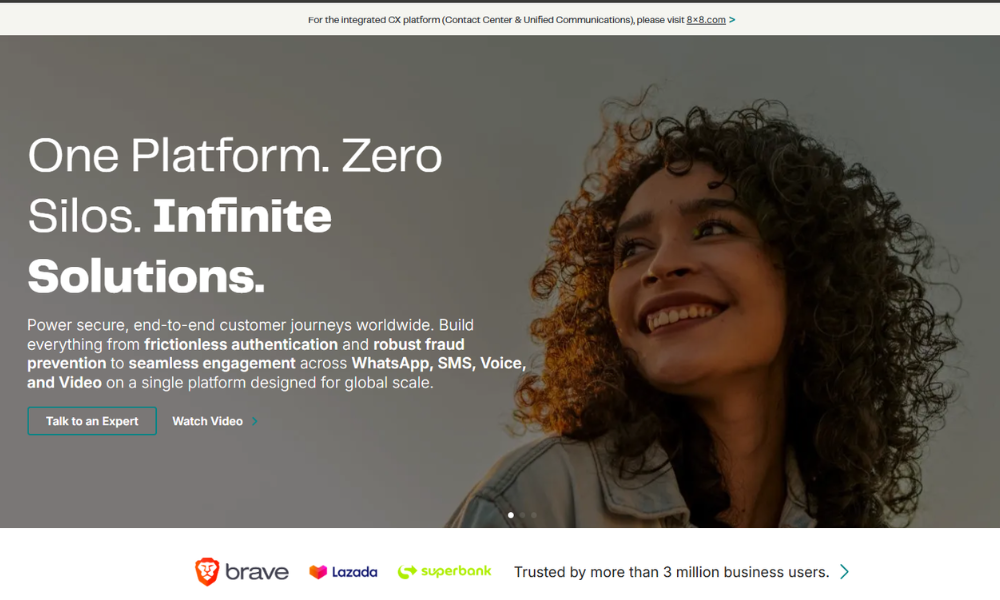
For SMBs with a significant international presence, 8×8 is hard to beat. Its higher-tier plans offer unlimited calling to up to 48 countries, which can result in massive cost savings for global operations.
8×8 vs. Quo: The Verdict
If international calling is your absolute top priority, 8×8 is the winner. However, for domestic-focused businesses, Quo offers a more modern interface and superior AI features at a more competitive price point.
Pricing: Starts at $24/user/month.
#8 GoTo Connect: The All-in-One Alternative
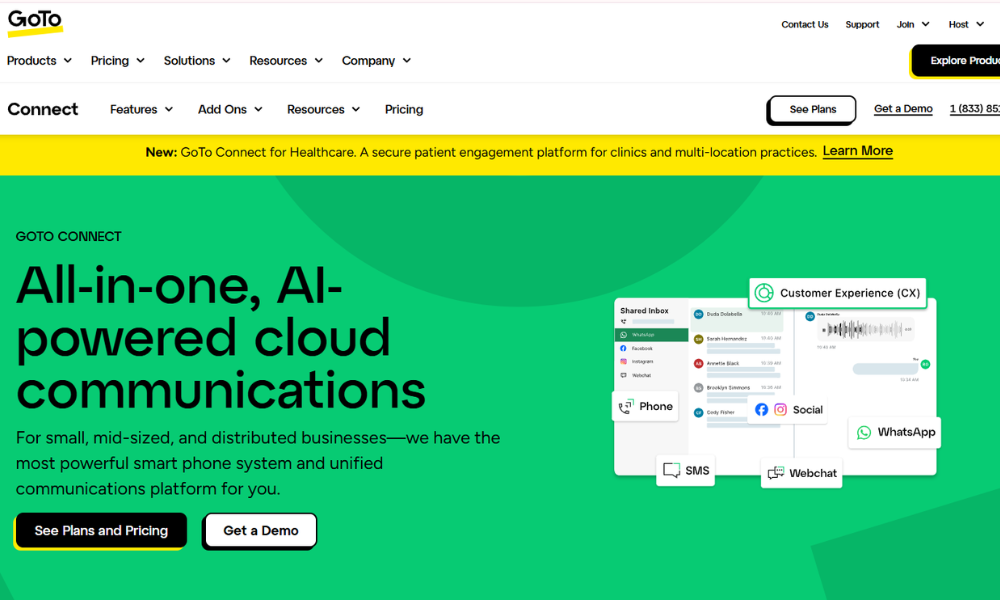
GoTo Connect (formerly Jive) bundles a solid VoIP system with GoToMeeting. It’s known for its incredibly intuitive visual dial plan editor, making it easy to set up complex call routing without IT help.
GoTo Connect vs. Quo: The Verdict
GoTo Connect is a reliable, all-in-one solution. But in 2026, “reliable” isn’t enough. Quo’s integration of AI into the core of the communication experience makes it a far more forward-thinking choice.
Pricing: Starts at $27/user/month.
#9 Vonage: The Developer’s Playground
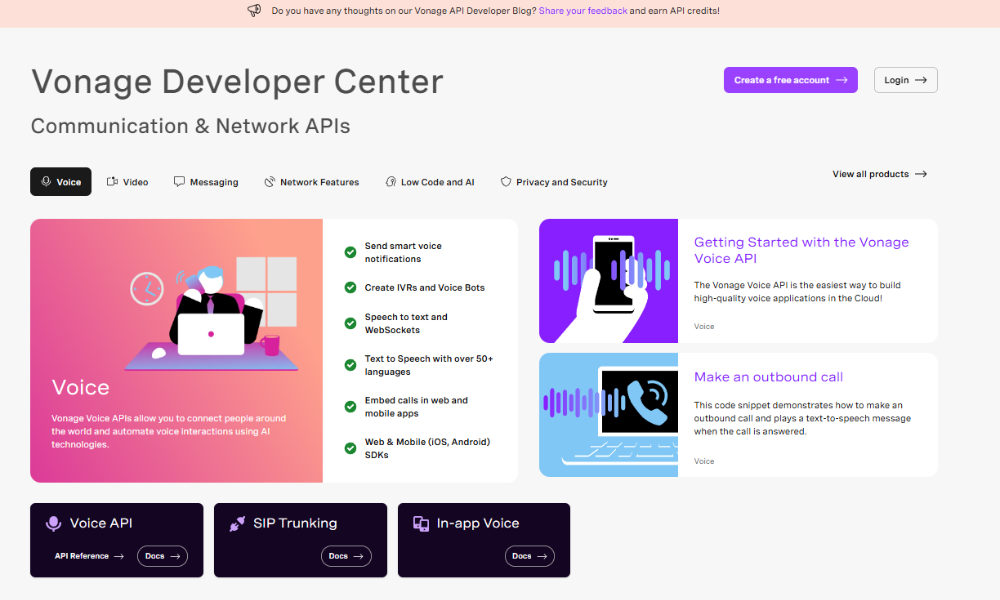
Vonage is unique because of its powerful Communication APIs. If you have an in-house development team and want to build custom voice and SMS features directly into your proprietary software, Vonage is the platform to use.
Vonage vs. Quo: The Verdict
Vonage is for businesses that want to build their own solutions. For the 99% of SMBs that want a powerful, ready-to-use platform out of the box, Quo is the clear winner.
Pricing: Starts at $19.99/user/month.
#10 Grasshopper: The Solopreneur’s Stepping Stone
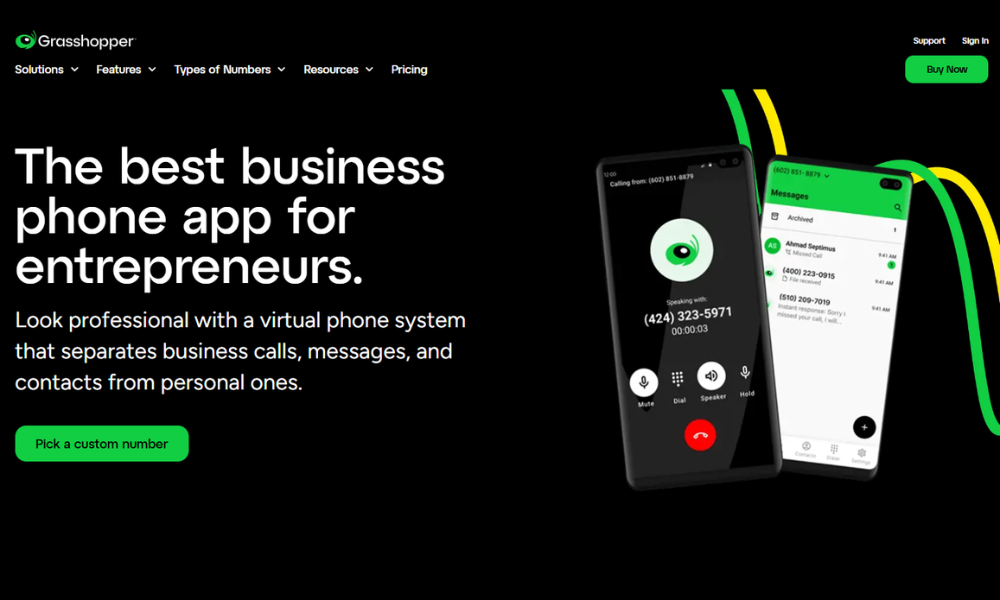
Grasshopper is a virtual phone system designed for micro-businesses. It simply adds a business number to your existing personal cell phone, keeping your personal and professional lives separate.
Grasshopper vs. Quo: The Verdict
Grasshopper is great for a team of one. But the moment you hire your first employee, its limitations become apparent. Quo is affordable enough for solopreneurs but has the architecture to scale seamlessly as your team grows.
Pricing: Starts at $28/month.
#11 Google Voice: The Free (But Limited) Option
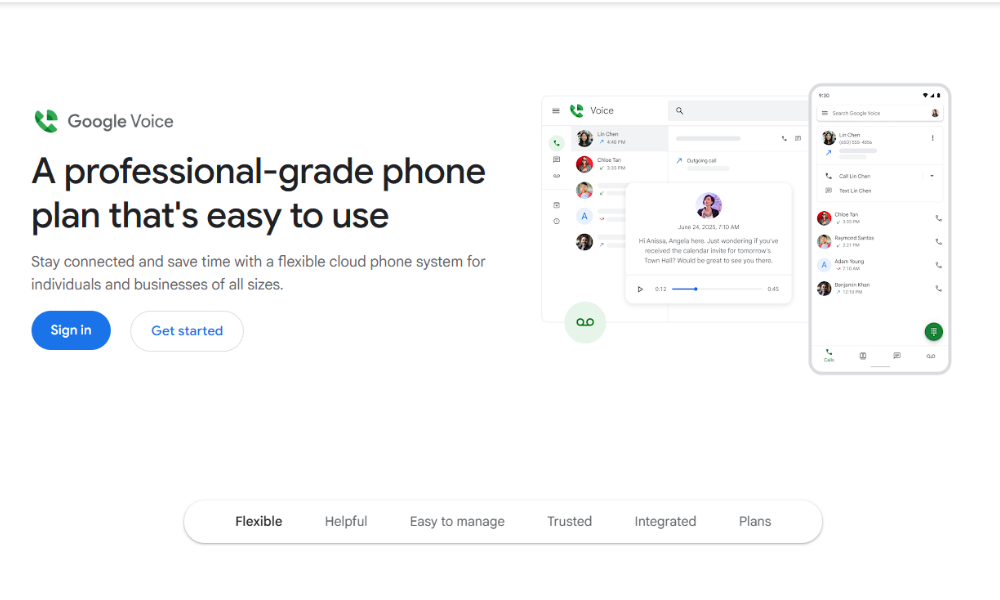
Google Voice is the default choice for many new businesses because it offers a free tier and integrates perfectly with Google Workspace. It boasts excellent spam filtering.
Google Voice vs. Quo: The Verdict
You get what you pay for. Google Voice lacks the collaborative features, CRM integrations, and AI capabilities necessary to run a modern business. Upgrading to Quo is a small investment that yields massive returns in professionalism and efficiency.
Pricing: Free (Personal), Business plans start at $10/user/month.
The Ultimate Comparison: Quo vs. The Rest
To make your decision easier, here is a quick visual breakdown of how the top contenders stack up in the areas that matter most to SMBs in 2026.
| Feature | Quo | Dialpad | RingCentral | Zoom Phone | CloudTalk |
|---|---|---|---|---|---|
| Starting Price | $15/mo | $15/mo | $20/mo | $10/mo | $25/mo |
| AI Capabilities | Elite (Sona AI) | Advanced (Vi) | Moderate | Basic | Moderate |
| User Experience | Exceptional | Good | Complex | Good | Good |
| Shared Inbox | Yes (Native) | Limited | No | No | No |
| Best For | Modern SMBs & Startups | Sales Teams | Large Enterprises | Budget/Zoom Users | Call Centers |
Conclusion: Why Quo is the Only Logical Choice for 2026
The business phone system is no longer just a utility; it is the central nervous system of your customer interactions. While platforms like Dialpad offer great sales tools and RingCentral provides massive scale, they often miss the mark for the average small business that needs agility, collaboration, and practical AI.
Quo stands alone at the top of the mountain. It is the only platform that has successfully married consumer-grade ease of use with enterprise-grade AI. By choosing Quo, you aren’t just buying a phone system; you are hiring a 24/7 AI assistant (Sona), breaking down communication silos with shared inboxes, and future-proofing your business for the demands of 2026 and beyond.
Stop letting outdated technology dictate your customer experience.
Want a truly in-depth perspective on how this platform performs in real-world business environments?
Dive into our comprehensive Quo Review 2026—a detailed analysis covering its key features, pricing strategy, performance, and overall value. Discover whether Quo is the right solution to support and scale your business operations.