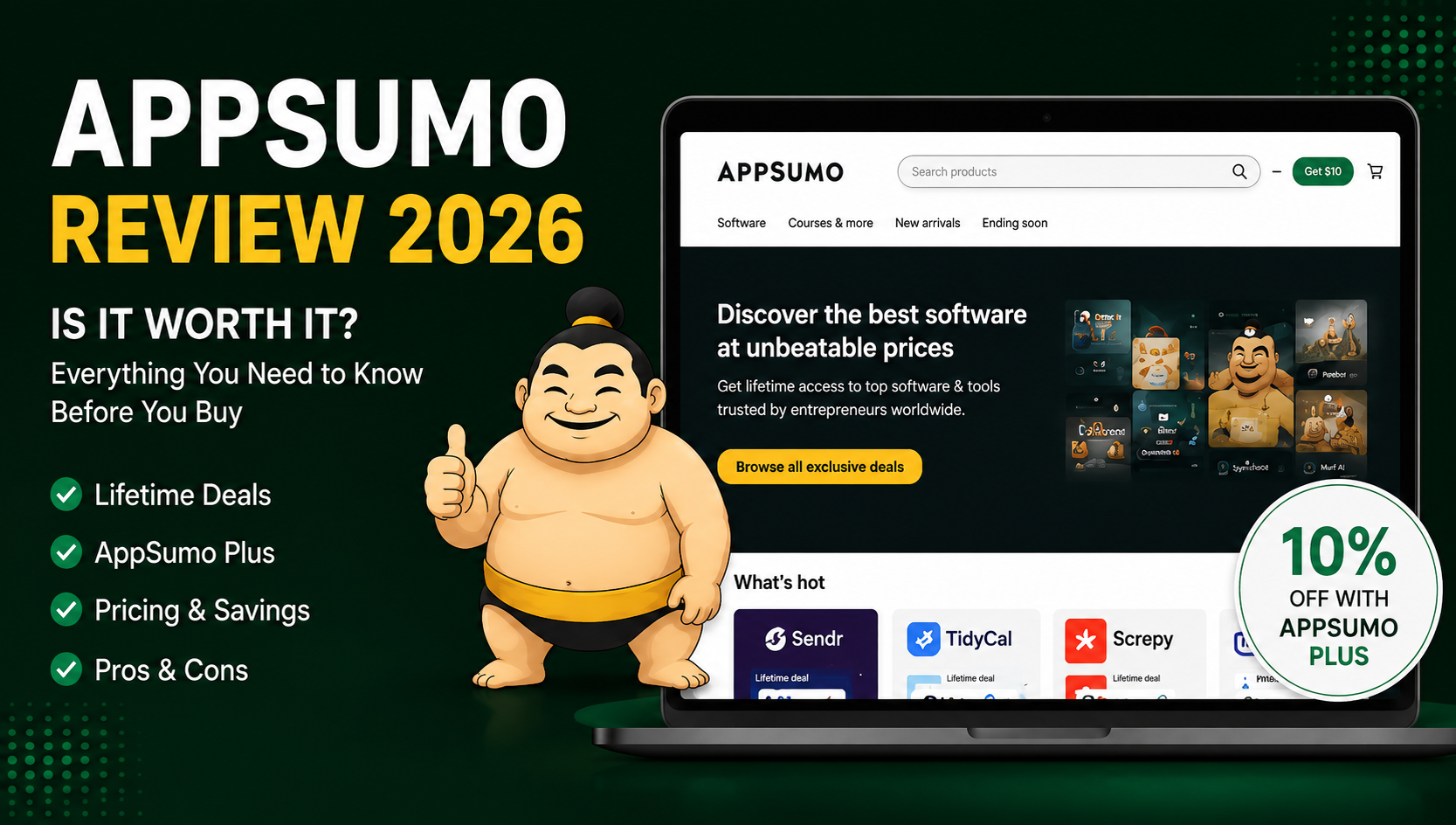
AppSumo Review 2026: Are Lifetime Software Deals Really Worth It?
Software subscriptions have quietly become one of the biggest recurring expenses for online businesses. A small team might pay separately for email marketing, SEO, social media scheduling, AI writing, CRM, analytics, automation, design, appointment scheduling, video creation, and project management. Individually, a $15 or $30 monthly subscription rarely feels expensive. Combined, however, those subscriptions can easily become hundreds of dollars every month.
AppSumo approaches that problem from a completely different direction.
Instead of subscribing to every software product month after month, AppSumo gives entrepreneurs, freelancers, marketers, agencies, creators, and small businesses access to discounted digital products, with Lifetime Deals (LTDs) being the marketplace’s best-known attraction. With an LTD, you typically make one upfront payment and receive ongoing access according to the terms of the deal for the lifetime of that product.
That sounds almost too good to be true. Pay $59 today instead of $20 every month, use the software for several years, and the savings can become substantial.
But there is another side to the equation. Many AppSumo products come from relatively young software companies. Some are excellent products that continue improving for years; others struggle to execute their roadmaps, change business models, introduce new limitations, or disappear altogether. And even when the product survives, buying software simply because it is heavily discounted can leave you with a collection of tools you rarely use.
That makes AppSumo more complicated than a simple “cheap software marketplace.”
The real question isn’t whether AppSumo offers good deals—it clearly can. The more useful question is:
Can AppSumo actually reduce your software expenses without exposing you to more risk, unused tools, and disappointing products than the savings are worth?
In this AppSumo Review 2026, we’ll look beyond the headline discounts. We’ll examine how AppSumo works, what Lifetime Deals really mean, license tiers, AppSumo Plus, refunds, buyer protection, customer reviews, LTD risks, deal evaluation, alternatives, and ultimately whether AppSumo deserves a place in your software-buying strategy.
AppSumo Review 2026: Quick Verdict
Overall Rating: 4.5/5
AppSumo is one of the most compelling marketplaces available to entrepreneurs and small businesses that want to reduce recurring software expenses. Founded in 2010, the Austin-based company says its platform is trusted by more than 1.25 million entrepreneurs. Its marketplace covers a wide range of business software, while Lifetime Deals remain the feature that makes AppSumo fundamentally different from a traditional SaaS store.
The value proposition can be excellent. If you currently spend $30 per month on a particular business tool and find a capable $79 AppSumo alternative, the Lifetime Deal theoretically reaches its break-even point in less than three months. Continue using that software for two or three years and the financial difference becomes substantial.
But that doesn’t make every deal worth buying.
AppSumo is a marketplace rather than the developer behind most products it sells. You’re therefore evaluating two things simultaneously: AppSumo as the purchasing platform and the individual software company behind the deal. AppSumo can provide checkout, refund policies, reviews, deal information, and certain buyer protections, but it cannot guarantee that every independent software company will remain successful indefinitely.
That distinction is central to our verdict.
| Category | Our Rating | Why |
|---|---|---|
| Deal Value | 4.8/5 | Excellent potential when replacing recurring subscriptions |
| Software Selection | 4.7/5 | Broad range of business and productivity tools |
| Ease of Use | 4.6/5 | Straightforward browsing, purchasing, and redemption |
| Refund Protection | 4.6/5 | Strong on eligible products when used correctly |
| Deal Transparency | 4.5/5 | Detailed terms, tiers, reviews, and Q&A on many listings |
| Community Reviews | 4.5/5 | Particularly useful for evaluating individual products |
| Product Consistency | 3.9/5 | Quality and maturity vary substantially by vendor |
| Long-Term Predictability | 3.8/5 | LTD longevity ultimately depends on individual companies |
| Overall | 4.5/5 | Excellent for selective buyers, less suitable for impulse shoppers |
Best for: Entrepreneurs, freelancers, marketers, agencies, creators, consultants, and small businesses that regularly purchase software and are comfortable researching individual products.
Think twice if: You require enterprise-level stability, strict SLAs, highly predictable long-term development, or tend to buy discounted software because of FOMO rather than an immediate business requirement.
Explore Current AppSumo Deals
See which Lifetime Deals and software offers are currently available before deciding whether AppSumo fits your software stack.
Affiliate disclosure: We may earn a commission if you purchase through our link, at no additional cost to you.
How We Evaluated AppSumo
Before going deeper, it is important to explain how this review was constructed. Some AppSumo reviews rely heavily on statements such as “I bought 100 Lifetime Deals” or “I spent thousands of dollars on AppSumo.” First-hand experience can certainly be valuable, but it should only be claimed when it genuinely exists.
For this review, we instead evaluated AppSumo through its current marketplace structure, official documentation, Lifetime Deal terms, refund policies, AppSumo Plus benefits, buyer-protection policies, product categories, deal mechanics, customer-review patterns, and the underlying economics of replacing recurring SaaS subscriptions with one-time purchases.
We also separate facts about AppSumo itself from claims made by individual software vendors. That distinction matters because a good experience with one AppSumo deal does not guarantee another product will be equally successful, just as a failed third-party product does not necessarily mean the marketplace itself is illegitimate.
Our goal is therefore not to prove that every AppSumo deal is worth buying. It is to determine when AppSumo provides genuine value, where the risks are, and how you can evaluate those risks before spending money.
What Is AppSumo?
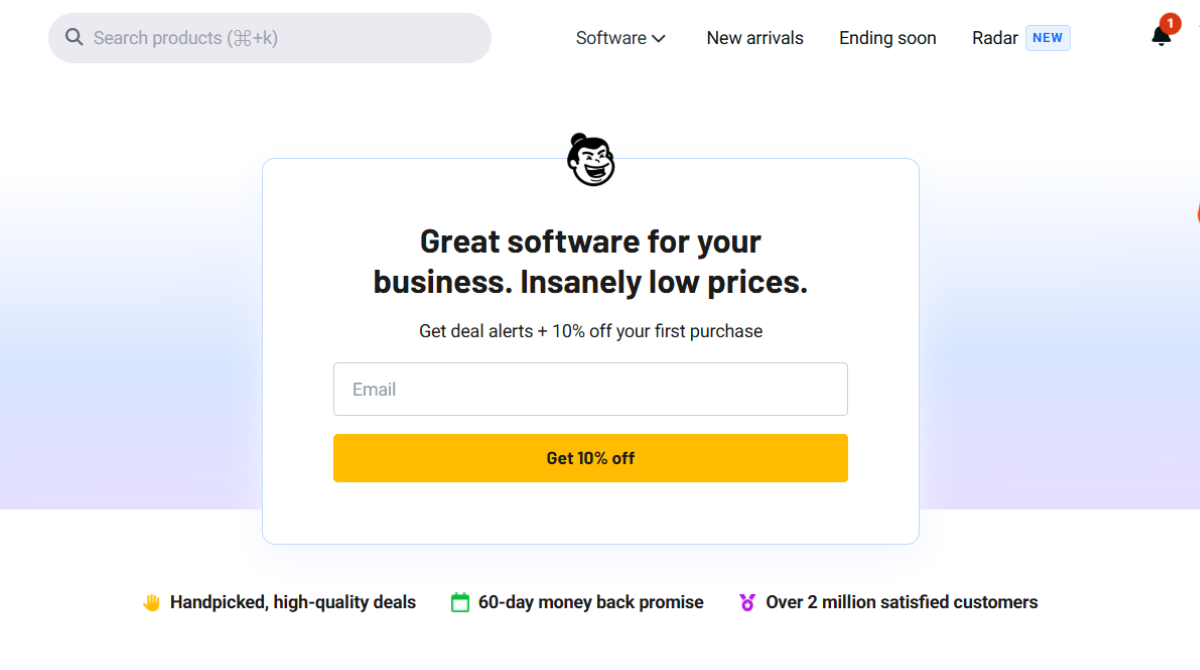
AppSumo is an online marketplace focused primarily on software and digital products for entrepreneurs, marketers, freelancers, creators, agencies, and small businesses. Noah Kagan founded the company in 2010, and AppSumo says it has since grown into a community serving more than 1.25 million entrepreneurs.
The business model is relatively easy to understand. Software developers want customers, feedback, visibility, and revenue. AppSumo has an established audience actively looking for business software. By bringing those two sides together, AppSumo gives software companies a distribution channel while giving customers access to discounted products.
Lifetime Deals are particularly important to this model. Instead of a traditional SaaS relationship where a customer might pay $20 every month for as long as they use the product, an AppSumo partner can offer a limited-time deal where customers pay once for continued access under specified terms.
For a young software company, this can generate a large amount of upfront revenue and attract hundreds or thousands of users quickly. Those users can provide feedback, identify bugs, request features, and help the company establish an early customer base.
For the buyer, the attraction is obvious: potentially replace recurring expenses with one-time costs.
AppSumo’s marketplace spans categories such as AI, marketing, SEO, sales, productivity, content creation, social media, ecommerce, automation, analytics, design, website development, and customer support. That breadth means AppSumo isn’t simply useful when you’re searching for one specific product. It can become a place to look whenever an existing SaaS subscription becomes expensive or you need a new business capability.
The important word, however, is look.
AppSumo should be treated as a place to discover potential software purchases—not as evidence that a product is worth buying merely because it appears on the marketplace.
How AppSumo Works: From Finding a Deal to Using the Software
Buying from AppSumo is relatively simple, but evaluating a purchase properly requires more than clicking the Buy button.
You begin by browsing the marketplace or searching for a specific category. Opening a product page typically gives you information about what the software does, key features, pricing, available license tiers, eligibility requirements, customer reviews, questions and answers, and the specific Deal Terms.
Those Deal Terms deserve more attention than the headline discount.
A product might advertise lifetime access from $59, but the $59 tier could include only one user and a limited number of monthly actions. An agency may need a $199 tier before the software becomes practically useful. Another deal might require multiple codes to unlock additional capabilities.
The real buying process should therefore look like this:
Identify Need → Find Product → Read Deal Terms → Compare Tiers → Check Reviews → Research Alternatives → Buy → Redeem → Test → Keep or Refund
The testing stage is particularly important. A polished landing page tells you what a vendor wants the product to do. Actually using it tells you whether it does that job well enough for your workflow.
If you purchased an SEO tool because you need keyword research, test keyword research first. If you’re considering replacing a scheduling subscription, recreate your existing scheduling workflow. If you bought a CRM, import sample contacts and test the pipeline rather than spending your refund period customizing the dashboard.
That simple change—testing the feature that justified the purchase first—can prevent a large number of disappointing LTD purchases.
What Does “Lifetime Deal” Really Mean on AppSumo?
This is probably the most misunderstood part of AppSumo.
When you see Lifetime Deal, it is tempting to interpret it as “I pay once and this software is guaranteed to work forever.”
That is not what AppSumo promises.
AppSumo explains that Lifetime Deals provide access for the lifetime of the product. Because AppSumo is a third-party marketplace, it cannot guarantee that every partner company will remain in business forever.
The difference is significant.
Suppose you’re considering software that normally costs $29 per month. A competing AppSumo LTD costs $79.
Your break-even calculation is:
$79 ÷ $29 = approximately 2.7 months
If the product works well and you use it for two years, the conventional subscription would have cost:
$29 × 24 = $696
Compared with a $79 LTD, the theoretical difference is $617.
That is an excellent outcome.
But suppose the LTD product closes after four months. You still crossed the mathematical break-even point compared with four months of the alternative subscription, but you now have to migrate to another product, learn a new interface, potentially move data, and resume paying for software.
The financial calculation alone doesn’t capture those switching costs.
That is why we recommend viewing Lifetime Deals through two separate lenses:
Financial value: How quickly does the product recover its purchase price?
Operational value: How disruptive would it be if the product disappeared?
A $59 social media utility used for non-critical work may be a reasonable LTD risk. Moving your entire company’s mission-critical infrastructure to an early-stage platform simply because it offers lifetime pricing deserves far more scrutiny.
Lifetime Deals can be excellent investments. They simply should not be mistaken for guaranteed permanent software ownership.
What You Actually Get With an AppSumo Lifetime Deal
One of the easiest mistakes is assuming that “lifetime” also means “unlimited.”
It doesn’t.
An LTD may give you permanent access to a particular license level while still limiting users, projects, clients, storage, monthly actions, AI credits, API requests, domains, workspaces, or other resources.
Imagine a marketing automation product with these hypothetical tiers:
| Tier 1 | Tier 2 | Tier 3 | |
|---|---|---|---|
| Price | $59 | $119 | $239 |
| Users | 1 | 5 | 20 |
| Contacts | 2,500 | 10,000 | 50,000 |
| Automations | 10 | 50 | Unlimited |
| Workspaces | 1 | 5 | 20 |
A freelancer with 1,000 contacts might get outstanding value from Tier 1. An agency managing ten clients could find the same tier nearly useless.
Both customers are looking at the same Lifetime Deal, but the value is completely different.
This is why the correct AppSumo price is not always the price displayed most prominently on the product page. Your real price is the lowest tier that genuinely supports your intended use case.
Future updates also require attention. Do not assume every new feature a company develops will automatically be included in every legacy Lifetime Deal unless the Deal Terms clearly support that interpretation.
Buy what is documented—not what you hope the deal will eventually become.
Browse Current AppSumo Lifetime Deals
Compare the available tiers and read each product’s Deal Terms before purchasing.
AppSumo License Tiers and Stacking Explained
Many AppSumo products use multiple license tiers to accommodate different types of customers. Tier 1 might target individual users, while higher tiers increase usage limits or unlock features intended for teams and agencies.
This structure is useful because it prevents every customer from paying for maximum capacity. But it also creates an easy upsell trap: buyers sometimes choose higher tiers because they fear the deal will disappear, not because they genuinely need the additional capacity.
Before upgrading, calculate your expected usage for the next 12–24 months. If you currently manage three client accounts, paying hundreds of dollars extra for 100 accounts “just in case” may not be sensible.
AppSumo also supports stacking on eligible code-based deals. Stacking means purchasing and redeeming multiple codes to unlock higher limits or plans. Whether stacking is available—and what each additional code provides—depends on the specific product’s Deal Terms.
The important principle is the same whether the product uses tiers or codes:
Purchase for realistic growth, not imaginary growth.
An agency expecting to move from 20 to 30 clients may reasonably purchase additional capacity. A solo freelancer buying an agency-level plan because “maybe I’ll need it someday” is tying up money that could be used elsewhere.
What Types of Software Can You Find on AppSumo?
The marketplace’s product variety is one reason AppSumo can be useful beyond simply finding cheap software.
A marketer might find SEO software, content optimization, email marketing, social scheduling, analytics, and lead-generation products. A creator may find video, writing, design, transcription, scheduling, and audience-management tools. Agencies can encounter CRM, reporting, automation, proposal, project-management, and client-portal products.
AI has also become an increasingly visible part of the marketplace. This includes writing tools, AI assistants, research products, image and video applications, meeting transcription, automation, and other generative-AI products.
That variety creates an interesting opportunity: software stack optimization.
Instead of asking, “What cheap AppSumo products should I buy?” list every recurring software subscription you already have.
For example:
- SEO software: $49/month
- Social scheduling: $29/month
- Appointment booking: $15/month
- Content tool: $39/month
- Video utility: $20/month
Total: $152/month or $1,824/year.
You do not need to replace everything.
If two carefully selected LTDs can replace $44/month of that stack, you have potentially eliminated $528 in annual recurring expenses.
This is a much healthier way to use AppSumo than collecting random Lifetime Deals.
AppSumo Select, LaunchPad and Radar: Why the Difference Matters
Not every product appearing on AppSumo carries the same maturity or protection profile.
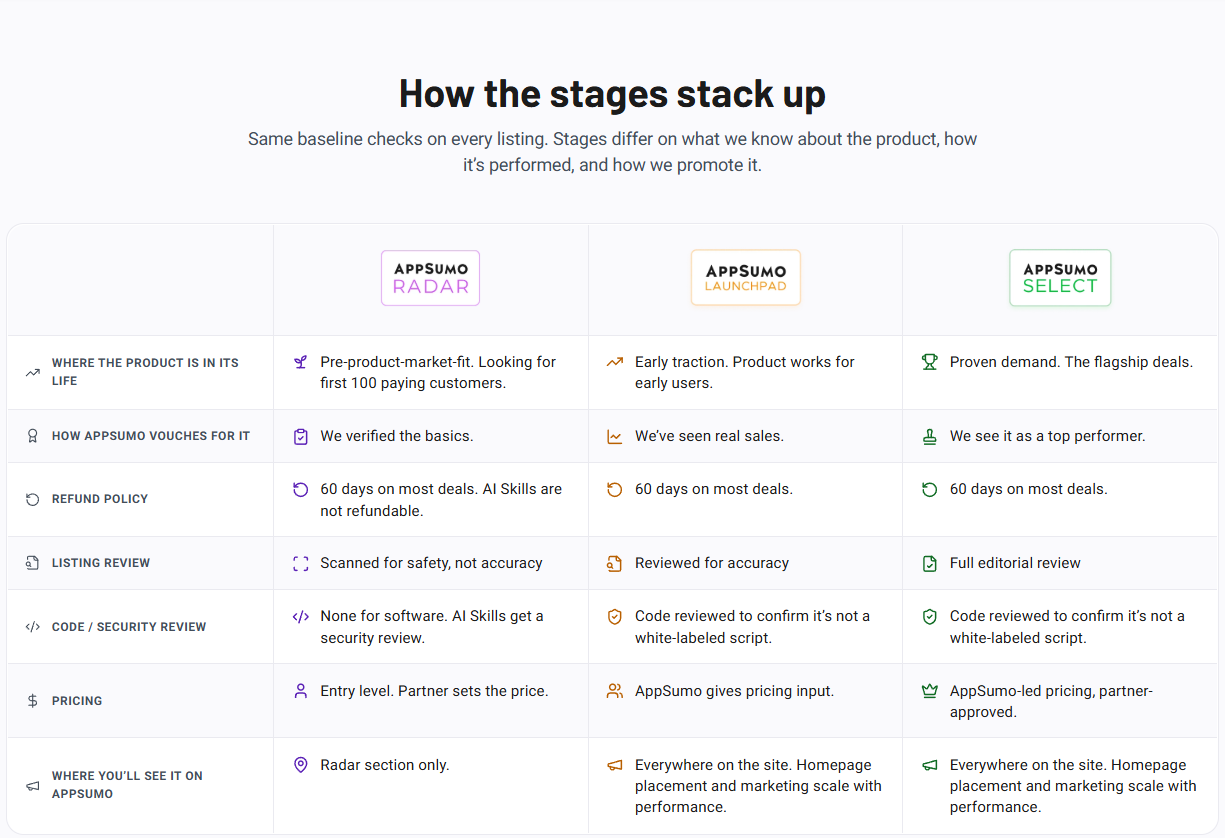
AppSumo currently distinguishes products through categories including Select, LaunchPad, and Radar, and these labels can help buyers understand how products entered the marketplace and what extended protections may apply.
AppSumo describes Select as hand-picked products that have undergone vetting for usability and functionality. LaunchPad products are earlier-stage offerings with lighter vetting but demonstrated sales. Radar represents newer products that AppSumo says are scanned for safety but have not gone through the same full vetting process.
This does not mean:
Select = safe
Radar = bad
A promising Radar product could become an excellent long-term tool. A Select product can still encounter business problems.
Instead, think in terms of risk tolerance.
If you’re experimenting with a $39 productivity utility, you may be comfortable buying something very early-stage. If you’re planning to move thousands of customer records into a CRM, product maturity becomes much more important.
These labels therefore work best as one input in a broader purchasing decision.
AppSumo Pricing: Is It Really as Cheap as It Looks?
There is no universal AppSumo price because each partner sets its own deal structure.
You may encounter products costing $39, $49, $59, $79, $99, $149, $199, or considerably more for higher tiers. What makes the marketplace attractive isn’t necessarily the absolute purchase price; it’s the difference between that one-time price and the recurring cost of comparable software.
However, advertised discounts need context.
Imagine an AppSumo product says:
Normally $600/year → Lifetime Deal $79
It is tempting to conclude that you’re saving $521 in year one alone.
But would you actually have paid $600 for that product?
If the answer is no, $521 isn’t your real saving.
Suppose the alternative you were realistically considering costs $12/month. Your actual annual comparison is:
$12 × 12 = $144
Against a $79 LTD, your first-year difference is $65, not $521.
Still good—but much more realistic.
The best formula is:
Real Savings = What You Would Actually Pay for an Alternative − LTD Cost
not:
Advertised Retail Price − LTD Cost
This small distinction dramatically improves the quality of purchasing decisions.
How Much Can AppSumo Really Save You?
The strongest AppSumo purchases usually share one characteristic: they replace an existing expense.
Consider three hypothetical cases:
| Use Case | Current SaaS | AppSumo LTD | Break-Even | 2-Year Subscription Cost |
|---|---|---|---|---|
| Scheduling | $15/mo | $59 | 3.9 months | $360 |
| SEO | $39/mo | $99 | 2.5 months | $936 |
| CRM | $49/mo | $149 | 3.0 months | $1,176 |
If all three LTDs genuinely replace the subscriptions for two years, the combined subscription cost would have been $2,472.
Combined LTD investment:
$307
Potential difference:
$2,165
This is the economic argument for AppSumo at its best.
Now consider another buyer who purchases six deals for a total of $450 but uses only two.
Those unused deals haven’t created savings. They have simply converted potential future subscriptions into unnecessary upfront spending.
This leads to a rule worth remembering:
The ROI of an AppSumo deal is determined by usage, not discount percentage.
A $199 product used every day can be dramatically better value than a $39 product you open twice.
AppSumo Plus Review: What Do You Get for $99 Per Year?
For frequent AppSumo buyers, the marketplace offers a paid membership called AppSumo Plus.
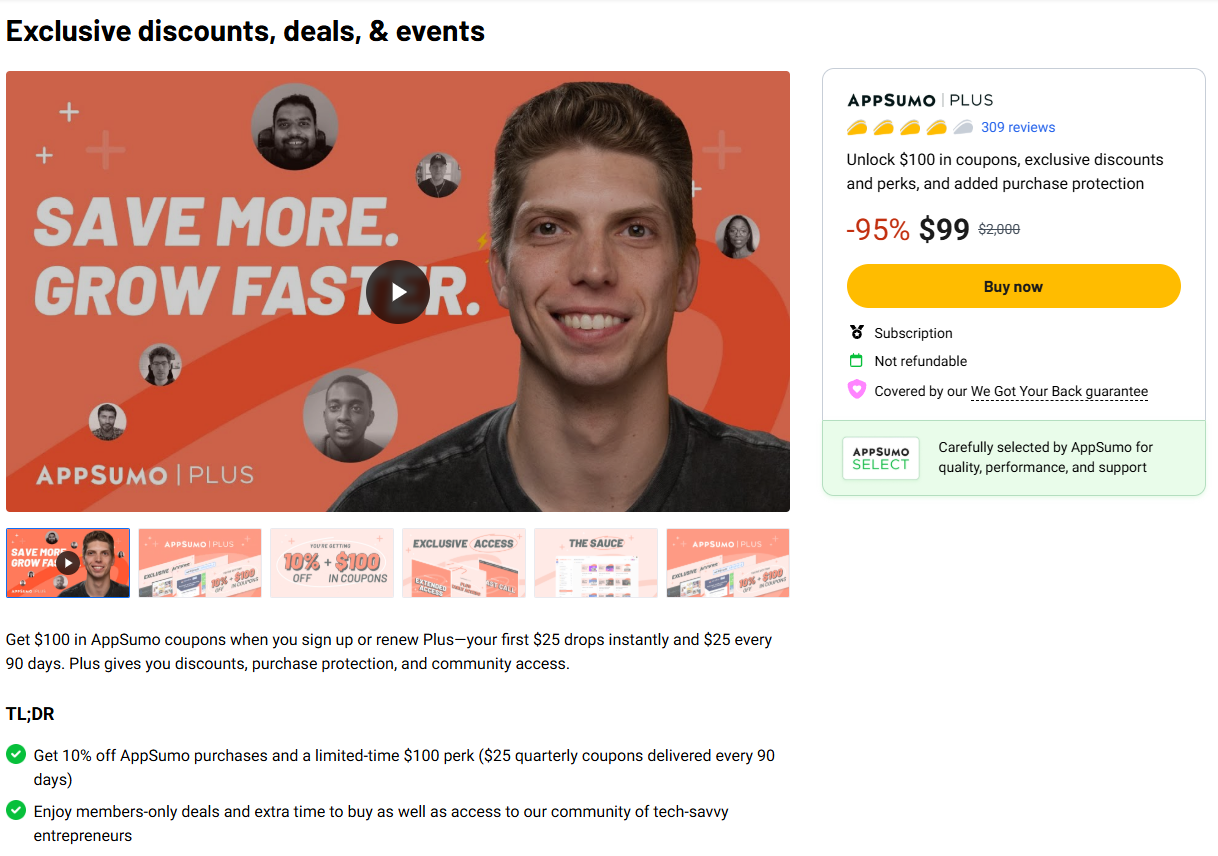
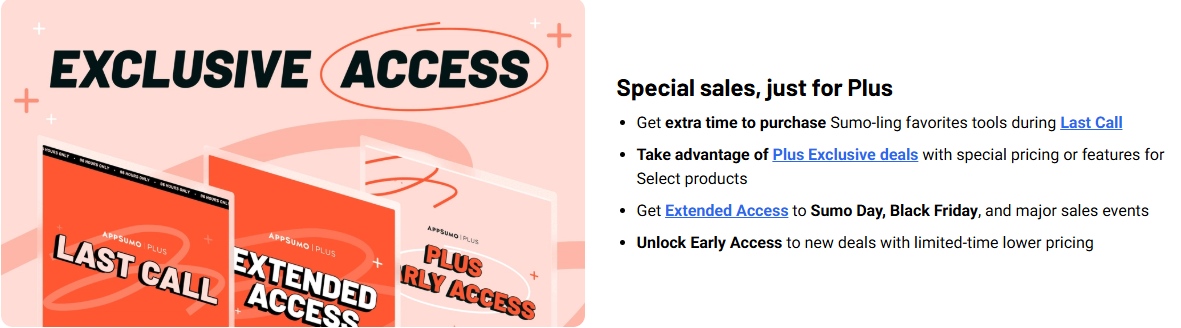
At the time of this review, AppSumo lists Plus at $99 per year. Current benefits include a 10% discount on purchases, quarterly coupons totaling up to $100 annually, early and extended access to certain deals, Plus-exclusive opportunities, enhanced purchase protection, VIP support, community access, educational content, and access to selected AppSumo Originals while membership remains active.
The most straightforward benefit is the 10% discount.
If you naturally spend:
$300/year → approximately $30 discount
$500/year → approximately $50
$1,000/year → approximately $100
$2,000/year → approximately $200
The current coupon benefit can improve the calculation further. AppSumo says Plus members receive a $25 coupon every 90 days, with each coupon available for a limited period.
That theoretically provides another $100 in annual value.
But there is a catch that many “Is AppSumo Plus Worth It?” calculations overlook.
A coupon is only worth $25 if it reduces the price of something you already intended to buy.
If receiving a coupon convinces you to spend $75 on software you didn’t need, the coupon hasn’t saved you $25—it has encouraged $50 of additional spending.
Is AppSumo Plus Worth It? A More Realistic Calculation
Instead of simply adding every advertised benefit together, consider three buyer profiles.
Occasional buyer
You purchase one or two inexpensive products per year and spend around $100–$200.
The 10% discount alone saves only $10–$20. Unless you naturally use enough coupons or strongly value the additional benefits, paying $99 for Plus may not make financial sense.
Regular buyer
You spend approximately $500–$1,000 annually.
At $1,000 of eligible purchases, the 10% discount alone can theoretically offset the current membership price. If you also naturally use quarterly coupons, the value proposition becomes stronger.
Heavy buyer or agency
You regularly use AppSumo to source business software and spend well above $1,000 annually.
Here, Plus can become significantly easier to justify because the percentage discount scales with purchasing volume, while the additional buyer protection can also become more valuable when you have more money invested in LTDs.
The important point is that AppSumo Plus is not automatically good value simply because its listed benefits exceed $99.
Its real value depends on your behavior.
Also remember that AppSumo’s current policy says Plus becomes non-refundable once membership rewards have been used. Cancelling stops future renewal rather than producing a prorated refund for the active membership period.
Interested in AppSumo Plus or Current Deals?
Compare the membership with your expected annual software spending before joining.
AppSumo Refund Policy: What Buyers Need to Know
AppSumo’s refund policy is one of the biggest reasons the marketplace can be less intimidating than buying an unknown early-stage tool directly, but the policy needs to be understood correctly.
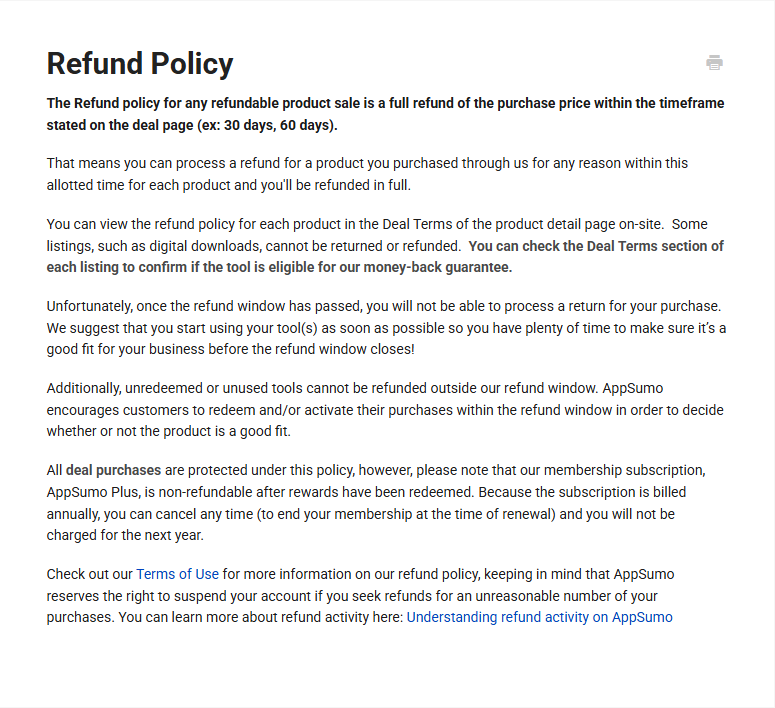
You will frequently see AppSumo associated with a 60-day money-back guarantee, and most marketplace products are indeed presented with generous refund periods. However, the detailed policy states that the applicable refund window is the one specified on the individual product page. AppSumo gives examples such as 30 or 60 days, while certain products or digital downloads may have different conditions or may not be refundable.
That means you should never purchase based solely on the assumption:
“I can always refund it within 60 days.”
Check the individual Deal Terms first.
Another important point is that leaving a product unused does not extend the refund period. AppSumo specifically states that an unredeemed or unused tool does not remain refundable after its applicable refund window has expired.
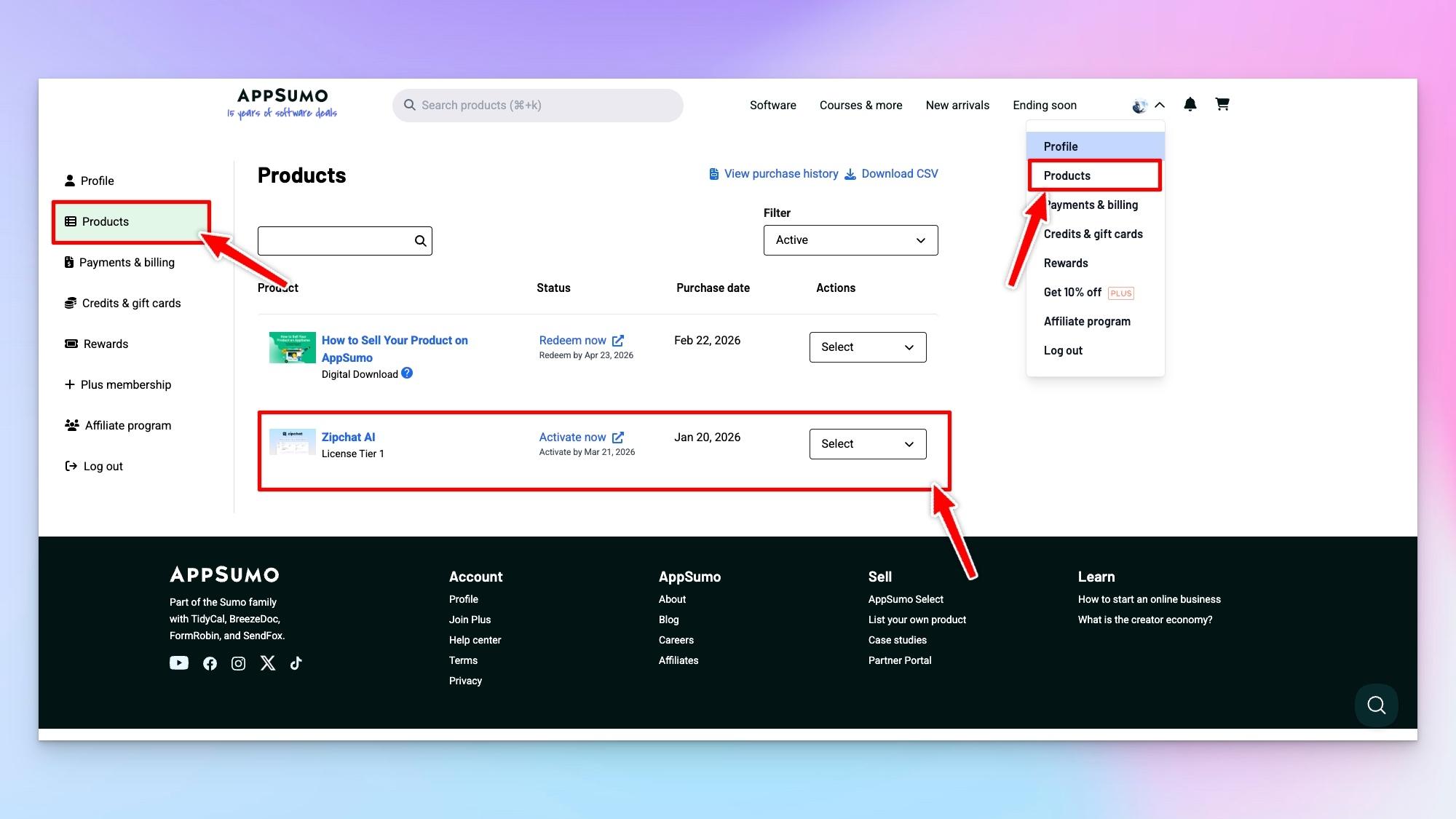
A sensible testing workflow looks like this:
Immediately after purchase: Redeem the product.
First few days: Test the primary feature that motivated the purchase.
Next: Recreate a real workflow rather than a demo scenario.
Then: Check integrations, reliability, limits, export capabilities, and support.
Before the deadline: Decide whether the product has demonstrated enough value to keep.
This approach is particularly useful because software can appear impressive during the first 15 minutes and become frustrating only after you try to integrate it into real work.
We Got Your Back Guarantee: What Happens If a Product Shuts Down?
One of the strongest concerns surrounding Lifetime Deals is obvious:
What happens if the software company disappears?
AppSumo’s current We Got Your Back Guarantee provides additional protection for certain eligible purchases beyond the normal refund period.
Under the current 2026 framework, eligible Select products that close within 12 months of purchase can qualify for AppSumo Credits. Plus customers may receive 100% of the purchase price in credits, while eligible non-Plus customers may receive 50%. Different protection levels apply to LaunchPad products, while Radar products do not receive the same extended closure protection beyond their normal refund period.
There are two important limitations.
First, these are generally AppSumo Credits, not cash refunds.
Second, the protection is not indefinite. Lifetime Deal access may theoretically last for years, while the extended closure protection applies only within the specified period.
AppSumo also requires eligible customers to contact Support within a defined period after the company announces the product closure.
The guarantee therefore reduces early failure risk, but it should not be interpreted as:
“Every AppSumo Lifetime Deal is financially guaranteed forever.”
It isn’t.
The Real Risks of AppSumo Lifetime Deals
The Lifetime Deal model is attractive precisely because it changes software economics. Unfortunately, that is also where some of its risks originate.
A traditional SaaS company receives recurring revenue. Every month or year, customers continue paying to access the product. That recurring revenue helps fund employees, servers, support, development, infrastructure, APIs, and other ongoing expenses.
An LTD customer pays once.
For the software company, a Lifetime Deal campaign can provide substantial upfront cash, rapid customer acquisition, product feedback, and market validation. But eventually, the company still needs a sustainable way to finance ongoing operations.
That does not mean LTD businesses are inherently unsustainable. Many companies use Lifetime Deals as an acquisition strategy before moving toward recurring pricing for future customers.
But buyers should understand the economic tension.
Company failure
The most obvious risk is that the vendor simply goes out of business. Early-stage software companies fail for many of the same reasons other startups fail: insufficient revenue, poor execution, competition, funding issues, or lack of product-market fit.
Product pivot
A company may remain alive while changing direction. The tool you purchased could evolve away from the use case that originally mattered to you.
Roadmap disappointment
Roadmaps are excellent for understanding direction, but dangerous as the primary justification for a purchase. Features can be delayed, redesigned, or cancelled.
Usage restrictions
An LTD can technically survive while becoming less useful because the limits no longer fit your needs.
AI economics
AI Lifetime Deals deserve additional scrutiny. AI inference, API usage, storage, and compute can create meaningful ongoing costs. Extremely generous lifetime usage may require the company to find other recurring revenue sources to remain sustainable.
Opportunity cost
Every dollar spent on an unused LTD is money that could have been invested elsewhere.
This last risk receives surprisingly little attention.
A failed $59 tool is disappointing. Ten $59 tools that you voluntarily purchased and never use represent a much larger problem.
Our 10-Point AppSumo Deal Evaluation Framework
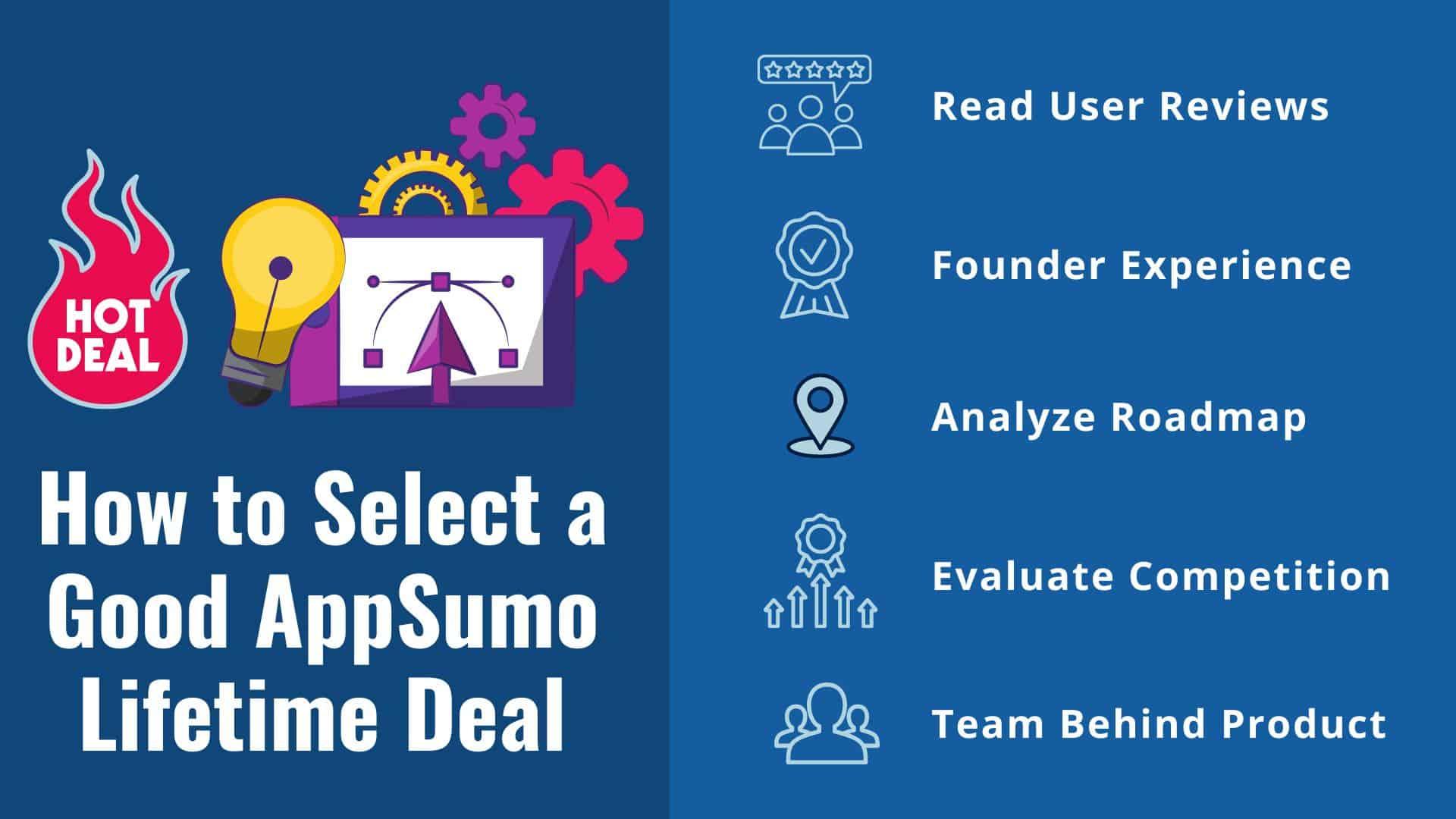
Rather than trying to predict which startup will survive ten years, use a repeatable framework before every purchase.
1. Problem Test
Ask:
Do I have this problem today?
If you need to invent a future use case, the deal probably isn’t urgent.
2. Replacement Test
Can this product replace software you’re already paying for?
This is one of the strongest indicators of measurable ROI because you already know the value of the problem.
3. Current Product Test
Imagine the roadmap disappears tomorrow.
Would you still pay the current AppSumo price for the product as it exists today?
If not, you’re primarily buying future promises.
4. Limit Test
Check every constraint relevant to your workflow: users, clients, storage, projects, domains, credits, API calls, automations, exports, workspaces, and integrations.
5. Review Test
Read recent reviews—not just the overall rating.
Look for patterns. Ten customers reporting the same limitation deserve more attention than one angry review.
6. Founder Test
Read the Questions section and vendor responses.
Does the team answer difficult questions clearly? Do they acknowledge limitations? Are they responsive when users report problems?
7. Development Test
Look for evidence that the product is actively being improved. Recent releases and meaningful updates are more useful signals than an ambitious roadmap graphic.
8. Sustainability Test
Ask yourself how the company can continue serving Lifetime customers.
This is particularly relevant when each user creates substantial recurring costs.
9. Break-Even Test
Use:
LTD Cost ÷ Real Monthly Alternative Cost
A $99 deal replacing a $30 monthly subscription reaches mathematical break-even in approximately 3.3 months.
10. Alternative Test
Before checkout, search for established competitors.
A mature product costing $8/month may be a better business decision than an uncertain $199 Lifetime Deal.
Interpreting the result
8–10 strong answers: Worth serious consideration.
5–7: Research further before buying.
0–4: The discount probably isn’t enough to justify the weaknesses.
No checklist can guarantee that a company will survive, but this one makes it considerably harder to buy purely because of FOMO.
AppSumo Red Flags We Would Not Ignore
Several signals should make you investigate a deal more carefully.
The essential feature exists only on the roadmap. If you need it now, the product does not currently solve your problem.
The company promises to replace five mature platforms at once. Ambition is good; unrealistic scope deserves scrutiny.
Recent reviews are getting worse. Historical ratings can hide current problems.
Customer questions go unanswered. A lack of communication can be particularly concerning during an LTD launch when vendors normally have strong incentives to engage.
Unlimited AI usage has no obvious sustainable economics. This doesn’t automatically mean the deal is bad, but you should understand how the company plans to support ongoing costs.
The headline tier is practically unusable. Calculate the price of the tier you actually need.
You must stack several codes for core functionality. The real deal price may be significantly higher than the advertised entry point.
You are buying because the deal is ending. A countdown timer does not improve software quality.
Found a Deal You’re Considering?
Open the marketplace and apply the 10-point checklist before choosing a license tier.
How to Find the Best AppSumo Deals
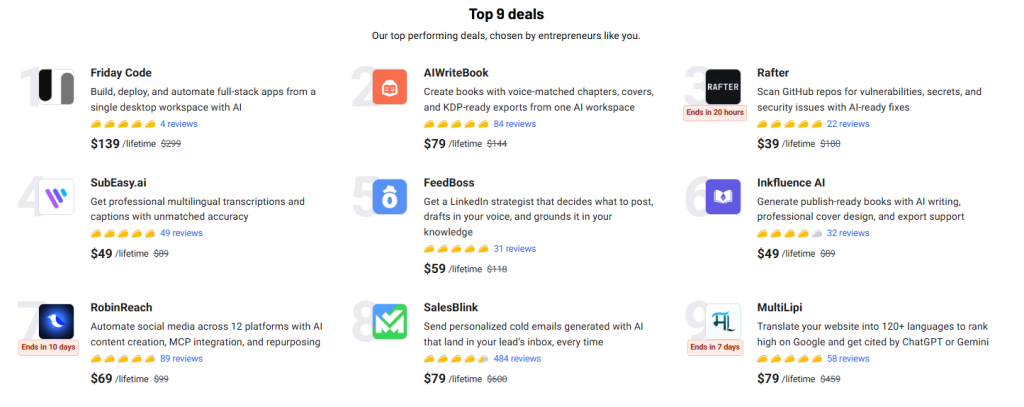
The best strategy starts somewhere other than AppSumo.
Open your current software-expense list.
Identify products that feel overpriced, underused, or easily replaceable. Then search AppSumo for alternatives in those categories.
This reverses the typical shopping process.
Instead of:
See discount → invent need → buy product
you use:
Identify need → search solution → evaluate deal → calculate savings → buy if justified
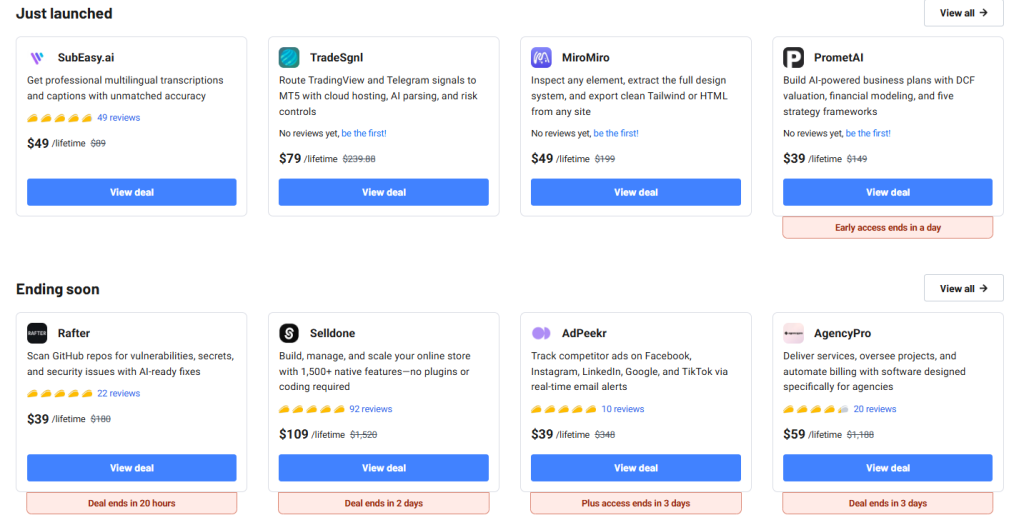
Once you find a candidate, inspect its recent reviews and Questions. Search for the product outside AppSumo as well. Look at the company’s website, documentation, release history, social activity, and other evidence of ongoing development.
Then calculate the break-even point.
If a $79 LTD replaces software costing you $25/month:
$79 ÷ $25 = 3.16 months
If you believe the product can reliably serve you for at least a year, the financial case is attractive.
Finally, use the refund period as an evaluation period rather than procrastination time.
A deal becomes valuable only when the software proves itself in your actual workflow.
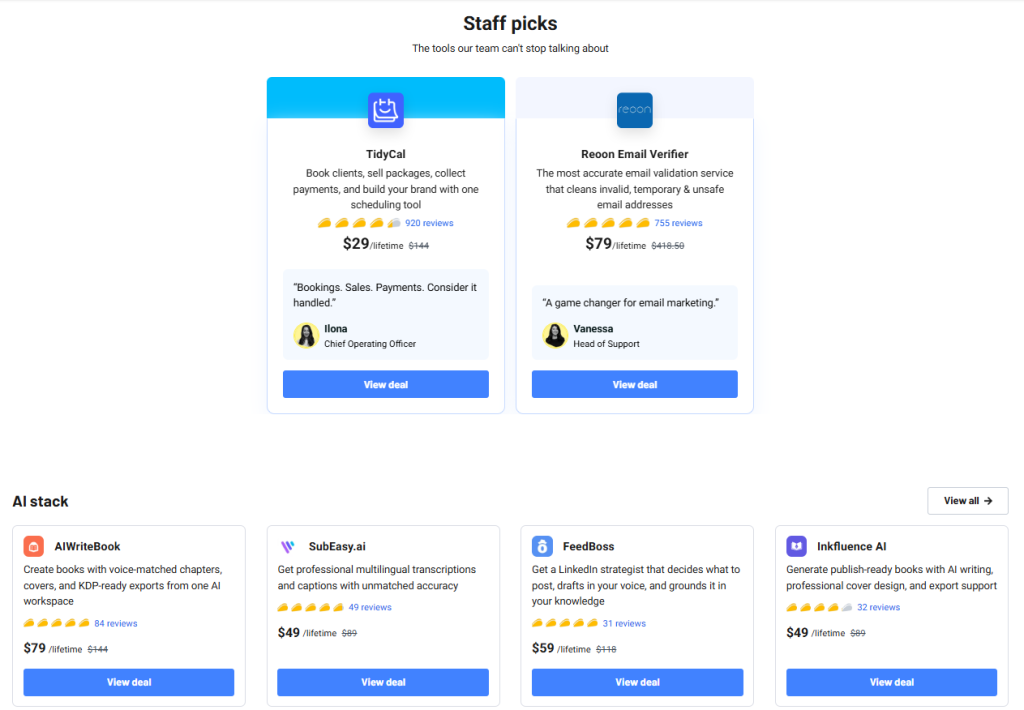
AppSumo Customer Reviews and Reputation: What Are Buyers Saying?
Independent customer feedback adds an important layer to an AppSumo review because the marketplace’s own marketing naturally emphasizes successful deals and software savings.
At the time checked for this review, AppSumo’s Trustpilot profile showed a 3.7/5 TrustScore with roughly 1,500 customer reviews. Review counts and ratings change continuously, so readers should treat this as a snapshot rather than a permanent score.
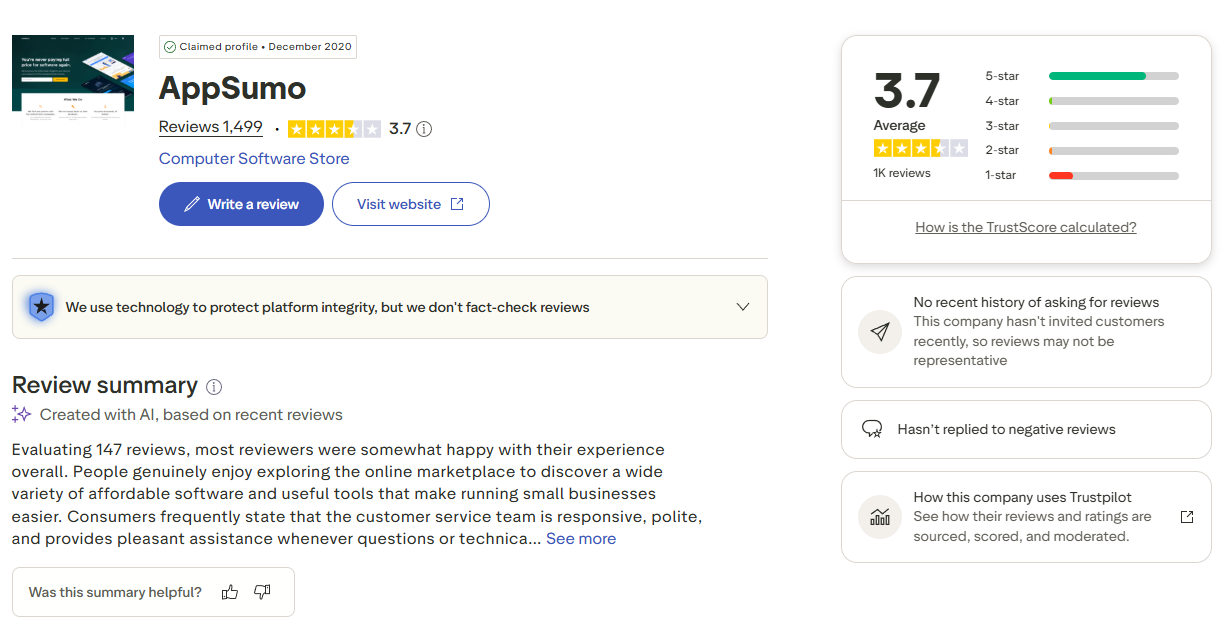
The score is interesting because AppSumo’s customer feedback is not uniformly positive or negative.
Positive reviewers commonly discuss discovering useful software, receiving value from Lifetime Deals, and positive interactions with customer support. These experiences align with AppSumo’s central value proposition: finding business tools at substantially lower long-term costs.
Negative reviews reveal the other side of the model. Complaints can involve individual products failing to meet expectations, vendor longevity, expired codes, support delays, or frustration when an LTD company encounters problems after purchase.
This reinforces an important distinction:
An AppSumo review and an AppSumo product review are not the same thing.
You can have a perfectly smooth transaction through AppSumo and still buy disappointing software.
Likewise, a third-party startup shutting down doesn’t automatically mean AppSumo itself is fraudulent.
For that reason, we recommend evaluating customer sentiment at two levels.
First, look at AppSumo’s reputation for marketplace operations, refunds, customer service, and dispute handling.
Second—and often more importantly—look at the reviews for the specific deal you’re considering.
When evaluating an individual product, pay particular attention to recent reviews. A 4.8/5 overall rating may look excellent, but if the last 20 reviews repeatedly mention slow development or serious bugs, those recent signals may matter more than the historical average.
Also remember that review platforms publish user experiences rather than independently verifying every claim made in every review. Individual complaints should therefore be treated as evidence to investigate, not automatically as established fact.
AppSumo Pros and Cons
After considering pricing, protection, deal economics, and customer feedback, AppSumo’s strengths and weaknesses become clearer.
The biggest advantages
Potentially exceptional ROI. A good Lifetime Deal can replace hundreds or thousands of dollars in future subscription costs.
Reduced recurring expenses. This is particularly valuable for bootstrapped businesses and freelancers trying to keep fixed monthly expenses low.
Software discovery. AppSumo exposes buyers to emerging products they might never discover through traditional software research.
Wide product variety. Marketing, AI, SEO, sales, productivity, design, automation, and many other categories are represented.
Useful deal-level information. Reviews, Questions, tiers, and Deal Terms can help buyers evaluate products before committing.
Meaningful refund protection. Eligible products provide an opportunity to test software before making the purchase effectively permanent.
Additional closure protection. Eligible products receive further safeguards under AppSumo’s current We Got Your Back framework.
The biggest disadvantages
Product quality varies. You are dealing with independent software companies at different maturity levels.
Lifetime does not mean guaranteed forever. Product longevity depends on the vendor remaining operational.
FOMO is a real financial risk. A marketplace built around limited-time discounts naturally encourages faster purchasing decisions.
Roadmap promises can disappoint. Future development is never as certain as current functionality.
Vendor support varies. AppSumo cannot make every independent software team provide the same support quality.
Entry prices can be misleading. The lowest tier may not provide enough capacity for your use case.
Early-stage products require tolerance. Some customers simply prefer the maturity of established SaaS platforms.
AppSumo vs StackSocial, Other Deal Sites, and Direct SaaS
AppSumo is not your only option for discounted software. The correct alternative depends on what you actually want.
StackSocial operates a broader deals marketplace covering software, digital products, learning, and other technology-related offers. AppSumo is more strongly associated with entrepreneur-focused software and the Lifetime Deal ecosystem.
Other smaller Lifetime Deal platforms can also surface interesting software. Their advantage can be discovering products not available through AppSumo, while AppSumo benefits from its larger established marketplace and buyer community.
But the most important comparison is not AppSumo versus another deal site.
It is:
AppSumo LTD vs established SaaS subscription.
| Factor | AppSumo LTD | Traditional SaaS |
|---|---|---|
| Initial cost | Higher upfront | Usually lower |
| Ongoing cost | Often none for purchased tier | Recurring |
| Long-term cost | Potentially very low | Continues while subscribed |
| Product maturity | Often earlier-stage | Varies, often more mature |
| Financial predictability | Excellent if product survives | Predictable recurring cost |
| Product longevity | Vendor-dependent | Vendor-dependent but established companies may reduce risk |
| Upgrade flexibility | Deal-dependent | Usually plan-based |
| Best for | Cost-conscious, selective buyers | Buyers prioritizing maturity and predictability |
Suppose established software costs $20/month while an AppSumo alternative costs $79.
The LTD looks dramatically cheaper after four months.
But if the established product has critical integrations, proven reliability, excellent support, and five years of operating history, paying the subscription may still be the smarter business decision.
Price is one variable—not the entire decision.
[INTERNAL LINK: BEST APPSUMO ALTERNATIVES]
[INTERNAL LINK: APPSUMO VS STACKSOCIAL]
Who Should Use AppSumo?
AppSumo is particularly well suited to bootstrapped entrepreneurs because recurring expenses matter enormously when a business is still small. Replacing even $50–$100 per month of subscriptions can materially reduce operating costs over several years.
Freelancers can benefit for similar reasons. A writer, designer, consultant, or marketer may need numerous professional tools but not have enterprise-level revenue to support dozens of subscriptions.
Agencies potentially have even more upside because their software stacks are usually larger. CRM, SEO, reporting, lead generation, social management, automation, scheduling, and client collaboration can collectively cost significant amounts each month. However, agencies need to examine client limits, commercial rights, workspaces, white labeling, and user seats especially carefully.
Content creators may find value in video, writing, design, social, scheduling, transcription, and AI products.
Early adopters are also a natural fit. If you enjoy discovering emerging software and are comfortable accepting some product risk in exchange for potentially excellent pricing, AppSumo can be an enjoyable marketplace to explore.
Who Should Probably Skip AppSumo?
AppSumo becomes less attractive when operational predictability matters more than software cost.
Large enterprises may require strict security reviews, SLAs, compliance documentation, procurement processes, dedicated account management, and long-term contractual guarantees that many young AppSumo products are not designed to provide.
You should also be cautious if you strongly dislike unfinished or rapidly changing software. Even promising products can have rough edges during their early stages.
Most importantly, AppSumo may be a poor fit if you are an impulse buyer.
If your purchasing logic regularly sounds like:
“I don’t need it right now, but it’s 90% off and the deal ends tomorrow…”
then Lifetime Deals may increase your software spending instead of reducing it.
Is AppSumo Legit?
Yes. AppSumo is a legitimate, established software marketplace that has operated since 2010. The company says its platform is trusted by more than 1.25 million entrepreneurs.
But “Is AppSumo legit?” and “Will every AppSumo Lifetime Deal succeed?” are completely different questions.
AppSumo operates the marketplace.
Most products are built and maintained by independent companies.
A legitimate marketplace cannot guarantee that every startup selling through it will still be operating ten years from now. AppSumo itself explicitly acknowledges this limitation when explaining Lifetime Deals.
The more accurate conclusion is therefore:
AppSumo is legitimate, but every individual deal still requires due diligence.
That may sound less exciting than “every deal is amazing,” but it is far more useful to buyers.
Is AppSumo Worth It in 2026?
For the right type of buyer, yes—potentially very much so.
The strongest argument for AppSumo is not access to cheap software. Cheap software is easy to find.
The strongest argument is subscription replacement.
Suppose your business currently spends $350 per month across 12 software subscriptions.
You don’t need to replace all 12.
If two AppSumo products allow you to cancel subscriptions costing a combined $55 per month, that’s:
$660 per year
or:
$1,980 over three years
If those two LTDs cost $200 combined and remain useful, the potential economics are excellent.
But the opposite is also true.
If you spend $1,000 on Lifetime Deals because they all look inexpensive individually and only use $200 worth of them, AppSumo has not saved you money.
That is why our recommendation isn’t:
“Buy AppSumo deals.”
It is:
Use AppSumo as a marketplace for finding potential replacements for software you already need.
Start with the problem. Then find the deal.
Never start with the discount and search for a reason to justify buying it.
See What’s Currently Available on AppSumo
Look for products that can replace software you’re already paying for rather than buying purely because of the discount.
Final Verdict: Should You Buy From AppSumo?
Overall Rating: 4.5/5
AppSumo remains one of the most interesting software marketplaces for entrepreneurs, freelancers, agencies, creators, marketers, and small businesses in 2026.
Its biggest strength is the possibility of turning recurring software costs into one-time investments. Find a reliable $79 Lifetime Deal that replaces a $30 monthly subscription and the financial value can become obvious within a few months.
Its biggest weakness is that the same pricing model can encourage buyers to underestimate product risk and overestimate how much software they actually need.
The smartest AppSumo customers are therefore not necessarily the people who buy the most deals.
They’re the people who reject most deals.
They identify a genuine need, compare the product with alternatives, inspect the terms, read recent reviews, calculate the break-even period, buy the appropriate tier, test it aggressively during the refund window, and keep it only when it earns a place in their workflow.
Approached that way, AppSumo can be more than a software discount site.
It can become a practical way to reduce recurring SaaS expenses while discovering useful emerging products.
For businesses that value maximum predictability above price, established subscription software may still be the better choice. But for cost-conscious buyers comfortable evaluating individual products, AppSumo remains well worth considering in 2026.
Explore AppSumo
Browse the latest Lifetime Deals, compare license tiers, read current customer feedback, and decide whether any of the available products fit your actual business needs.
Affiliate disclosure: This review contains affiliate links. If you purchase through our link, we may earn a commission at no additional cost to you. Our editorial conclusions are based on the factors discussed in this review.
AppSumo FAQ
Is AppSumo legit?
Yes. AppSumo has operated since 2010 and is an established marketplace for software and digital products. The company says more than 1.25 million entrepreneurs trust its platform.
What is AppSumo best known for?
AppSumo is best known for software Lifetime Deals, although the marketplace includes different types of offers. LTDs typically allow buyers to make a one-time payment for continued access according to the specific Deal Terms.
What does lifetime mean on AppSumo?
Lifetime refers to the lifetime of the product, not the lifetime of the customer. If the company behind a product permanently shuts down, AppSumo cannot guarantee that the software will continue operating.
Are all AppSumo deals lifetime?
No. You should check the individual listing and Deal Terms before purchasing rather than assuming every AppSumo product provides Lifetime access.
Does AppSumo offer refunds?
Eligible products can be refunded within the timeframe specified on their individual deal pages. Many marketplace products have generous refund periods, but the exact terms can vary, and some products may be non-refundable.
Can I refund an AppSumo product if I never used it?
Not after the applicable refund window simply because the product remained unused. AppSumo states that unused or unredeemed products do not remain indefinitely refundable.
What happens if an AppSumo product shuts down?
Normal Lifetime access can end if the product itself ceases operating. Eligible purchases may qualify for additional AppSumo Credits under the current We Got Your Back Guarantee when the closure occurs within the applicable protection period.
What is AppSumo Plus?
AppSumo Plus is a paid annual membership designed for frequent buyers. Current benefits include discounts, quarterly coupons, selected exclusive or extended deal access, additional buyer protection, VIP support, community access, and other perks.
How much is AppSumo Plus?
At the time of this review, AppSumo lists Plus at $99 per year. Because pricing can change, verify the current membership price before joining.
Does AppSumo Plus give you 10% off?
Yes. A 10% discount on AppSumo purchases is currently one of the main Plus benefits.
Is AppSumo Plus worth it?
It is most attractive for regular buyers who naturally make enough purchases to benefit from the 10% discount, quarterly coupons, and additional protections. Someone buying one inexpensive deal per year may struggle to justify a $99 membership.
What is AppSumo stacking?
On eligible code-based deals, stacking allows you to purchase multiple codes to unlock greater usage limits, higher plans, or additional functionality. Not every AppSumo deal supports stacking.
Is AppSumo good for agencies?
Potentially, yes. Agencies often maintain expensive software stacks, making Lifetime Deals particularly attractive. However, check client limits, users, workspaces, commercial rights, white-label options, and usage allowances before purchasing.
Is AppSumo good for AI tools?
It can be, but AI Lifetime Deals deserve extra due diligence. Because AI usage can create ongoing infrastructure and API costs, buyers should pay particular attention to monthly credits, fair-use rules, and the sustainability of unusually generous lifetime limits.
Are AppSumo reviews trustworthy?
Deal-level reviews are useful, especially when you focus on recent feedback and recurring patterns rather than the average star rating alone. For important purchases, combine AppSumo reviews with external research and your own testing.
What rating does AppSumo have on Trustpilot?
At the time checked for this review in August 2026, AppSumo’s Trustpilot profile displayed approximately 3.7/5 from around 1,500 reviews. Ratings and review counts change, so verify the current score when reading this article later.
What is the biggest AppSumo risk?
There are two major risks: the product may fail to remain useful or operational long term, and you may simply buy too many products you don’t need. The second risk is entirely under the buyer’s control.
How do I know whether an AppSumo deal is worth buying?
Ask whether the tool solves an immediate problem, can replace an existing expense, works well enough today without relying on its roadmap, provides sufficient usage limits, has positive recent development signals, and reaches break-even within a reasonable period.
Should I buy an AppSumo product because its roadmap looks good?
No. Treat future features as upside. Your purchase decision should primarily be based on the product that exists today.
Should I choose the highest AppSumo license tier?
Only when the additional capacity or functionality has realistic value for you. Buying a larger tier solely because the deal might disappear can undermine the savings you’re trying to achieve.
Is AppSumo cheaper than subscribing directly to SaaS products?
It can be dramatically cheaper over time when a Lifetime Deal genuinely replaces a recurring subscription. But price should be balanced against product maturity, reliability, support, integrations, and long-term predictability.
Who is AppSumo best for?
AppSumo is particularly suitable for entrepreneurs, freelancers, marketers, agencies, creators, consultants, and small businesses that regularly use multiple software products and want to reduce recurring expenses.
Is AppSumo worth it in 2026?
Yes, for selective buyers. AppSumo can provide excellent long-term value when you use Lifetime Deals to solve existing problems or replace subscriptions you’re already paying for. It becomes much less attractive when purchasing is driven mainly by discounts and FOMO.
Browse AppSumo Deals