
This Doba review delivers a deep, unbiased analysis of features, pricing, pros and cons, use cases, and alternatives to help sellers decide in 2025.
Introduction

Dropshipping remains one of the most accessible eCommerce business models, especially for entrepreneurs who want to avoid inventory management and upfront product investment. However, the reality of running a successful dropshipping business in 2025 is very different from what it was a decade ago. Advertising costs are higher, customer expectations are stricter, and competition is more intense than ever.
As a result, sellers increasingly rely on platforms that can simplify supplier sourcing, order processing, and inventory management. Instead of manually negotiating with multiple suppliers, many choose centralized dropshipping platforms that offer automation and structure.
Doba is one of the longest-running platforms in this space. It positions itself as a managed dropshipping and wholesale marketplace designed to reduce operational complexity for sellers. This Doba review takes a comprehensive look at the platform’s capabilities, limitations, and long-term viability for modern eCommerce businesses.
🔍 What Is Doba?
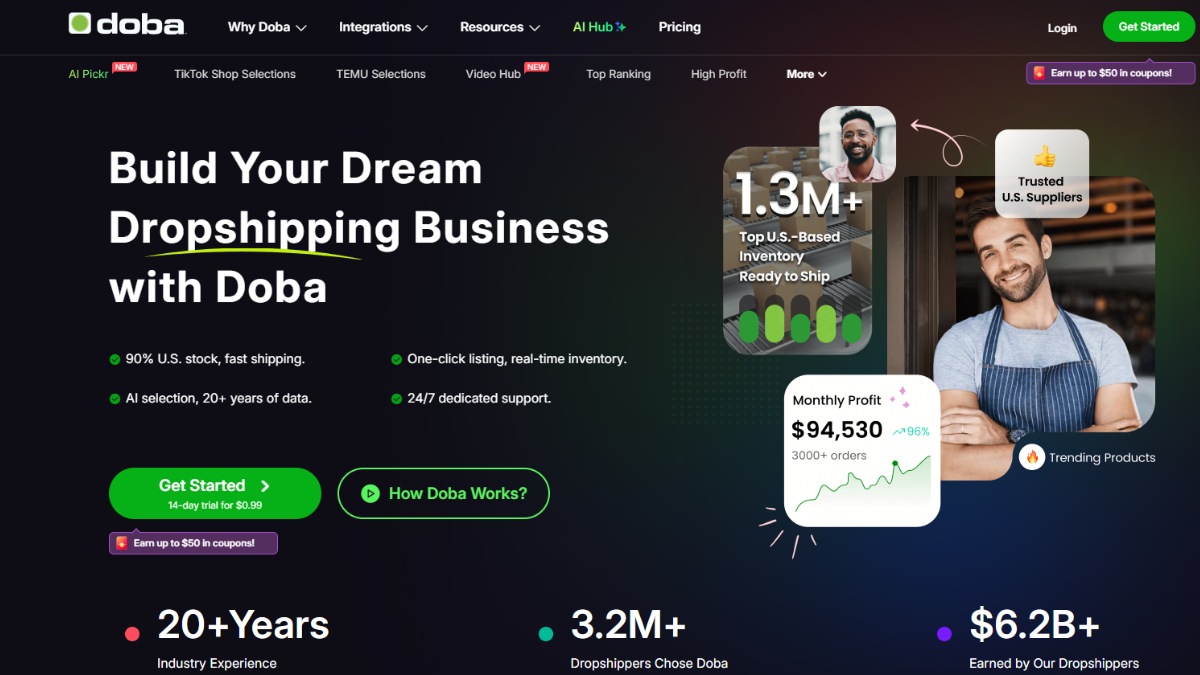
Doba is a dropshipping and wholesale marketplace platform that connects online sellers with a large network of third-party suppliers. Rather than acting as a single supplier, Doba aggregates products from many wholesalers and manufacturers into one centralized system.
Through Doba, sellers can:
-
Access a broad catalog of products across multiple categories
-
Import product listings into their online stores
-
Automatically route customer orders to suppliers
-
Track inventory availability and order status
The platform’s core value lies in coordination and automation, not in product ownership. Doba does not manufacture or ship products itself; instead, it facilitates communication and data flow between sellers and suppliers.
In this Doba review, it is important to view the platform as an operational layer rather than a traditional marketplace like Amazon or eBay.
⚙️ How the Platform Works
Understanding how Doba operates is critical to evaluating whether it fits your business model.
Supplier Network Structure
Doba partners with a wide range of suppliers who list their products within the platform. Each supplier controls pricing, inventory, shipping methods, and fulfillment speed. Doba centralizes this information for sellers but does not control supplier behavior.
Product Discovery and Import
Sellers browse the catalog and select products they want to sell. These products can then be imported into supported eCommerce platforms, where sellers adjust titles, descriptions, and pricing to fit their brand positioning.
Order Automation
When a customer places an order, Doba automatically forwards the order details to the appropriate supplier. This automation reduces manual work and minimizes fulfillment delays.
Inventory and Order Tracking
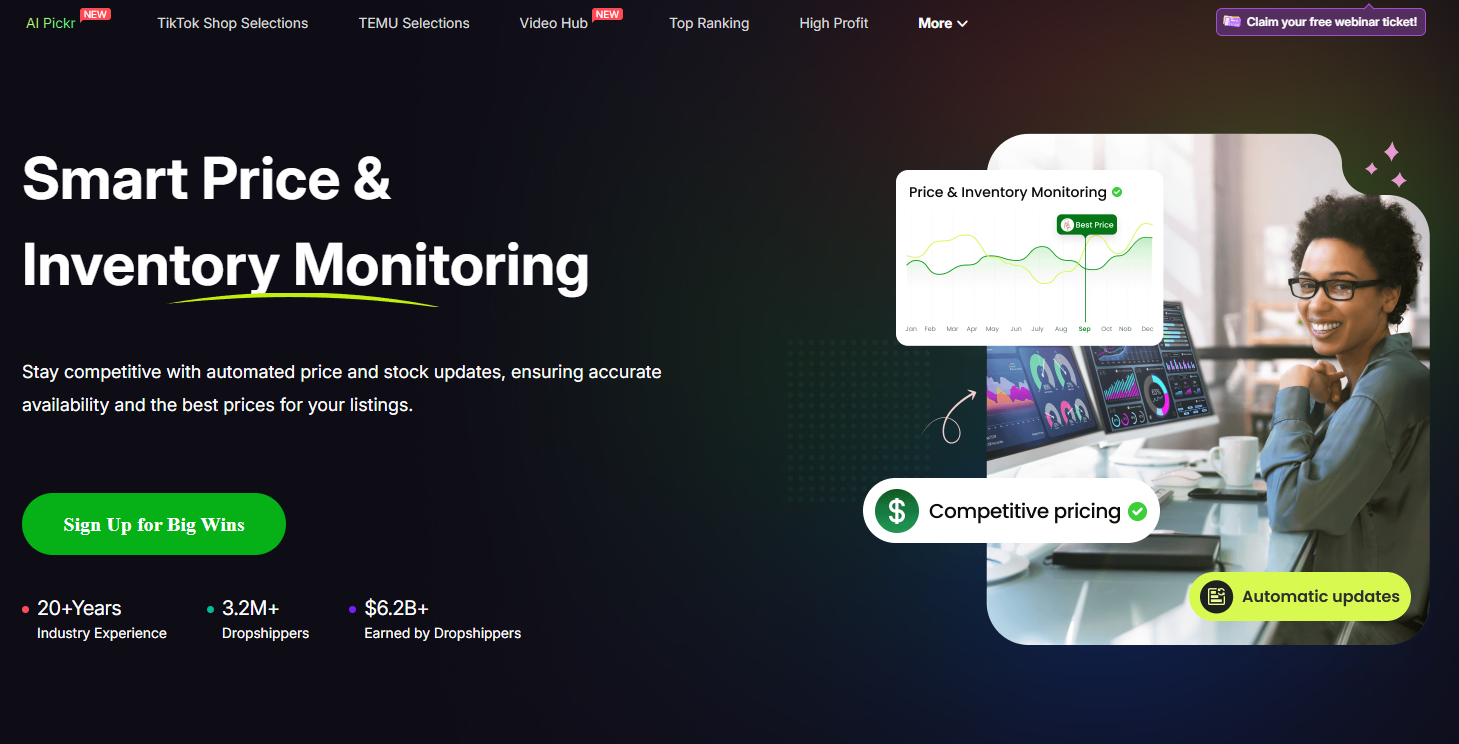
Doba updates inventory levels and order statuses to help sellers avoid overselling and provide customers with accurate delivery information.
From an operational perspective, this Doba review highlights automation as one of the platform’s strongest advantages.
⚙️ Key Features in Detail
Centralized Product Catalog
Doba’s catalog spans multiple product categories, allowing sellers to experiment with different niches without maintaining separate supplier relationships. This flexibility is particularly useful for beginners who are still testing product-market fit.
Automated Order Processing
Order automation reduces the need for manual order forwarding and minimizes the risk of human error. Once properly configured, sellers can handle higher order volumes with less operational overhead.
Inventory Monitoring
Inventory synchronization helps sellers keep product availability aligned with supplier stock levels. While not perfect, this feature reduces the likelihood of selling unavailable products.
Store Integrations
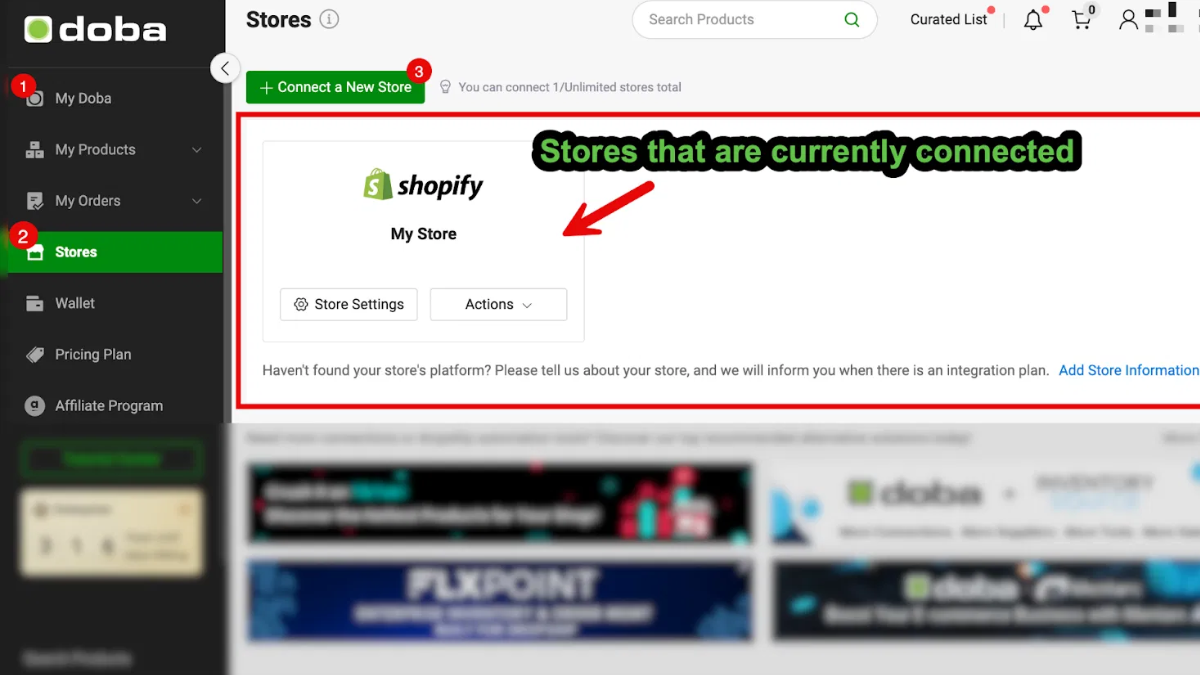
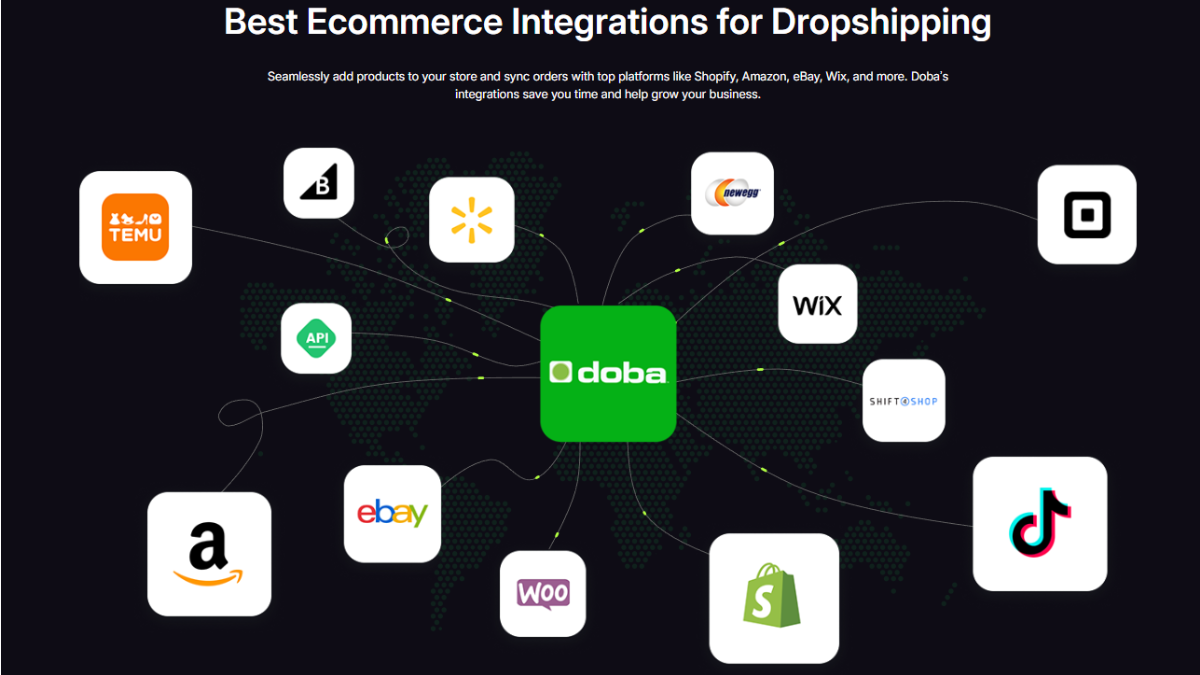
Doba integrates with major eCommerce platforms, enabling smoother product imports and order synchronization. This reduces setup time and simplifies ongoing management.
Beginner-Oriented Workflow
The platform’s interface and workflow are designed with new sellers in mind. While experienced sellers may find the system restrictive, beginners often benefit from the structure.
💰 Pricing and Plans
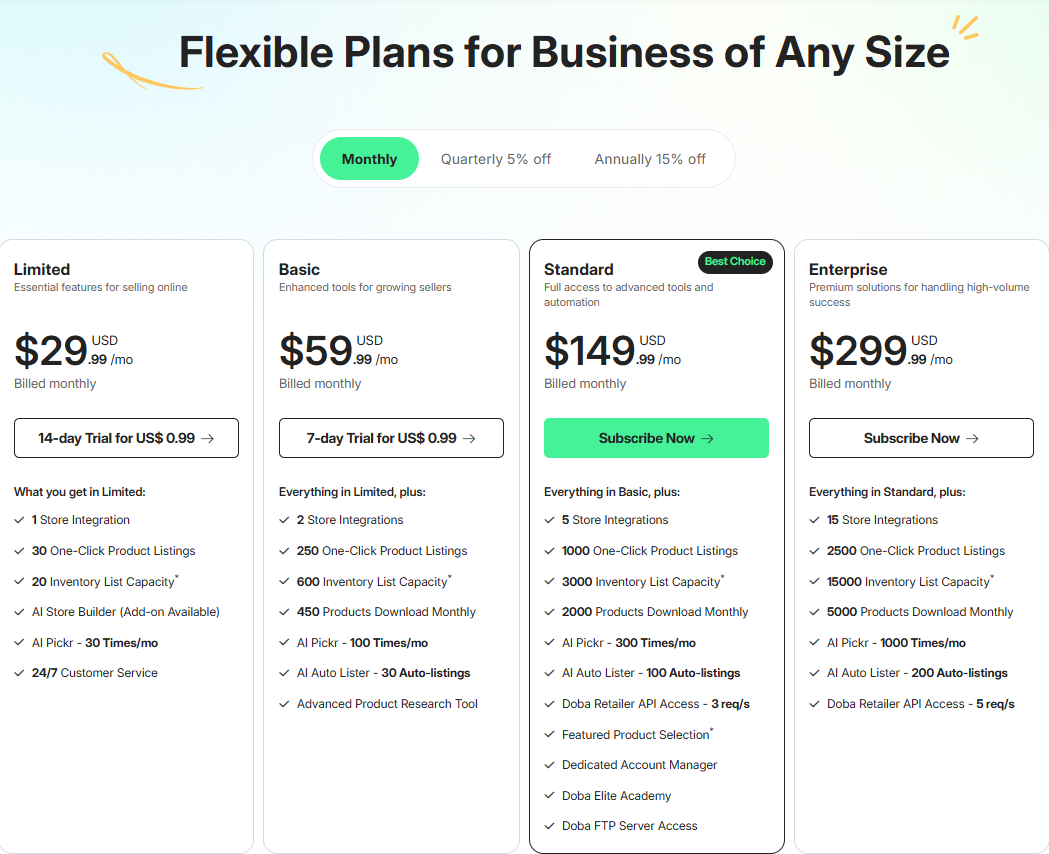
Doba operates on a subscription-based pricing model, which is an important consideration for long-term profitability.
Subscription Structure
Users pay a monthly or annual fee to access Doba’s supplier network and automation tools. Higher-tier plans typically unlock additional features, higher usage limits, and enhanced support.
Cost vs Value
The subscription fee introduces fixed overhead. For sellers with consistent sales volume, this cost may be justified by time savings and reduced operational complexity. For beginners without traction, the monthly fee can be a barrier.
As discussed throughout this Doba review, sellers must carefully evaluate whether expected margins can absorb the subscription cost.
✅ Pros and ❌ Cons
Pros
-
Centralized access to multiple suppliers
-
Automated order routing and inventory updates
-
Reduced manual supplier coordination
-
Beginner-friendly structure and workflow
-
Suitable for small to medium-sized sellers
Cons
-
Monthly subscription required
-
Limited control over branding and packaging
-
Supplier quality varies by product and category
-
Less flexibility than direct supplier relationships
-
Margins can be tight in competitive niches
🎯 Who Is Doba Best For?
Doba is best suited for:
-
Beginner dropshippers who want a guided system
-
Solo entrepreneurs managing limited catalogs
-
Small eCommerce teams prioritizing automation
-
Sellers who value simplicity over customization
It may not be ideal for:
-
High-volume sellers seeking maximum margins
-
Brands that require custom packaging and branding
-
Businesses needing full control over fulfillment
-
Sellers with established supplier relationships
Understanding this distinction is essential when evaluating the platform in any Doba review.
🔄 Doba vs Alternatives
In this Doba review, comparing the platform with alternatives reveals clear trade-offs.
Doba vs Open Marketplaces
Open marketplaces offer flexibility and low entry costs but require manual supplier vetting and coordination. Doba trades flexibility for centralized management and automation.
Doba vs Curated Dropshipping Platforms
Some platforms focus on fewer, higher-quality suppliers. Doba offers broader access but with varying levels of quality and shipping performance.
Strategic Trade-Off
Doba’s value proposition centers on operational simplicity, not on maximum margin optimization or brand differentiation.
🤔 Is Doba Worth It in 2025?
Whether the platform is worth using depends on your business goals. According to this Doba review, Doba remains relevant for sellers who prioritize ease of use and operational efficiency.
However, sellers aiming to build long-term brands with strong differentiation may eventually outgrow the platform and seek more direct supplier relationships.
🏁 Final Verdict
Overall, this Doba review concludes that Doba is still a viable dropshipping solution for specific use cases. It simplifies supplier coordination, automates order processing, and lowers the barrier to entry for new sellers.
While it may not offer the highest margins or the fastest fulfillment, Doba provides structure and automation that can help sellers launch and manage eCommerce businesses more efficiently—provided expectations are aligned with its limitations.
FAQ
Does Doba require inventory upfront?
No. Products are purchased only after a customer places an order.
Is Doba suitable for beginners?
Yes. This Doba review confirms that the platform is beginner-friendly.
Does Doba handle shipping?
Shipping is handled by individual suppliers, not by Doba directly.
Can Doba support brand building?
Branding options are limited and depend on supplier capabilities.
Is Doba worth using in 2025 according to this Doba review?
It can be worthwhile for beginners and small sellers focused on automation.
🔗 Want more in-depth eCommerce platform reviews?
You can explore additional long-form, unbiased software and eCommerce reviews at
👉Esapplication.com