
This in-depth Lindy AI review explores features, pricing, use cases, pros & cons, and alternatives to help you decide if Lindy AI is worth using in .
Introduction

Automation tools are no longer just about connecting apps with simple triggers. As businesses grow more complex, so do their workflows—requiring tools that can reason, adapt, and operate with a level of autonomy. This shift has led to the rise of AI agents, and Lindy AI positions itself at the center of this trend.
Lindy AI is a no-code AI agent platform designed to help teams automate knowledge-based and operational tasks without relying on engineers or rigid workflows. Instead of manually building complex automations, users can deploy AI agents that behave more like digital employees—capable of handling emails, meetings, CRM updates, research, and multi-step processes.
In this long-form Lindy AI review, we’ll take a deep, objective look at how the platform works, its strengths and limitations, pricing considerations, real-world use cases, and how it compares to traditional automation tools.
🔍 What Is Lindy AI?
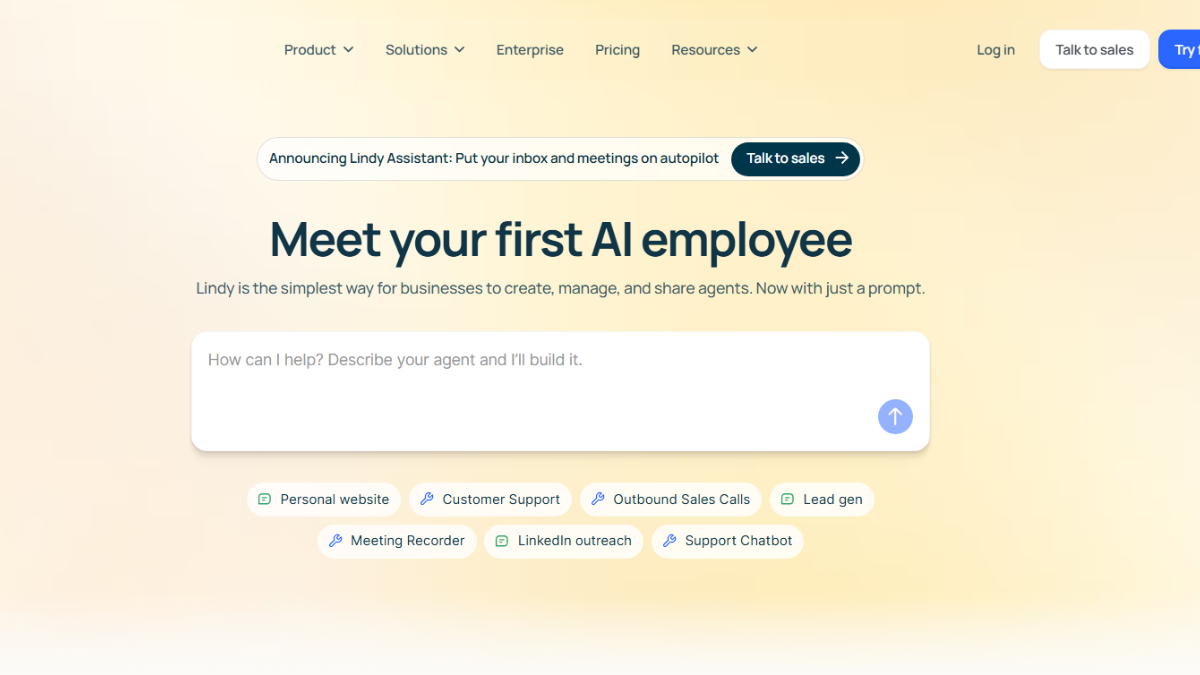
Lindy AI is a platform that allows users to create autonomous AI agents using natural language instructions rather than code. These agents are designed to perform tasks that typically require human reasoning, such as understanding context, making decisions, and executing multiple steps across different tools.
Unlike classic automation platforms that rely on predefined “if-this-then-that” logic, Lindy emphasizes agent-based automation. Each agent can observe inputs (emails, events, data), reason about what to do next, and then take appropriate actions.
At a high level, Lindy AI aims to:
-
Reduce repetitive knowledge work
-
Replace brittle automation workflows
-
Enable non-technical teams to deploy advanced automation
This makes Lindy particularly interesting for teams that have outgrown basic automation but are not ready to build custom AI systems in-house.
⚙️ How Lindy AI Works: Core Concepts Explained
To understand Lindy AI properly, it’s important to look at how its underlying model differs from traditional automation tools.
AI Agents Instead of Workflows
In Lindy, the primary unit is an agent, not a workflow. An agent is given a goal or responsibility—such as managing meeting notes or handling inbound leads—and operates continuously within that scope.
Natural Language Instructions
Instead of configuring dozens of rules, users describe what they want the agent to do in plain English. The system interprets these instructions and determines how to act across different scenarios.
Context Awareness
Agents can retain context over time. For example, an agent handling emails can recognize ongoing conversations, priorities, and follow-up requirements rather than treating each message as a standalone event.
Multi-Step Execution
Lindy agents are capable of chaining actions together—reading data, making decisions, updating records, and notifying users—without requiring each step to be explicitly defined.
This architecture is what separates Lindy from most no-code automation platforms.
⚙️ Key Features of Lindy AI
No-Code Agent Builder
Lindy’s no-code approach is one of its biggest advantages. Non-technical users can deploy agents by describing tasks rather than designing complex logic flows. This significantly lowers the barrier to advanced automation.
Pre-Built Agent Templates
The platform offers templates for common business roles and tasks, such as:
-
Meeting assistants
-
Sales follow-up agents
-
Inbox management
-
CRM updates
These templates act as starting points and can be customized further.
Integrations With Business Tools
Lindy integrates with widely used productivity and business platforms, enabling agents to read and write data across systems. This allows automation to span multiple tools instead of being siloed.
Autonomous Decision-Making
Rather than following rigid rules, agents can decide what action makes sense based on context. This is especially useful for tasks like prioritization, follow-ups, or summarization.
Continuous Operation
Once deployed, agents can operate continuously, reducing the need for constant human supervision while still allowing manual intervention when necessary.
💰 Pricing and Plans: What Should You Expect?
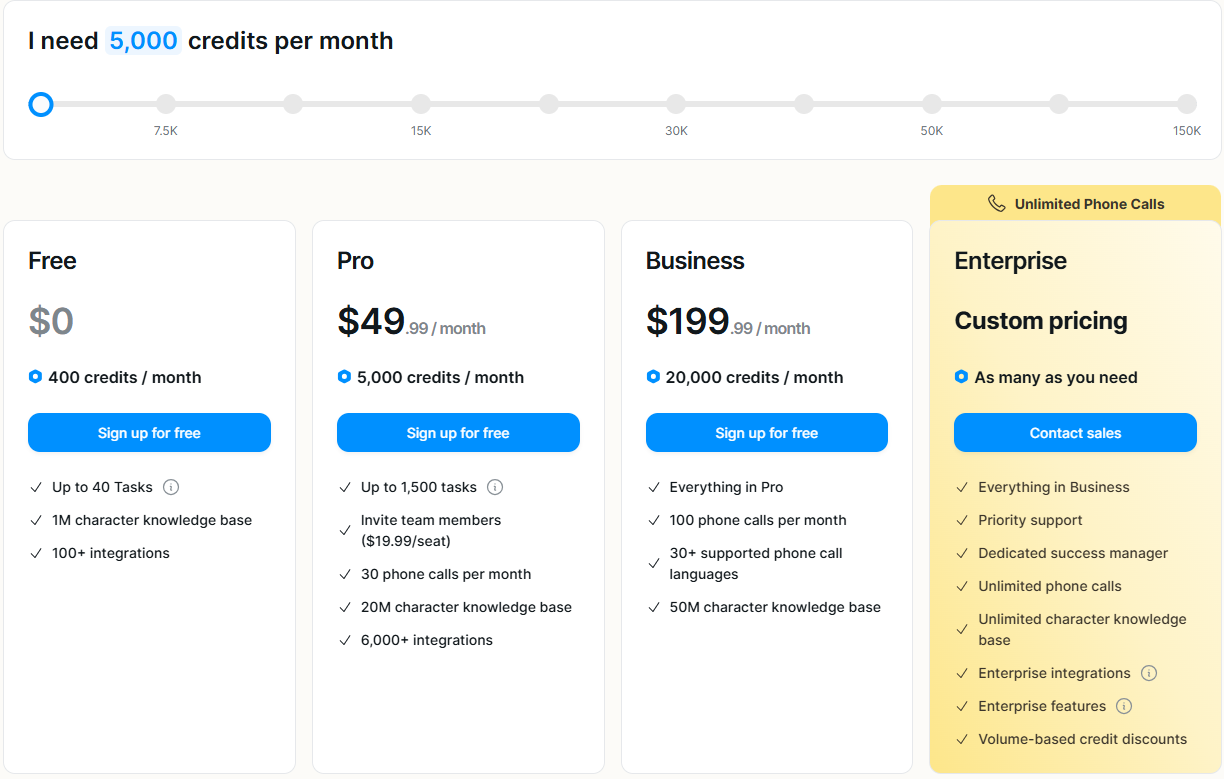
Lindy AI uses a credit-based pricing model, which is common among AI-driven platforms. Users consume credits based on how often agents perform tasks and how complex those tasks are.
Free Tier
The free plan allows users to experiment with basic agents and understand how the platform works. It’s suitable for testing but not for sustained production use.
Paid Plans
Paid plans increase the number of credits available per month and unlock higher usage limits. Pricing scales with:
-
Task volume
-
Agent complexity
-
Frequency of execution
Cost Considerations
While Lindy can replace hours of manual work, costs can rise quickly for teams running many agents continuously. This makes usage monitoring an important part of adoption.
Because pricing details may change, users should always verify current plans on the official website.
✅ Pros and ❌ Cons of Lindy AI
Pros
-
No-code design accessible to non-technical teams
-
Agent-based automation enables complex workflows
-
Reduces reliance on brittle, rule-based systems
-
Suitable for knowledge work, not just data syncing
Cons
-
Credit-based pricing can become expensive at scale
-
Requires experimentation to fine-tune agent behavior
-
Overkill for very simple automation needs
-
Less transparent predictability compared to rigid workflows
🎯 Who Is Lindy AI Best For?
Lindy AI is not for everyone. It shines most in scenarios where automation requires reasoning rather than simple triggers.
Best-fit users include:
-
Operations teams managing internal processes
-
Sales teams automating follow-ups and CRM updates
-
Customer support teams handling repetitive inquiries
-
Founders and managers looking to delegate routine knowledge work
-
Non-technical teams that need advanced automation
Teams that only need basic app-to-app automation may find simpler tools more cost-effective.
🔄 Lindy AI vs Traditional Automation Tools
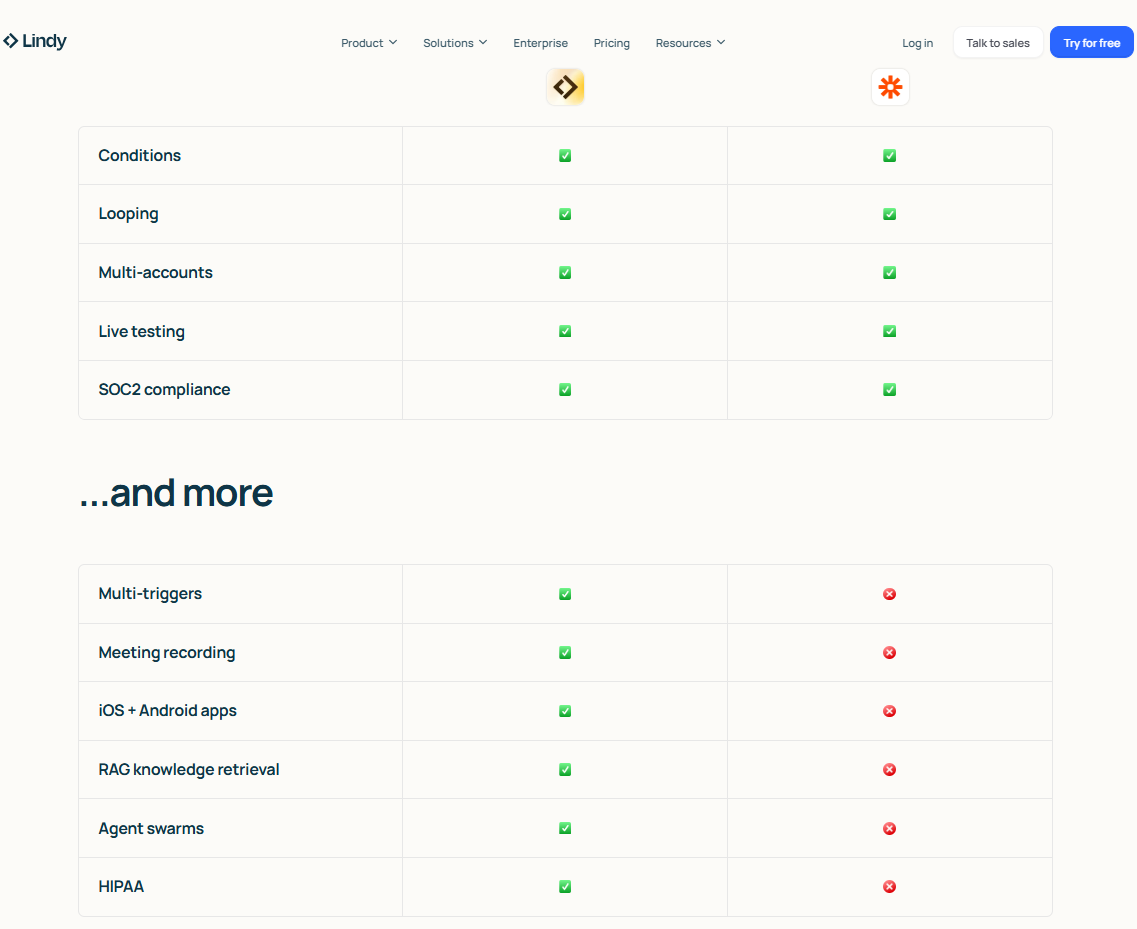
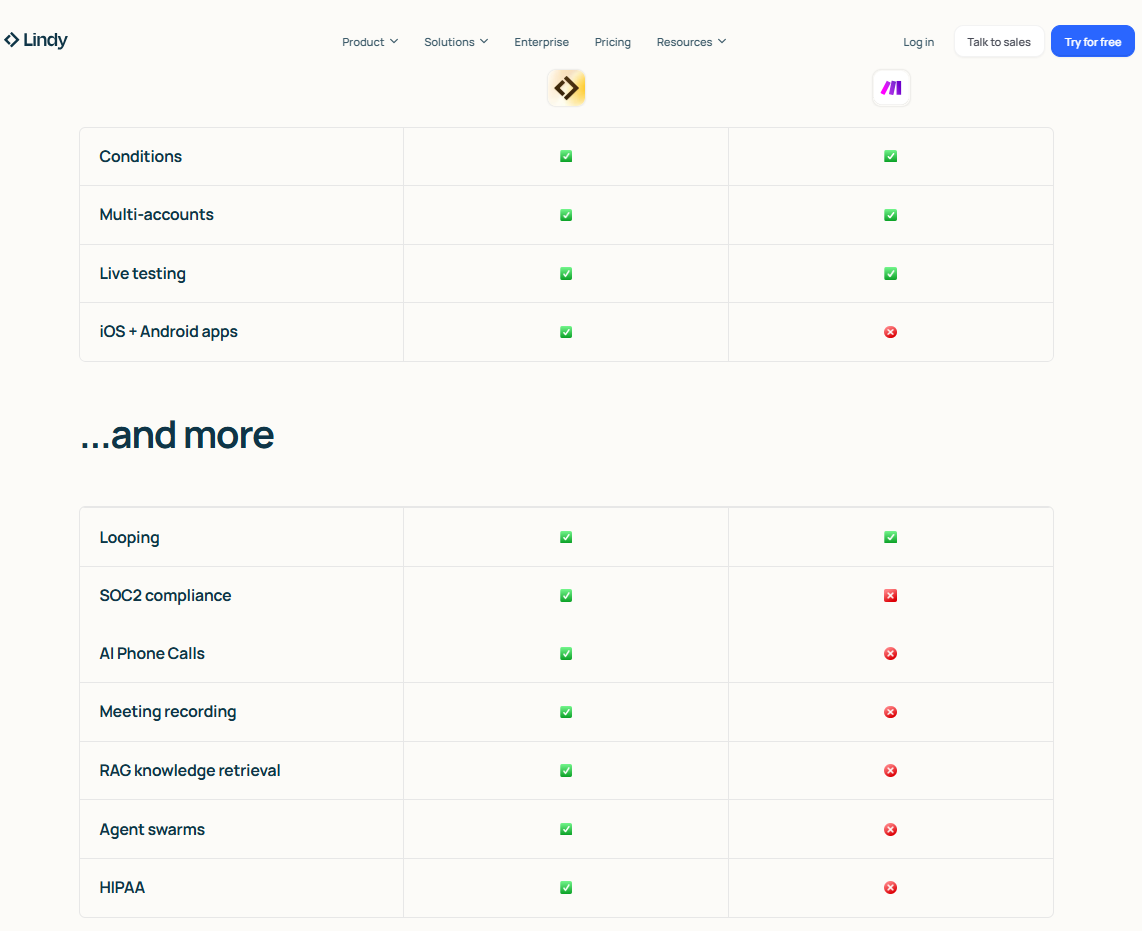
When compared to tools like Zapier or Make, Lindy AI takes a fundamentally different approach.
Traditional automation tools:
-
Rely on explicit triggers and actions
-
Are predictable but rigid
-
Work best for simple, linear workflows
Lindy AI:
-
Focuses on autonomous agents
-
Handles ambiguity and context better
-
Excels at multi-step, decision-driven tasks
The trade-off is complexity and cost. Lindy offers more power but requires thoughtful implementation to justify its pricing.
🤔 Is Lindy AI Worth It in 2026?
Lindy AI is worth considering if your workflows involve:
-
Repetitive knowledge work
-
Decision-making based on context
-
Tasks that change over time
For teams that can replace manual effort with well-designed agents, the productivity gains can outweigh the costs. However, for basic automation needs, simpler tools may provide better ROI.
🏁 Final Verdict
Lindy AI represents a new generation of automation platforms built around AI agents rather than static workflows. Its no-code approach makes advanced automation accessible to non-technical teams, while its agent-based model enables tasks that traditional tools struggle with.
That said, Lindy is not a universal solution. Its value depends heavily on how complex your workflows are and how effectively you manage usage costs. For teams ready to embrace AI-driven automation, Lindy AI can be a powerful addition to their tool stack.
FAQ
Does Lindy AI have a free plan?
Yes, Lindy AI offers a free tier suitable for testing basic functionality.
Is Lindy AI suitable for non-technical users?
Yes, the platform is designed to be used without coding experience.
Can Lindy AI replace human workers?
It can automate tasks, not judgment-heavy roles. It’s best viewed as a productivity multiplier.
Is Lindy AI better than Zapier or Make?
It depends on use case. Lindy excels at complex, context-aware automation, while Zapier and Make are better for simple workflows.
🔗 Want more in-depth software reviews?
You can find additional long-form, unbiased reviews and comparisons on https://esapplication.com.