
Building a dynamic WordPress website in 2026 is no longer about picking “a page builder.” Modern sites behave like platforms: they store structured data, display it dynamically, allow filtering and submissions, integrate ecommerce, and scale to hundreds or thousands of pages without breaking UX or SEO.
This article ranks the best dynamic WordPress plugin suites and builders, based on architecture depth, scalability, usability, performance, ecosystem maturity, and long-term ROI.
👉 Crocoblock takes the #1 position because it delivers the most complete, no-code/low-code ecosystem for advanced, data-driven WordPress projects.
How This Ranking Was Determined
Each platform below is evaluated across six practical dimensions:
-
Data Modeling Power – Custom post types, fields, and relationships
-
Dynamic Display & Templates – Listings, archives, single templates at scale
-
Interactivity – Filters, forms, submissions, user flows
-
Ecosystem Cohesion – How well tools work together (vs. plugin sprawl)
-
Learning Curve vs. Payoff – Time to productivity and maintainability
-
ROI – Cost vs. outcomes for businesses, agencies, and affiliates
🥇 #1. Crocoblock
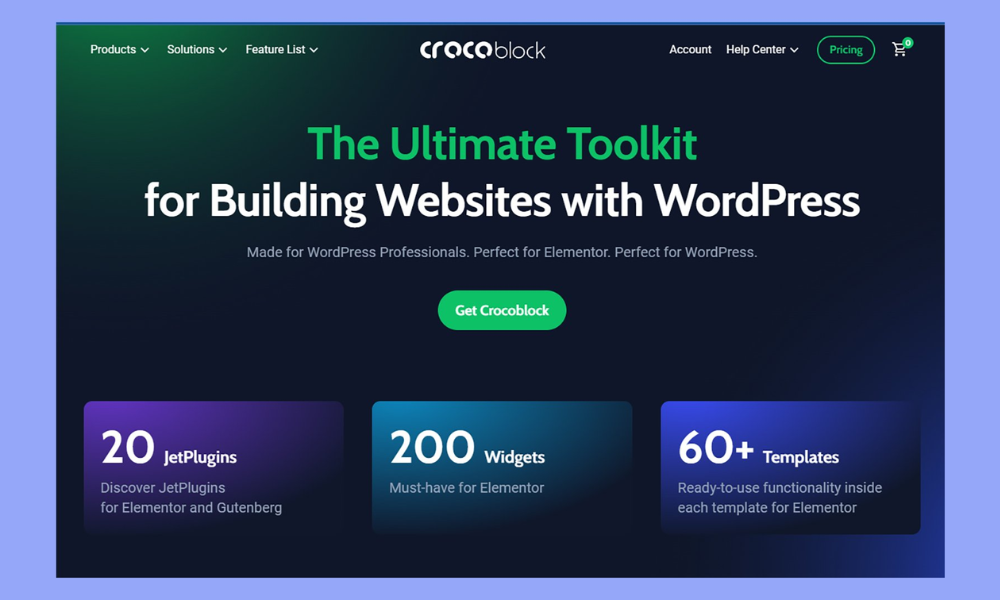
Best Overall Dynamic WordPress Ecosystem (No-Code / Low-Code)
Best for: Agencies, advanced builders, directories, marketplaces, comparison sites, complex WooCommerce builds
Crocoblock ranks #1 because it was designed from the ground up as an ecosystem, not as a single plugin trying to do everything. Its JetPlugins are modular but tightly integrated, which means you can model data, display it dynamically, filter it intelligently, and accept submissions—all within one coherent architecture.
Core Strengths
1) JetEngine: Structured Data at Scale
JetEngine is the backbone. It enables:
-
Custom post types (CPTs)
-
Custom fields (meta)
-
Relationships between content (posts ↔ users ↔ taxonomies)
-
Dynamic listings and templates
This turns WordPress into a database-like system, which is essential for directories, marketplaces, and review hubs.
2) Dynamic Templates & Listings
Build once, reuse everywhere:
-
Listing cards
-
Archive templates
-
Single templates
-
Conditional dynamic fields
This is critical for SEO scalability—you can publish hundreds of pages from one template without thin content.
3) Advanced Filtering & Search
With JetSmartFilters:
-
AJAX filters
-
Multi-criteria filtering (ranges, taxonomies, meta)
-
Better UX for high-intent users
For affiliate and comparison sites, filtering directly impacts conversion rates.
4) Forms as Data Pipelines
JetFormBuilder goes beyond contact forms:
-
Front-end submissions
-
Multi-step logic
-
User dashboards
-
Data flows into CPTs
Forms become part of your site’s operating system.
5) WooCommerce Deep Customization
JetWooBuilder allows:
-
Custom product and archive layouts
-
Conversion-focused sections
-
Flexible merchandising
Trade-offs
-
Learning curve (you must think in data models)
-
Overkill for simple brochure sites
Verdict
If your website behaves like a platform, not just pages, Crocoblock is the strongest all-in-one solution available in 2026.
🥈 #2. Elementor Pro
Best Visual Builder with Dynamic Capabilities
Best for: Designers, marketers, brand-first sites, landing pages, many WooCommerce stores
Elementor Pro is the visual design leader in the WordPress ecosystem. It excels at speed, polish, and accessibility—making it ideal for teams that prioritize UI/UX and fast iteration.
Where Elementor Pro Excels
-
Intuitive visual editor
-
Theme Builder for headers/footers/templates
-
Dynamic tags for pulling meta data
-
Built-in forms, popups, and WooCommerce widgets
-
Massive community and third-party add-ons
Where It Falls Short vs. Crocoblock
-
Shallow data relationships
-
Limited advanced listings without add-ons
-
Not designed for database-like sites
Verdict
Elementor Pro is exceptional for design-first projects. For advanced data modeling, it works best paired with Crocoblock.
🥉 #3. Toolset
Best Logic-Heavy Dynamic Suite (Legacy Power)
Best for: Power users who want strong logic without heavy custom coding
Toolset is the closest philosophical competitor to Crocoblock. It offers CPTs, fields, relationships, and views—covering the same core problems—but with a more traditional workflow.
Strengths
-
Robust relationships and views
-
Strong logical modeling
-
Mature, battle-tested feature set
Limitations
-
UI feels dated
-
Slower design iteration
-
Steeper learning curve for non-technical users
Verdict
Toolset is powerful, but Crocoblock has surpassed it in usability, modern workflows, and ecosystem cohesion.
#4. Advanced Custom Fields (ACF)

Best Developer-First Dynamic Framework
Best for: Developers, custom themes, bespoke projects
ACF is the gold standard for developers who want full control. It enables clean data modeling but requires PHP and custom templates.
Strengths
-
Maximum flexibility
-
Clean architecture
-
Ideal for bespoke builds
Limitations
-
Requires coding
-
Slower iteration
-
Higher long-term maintenance
Verdict
ACF is unbeatable for dev-led projects. For no-code/low-code teams, Crocoblock delivers faster ROI.
#5. Bricks Builder
Best Performance-Focused Builder
Best for: Advanced users prioritizing performance and clean output
Bricks is a modern builder/theme hybrid known for speed and clean code. Its dynamic features are improving rapidly, but it lacks the breadth of an ecosystem.
Strengths
-
Excellent performance
-
Clean HTML/CSS
-
Developer-friendly
Limitations
-
Smaller ecosystem
-
Fewer integrated tools
-
Often paired with other plugins for full functionality
Verdict
Great for performance-critical sites. Combine with Crocoblock plugins for full dynamic power.
🧭 Expanded Comparison Table
| Rank | Platform | Data Modeling | Dynamic Templates | Filters & Forms | Ecosystem Depth | Best Use Case |
|---|---|---|---|---|---|---|
| 🥇 | Crocoblock | ✅✅ | ✅✅ | ✅✅ | ✅✅ | Platforms, directories, agencies |
| 🥈 | Elementor Pro | ⚠️ | ✅ | ⚠️ | ⚠️ | Design-first sites |
| 🥉 | Toolset | ✅ | ✅ | ⚠️ | ⚠️ | Logic-heavy builds |
| #4 | ACF | ✅ | ⚠️ | ❌ | ⚠️ | Developer projects |
| #5 | Bricks | ⚠️ | ⚠️ | ⚠️ | ⚠️ | Performance builds |
Final Verdict: The “Best” Choice in 2026
-
Choose Crocoblock if you’re building dynamic, scalable WordPress platforms and want a cohesive, no-code/low-code ecosystem.
-
Choose Elementor Pro for fast, polished, design-first sites.
-
Choose Toolset or ACF if your team is developer-heavy.
-
Choose Bricks if performance is your top priority.
👉 Overall Winner: Crocoblock — the most complete solution for dynamic WordPress websites in 2026.
If you’re building a dynamic WordPress website that requires custom data, advanced filtering, or scalable templates, Crocoblock is absolutely worth trying.
Instead of relying on dozens of disconnected plugins or custom code, Crocoblock gives you a unified ecosystem designed for serious WordPress projects.
👉 Try Crocoblock today and see how much easier building dynamic sites can be.
👉 Visit my site for more reviews and comparisons
If you want more in-depth reviews, tool comparisons, and practical site-building strategies, visit https://esapplication.com.