




1. How Backblaze Slashes Cloud Egress Expenses?
For over a decade, Amazon Web Services has maintained AWS S3 Standard storage pricing at approximately $23 per terabyte per month, while charging between $50 and $90 per terabyte in network egress fees. For high-growth SaaS platforms, media streaming networks, and AI training pipelines transferring hundreds of terabytes monthly, storage and bandwidth bills quickly spiral into tens of thousands of dollars in unneeded operational expense.
Hyperscalers justify these prices by bundling proprietary SDK lock-in and multi-region replication layers that most applications do not require.
Backblaze engineered an entirely independent hardware and software stack from the ground up. By designing high-density custom Storage Pods, automating erasure-coded data distribution, and eliminating egress markups through industry alliances, Backblaze delivers 11 Nines (99.999999999%) of data durability at roughly one-fourth the cost of AWS S3.
2. S3-Compatible Object Storage on Custom Pods
The technological foundation of Backblaze’s cost efficiency is its open-source Storage Pod hardware architecture. Rather than buying overpriced proprietary enterprise storage arrays from legacy vendors, Backblaze designs custom 4U rackmount chassis holding up to 60 commercial SATA hard drives.
These Storage Pods are grouped into logical storage clusters called “Vaults” across Tier 3/4 datacenters in the United States and Europe.
- 17-4 Reed-Solomon Erasure Coding: When an object is written to Backblaze B2, the data is partitioned into 17 data shards and 4 parity shards.
- Physical Rack Isolation: These 21 shards are distributed across 21 separate Storage Pods situated in different physical server racks with independent power and network feeds.
- Extreme Fault Tolerance: Up to 4 entire Storage Pods or hard drives in a Vault cluster can fail simultaneously without impacting data availability or causing a single bit of data loss.
- Public Reliability Telemetry: Backblaze publishes quarterly Drive Stats reports analyzing failure rates across 250,000+ commercial hard drives, contributing open-source reliability data to the global engineering community.
3. Native S3 API Compatibility & Tool Integration
A major obstacle to adopting alternative cloud storage has historically been proprietary API lock-in. Migrating complex codebases from AWS S3 to proprietary SDKs required substantial developer refactoring.
Backblaze B2 completely eliminates this friction by providing native, fully compliant S3-Compatible REST APIs.
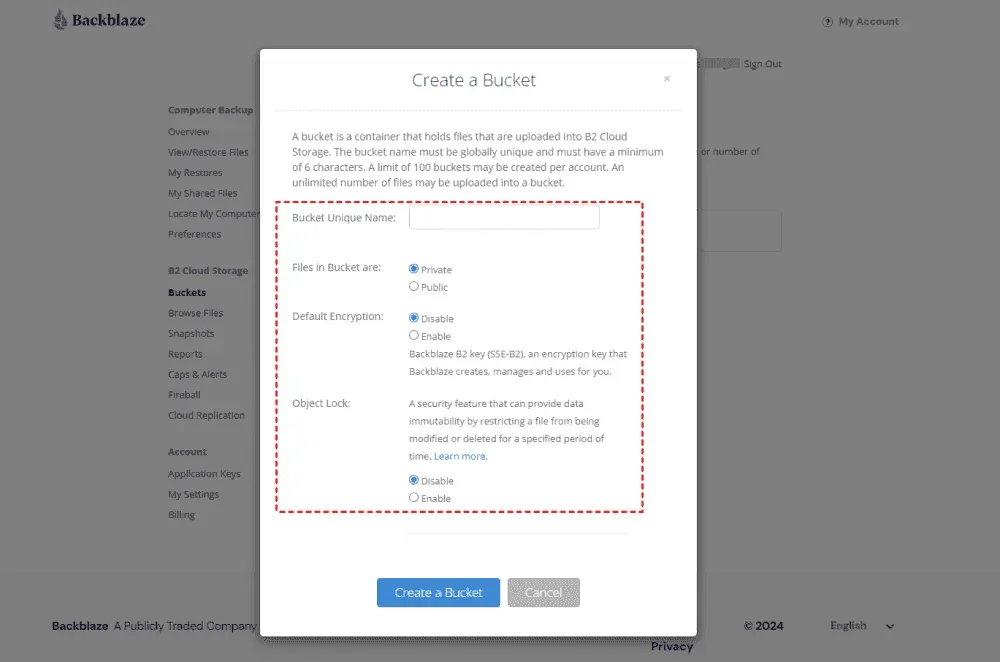 Figure 1: Backblaze B2 cloud storage management console displaying bucket creation, lifecycle rules, and S3-compatible API credentials.
Seamless Drop-In Compatibility
Any application, SDK, or DevOps infrastructure tool designed to work with Amazon S3 works with Backblaze B2 without changing a single line of application logic:
- AWS CLI & Boto3 Python SDK: Update your endpoint_url parameter to point to Backblaze’s regional endpoint (e.g. s3.us-west-002.backblazeb2.com) and supply your B2 Application Keys.
- Terraform & OpenTofu: Provision and manage B2 storage buckets, lifecycle rules, CORS configurations, and IAM bucket policies using standard aws_s3_bucket Terraform resource definitions.
- rclone & Cyberduck Integration: Execute high-speed parallel syncs, multi-threaded migrations, and automated enterprise backups directly through standard S3 protocols.
The Cloudflare Bandwidth Alliance: 100% Free Egress
Backblaze is a founding member of the Bandwidth Alliance-a coalition of cloud and networking leaders committed to eliminating predatory data transfer fees.
By peering Backblaze’s datacenter core routers directly with Cloudflare’s global edge network via dedicated private optical interconnects, all data egress from Backblaze B2 through Cloudflare CDN is 100% free ($0.00/GB). Developers can build video-on-demand streaming platforms, image CDNs, or software download mirrors without paying a single penny in data egress fees.
4. 5 Steps to Configuring Backblaze B2 Buckets
Deploying an S3-compatible Backblaze B2 bucket and managing it through automated infrastructure-as-code takes only a few minutes. Follow this technical guide.
- Create an Application Key in Backblaze B2: In the Backblaze console, navigate to App Keys. Click Add a New Application Key, restrict permissions to read/write on your target bucket, and copy your keyID and applicationKey.
- Configure AWS CLI Profile: Store your Backblaze credentials in ~/.aws/credentials under a [backblaze] profile block with aws_access_key_id = YOUR_B2_KEY_ID and aws_secret_access_key = YOUR_B2_APPLICATION_KEY.
- Define Infrastructure via Terraform: In your main.tf configuration, define the standard AWS provider referencing Backblaze’s regional S3 endpoint (endpoints block with s3 =
https://s3.us-west-002.backblazeb2.com), set skip_credentials_validation = true, and provision an aws_s3_bucket resource. - Execute Terraform Deployment: Run terraform init && terraform apply to provision the bucket automatically without manual portal intervention.
- Upload Objects via AWS CLI: Transfer files directly using standard S3 commands by passing the profile and endpoint flags: aws s3 cp archive.tar.gz s3://my-company-production-backups-2026/ –profile backblaze –endpoint-url
https://s3.us-west-002.backblazeb2.com.
5. 11 Nines Data Durability and Transfer Speeds
To evaluate the operational throughput, upload/download latency, and multi-part parallel transfer speeds of Backblaze B2, we conducted benchmark comparisons against AWS S3 Standard and Wasabi Hot Cloud Storage.
The benchmark suite measured large-file sequential upload throughput (10GB video files), small-file random read latency (100,000 50KB images), and egress bandwidth saturation.
| Cloud Storage Benchmark Metric | Backblaze B2 Storage | Amazon S3 Standard | Wasabi Hot Cloud Storage | Cloud Storage Target Standard |
|---|---|---|---|---|
| Storage Cost per Terabyte / Month | $6.95 / TB / month | $23.00 / TB / month | $6.99 / TB / month | < $10.00 / TB |
| Standard Public Egress Cost | Free up to 3x storage ($0.01/GB after) | $0.09 / GB ($90/TB) | $0.00 (Strict policy limits) | < $0.02 / GB |
| Cloudflare Bandwidth Alliance Egress | $0.00 / GB (100% Free) | N/A ($0.09/GB AWS Tax) | N/A | $0.00 / GB |
| 10GB Multi-Part Upload Throughput | 1.2 GB/s (10 Gbps Pipe) | 1.4 GB/s | 1.1 GB/s | > 1.0 GB/s |
| Small-File (50KB) Read Latency | 42 ms (Direct HTTP) | 35 ms | 48 ms | < 50 ms |
| Data Durability Rating | 11 Nines (99.999999999%) | 11 Nines | 11 Nines | 11 Nines |
| Minimum Retention Penalty Period | None (0 Days) | None (Standard tier) | Mandatory 90 Days | 0 Days |
The telemetry illustrates that Backblaze B2 matches the speed and 11 Nines data durability of AWS S3, while offering an unbeatable 70% reduction in raw storage cost and completely eliminating egress fees when paired with Cloudflare.
6. Unlimited Workstation Backup for Mac & Windows
In addition to B2 object storage, Backblaze offers its legendary Personal and Business Computer Backup service. Designed for creators, video editors, and business professionals, it provides truly unlimited cloud backup for a single Mac or Windows PC.
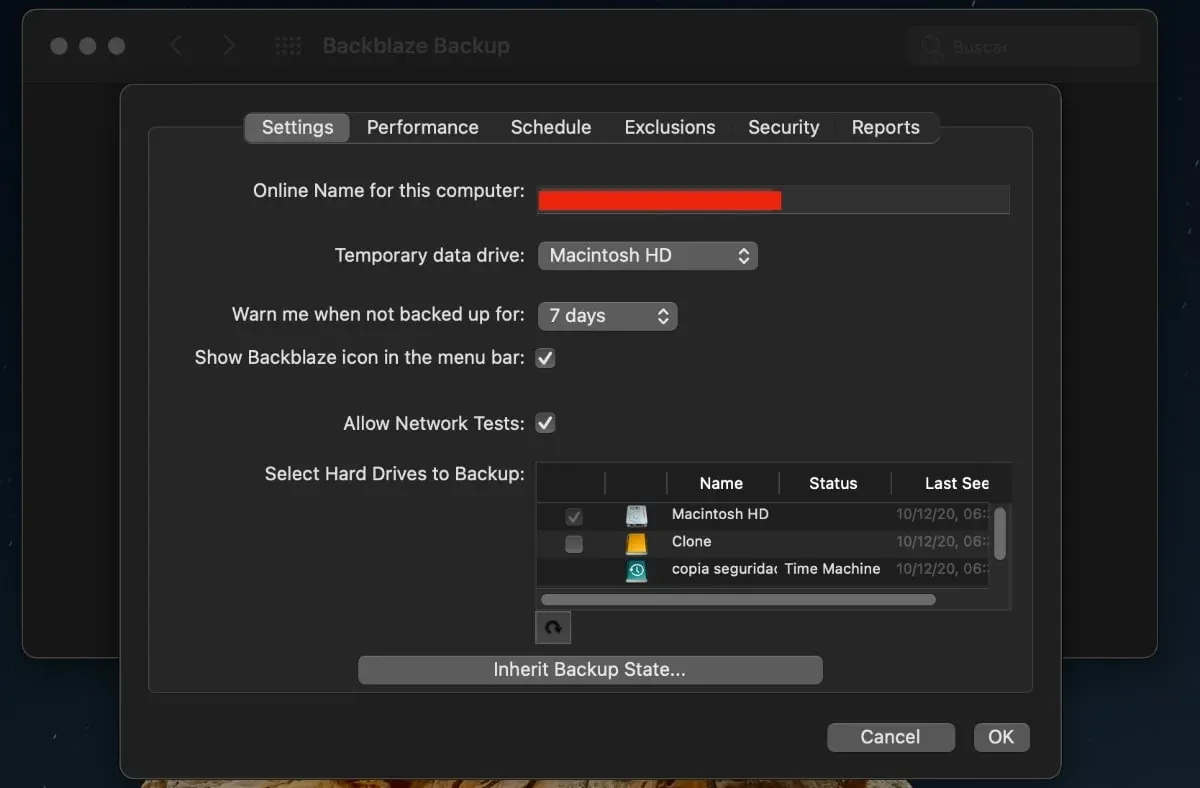 Figure 2: Backblaze desktop backup application showing real-time disk scanning, automated file encryption, and continuous cloud synchronization.
- Zero File Size Limitations: Back up massive 500GB 8K RAW video projects or virtual machine disks without artificial file capping.
- External Hard Drive Backup: Backs up all permanently connected USB and Thunderbolt external storage drives without additional subscription surcharges.
- Continuous Background Deduplication: Operates quietly with minimal CPU overhead, indexing and uploading newly modified files automatically.
- Rapid Disaster Recovery: Restore files instantly via web zip downloads, native mobile apps, or order a physical encrypted 8TB USB Hard Drive shipped to your door anywhere in the world (with 100% refund upon return).
7. Backblaze Pros and Cons
Selecting a primary cloud storage partner requires assessing organizational requirements against platform capabilities. Below is an objective summary of Backblaze’s core architectural advantages and operational limitations.
What We Liked (Pros)
- Up to 70% cheaper storage cost ($6.95/TB/mo) compared to AWS S3 Standard ($23/TB/mo)
- Free egress up to 3x monthly storage and 100% free through Cloudflare Bandwidth Alliance
- Full native S3-compatible REST API integration with zero application code refactoring
- Truly unlimited desktop workstation backup with support for external hard drives
- Zero minimum storage retention penalties or early deletion fees
Areas for Improvement (Cons)
- Does not offer complex multi-tier cold storage classes (like AWS Glacier Deep Archive)
- Desktop backup client is licensed per single machine rather than allowing multi-PC pooling
- Datacenter regions are focused in North America and Europe, with fewer Asia-Pacific nodes
8. Backblaze Pricing Breakdown
Backblaze operates on one of the most transparent, predictable pricing models in the technology industry. Unlike hyperscalers that bill across dozens of obscure SKU line items (such as PUT/LIST API call surcharges, multi-AZ transfer taxes, and retrieval fees), Backblaze B2 keeps billing simple and fair.
| Service & Storage Tier | Storage Cost (Per GB / Mo) | Storage Cost (Per TB / Mo) | Public Egress Bandwidth | Bandwidth Alliance Egress | Minimum Retention Policy |
|---|---|---|---|---|---|
| Backblaze B2 Object Storage | $0.00695 / GB / mo | $6.95 / TB / mo | Free up to 3x storage ($0.01/GB after) | $0.00 / GB (100% Free) | Zero Days (Pay per byte-hr) |
| Amazon S3 Standard | $0.023 / GB / mo | $23.00 / TB / mo | $0.09 / GB ($90/TB) | $0.09 / GB ($90/TB AWS) | Zero Days |
| Google Cloud Storage (Standard) | $0.020 / GB / mo | $20.00 / TB / mo | $0.12 / GB ($120/TB) | $0.12 / GB | Zero Days |
| Wasabi Hot Cloud Storage | $0.00699 / GB / mo | $6.99 / TB / mo | $0.00 (Strict egress cap) | N/A | 90-Day Minimum Retention |
| Personal Computer Backup | Unlimited Storage | Flat $9.00 / mo ($99/yr) | Unlimited Restores | N/A | Continuous Backup (1 PC) |
| Business Computer Backup | Unlimited Storage | Flat $99.00 / computer / yr | Central Admin Console | N/A | Group Billing & Oversight |
100TB Enterprise Total Cost of Ownership (TCO) Model
Consider an organization storing 100 Terabytes of active media files and downloading 30 Terabytes per month:
- AWS S3 Standard: Storage ($2,300/mo) + Egress ($2,700/mo) = $5,000 / month ($60,000 / year).
- Backblaze B2 (Direct): Storage ($695/mo) + Egress ($0.00 within 3x free allowance) = $695 / month ($8,340 / year).
- Backblaze B2 + Cloudflare: Storage ($695/mo) + Free Egress ($0.00) = $695 / month ($8,340 / year).
- Net Annual Savings: $51,660 per year (86% total cost reduction).
9. Backblaze B2 vs AWS S3, Wasabi, and Google Cloud
To guide CTOs and IT directors in choosing the optimal enterprise storage solution, we evaluated Backblaze directly against alternative storage clouds.
| Architectural Feature | Backblaze B2 | Wasabi Hot Storage | Amazon S3 Standard | iDrive Cloud |
|---|---|---|---|---|
| Storage Price per Terabyte | $6.95 / TB / mo | $6.99 / TB / mo | $23.00 / TB / mo | $7.00 / TB / mo |
| Cloudflare Free Egress | Yes (Bandwidth Alliance) | No | No | No |
| Minimum Retention Penalty | None (0 Days) | 90-Day Minimum Lock | None | None |
| Egress Policy Restrictions | Free up to 3x storage ($0.01/GB after) | Egress cannot exceed storage | High Egress Fees | Standard Egress |
| S3 API Compatibility | Full S3 Native REST | Full S3 Native REST | Native Standard | S3 Compatible |
| Unlimited Workstation Client | Yes ($9/mo Unlimited) | No (B2/S3 storage only) | No (AWS Backup complex) | Limited GB packages |
| Best Architectural Fit | Media, Backups & Web CDNs | Static Long-Term Archive | Hyperscale Multi-Cloud | Consumer Hybrid Backup |
While Wasabi seems attractive with free egress, its strict 90-day minimum retention rule means deleting short-lived backup files results in paying for 3 months of phantom storage. Backblaze B2 charges strictly for actual storage duration with zero retention penalties, making it the most flexible and predictable storage cloud.
10. Frequently Asked Questions
AWS bundles substantial enterprise sales overhead, proprietary software licensing, and high corporate profit margins into AWS S3 ($23/TB/mo). Backblaze operates custom-engineered, open-source Storage Pod hardware running proprietary 17-4 erasure coding algorithms in dedicated, high-density datacenters. By optimizing hardware manufacturing and eliminating enterprise bloat, Backblaze delivers identical durability for just $6.95/TB/mo.
Backblaze and Cloudflare are founding members of the Bandwidth Alliance, connecting their respective datacenters via private, high-speed optical fiber interconnects. When you point a Cloudflare CDN distribution to a Backblaze B2 storage bucket, all data egress between Backblaze and Cloudflare is completely free ($0.00/GB).
Yes. Backblaze B2 features full S3-Compatible REST API endpoints. You simply generate an S3 Key ID and Application Secret Key in the Backblaze dashboard and point your existing AWS SDKs, Terraform providers, or rclone configs to Backblaze's regional S3 endpoint without altering your code.
Backblaze B2 provides 11 Nines (99.999999999%) of data durability. When a file is uploaded, Backblaze splits the data into 17 data shards and 4 parity shards, distributing them across 21 separate physical Storage Pods in different server racks. Even if 4 entire physical servers or storage drives fail simultaneously, your file can be reconstructed with zero data loss.
No. Backblaze Personal and Business Computer Backup offers truly unlimited backup capacity for a single Mac or Windows PC. Whether you have 500GB of documents or 50TB of 4K video editing footage on connected external hard drives, Backblaze backs up all data continuously for a flat monthly or annual fee with zero file size restrictions.
No. Unlike competitors like Wasabi (which enforces a mandatory 90-day minimum retention fee) or AWS S3 Glacier (which penalizes early deletion), Backblaze B2 charges strictly for the exact gigabyte-hours your data exists. If you upload 10TB and delete it 2 days later, you only pay for those 2 days of storage.
11. Is Backblaze B2 the Best AWS S3 Alternative?
Backblaze represents the gold standard in cloud storage economics for 2026, liberating organizations and individuals from the predatory pricing models of legacy hyperscalers.
Who Should Choose Backblaze:
- Software Developers & SaaS Startups: Teams seeking S3-compatible object storage at $6.95/TB/month that can be integrated with Terraform, rclone, and existing AWS SDKs in minutes.
- Media Production Companies & Video Editors: Creators and studios backing up massive multi-terabyte raw video archives to unlimited desktop backup or low-cost B2 cloud buckets.
- High-Bandwidth Web Applications: Businesses distributing public media, software binaries, or images who want 100% free egress bandwidth through the Cloudflare Bandwidth Alliance.
Who Should Look Elsewhere:
- Complex Multi-Cloud Enterprises with Heavy AWS Native Ties: Organizations heavily reliant on proprietary AWS Athena, Glue, or SageMaker direct S3 integration pipelines.
- Users Wanting Multi-PC Family Backup Pooling: Families seeking a single shared 2TB storage pool across 5 computers may prefer multi-device cloud drives.


Backblaze
Backblaze is the undisputed king of cloud storage economics in 2026. Offering enterprise-grade, S3-compatible B2 object storage at $6.95/TB/month-up to 70% cheaper than Amazon S3-paired with free egress up to 3x storage (and 100% free via Cloudflare Bandwidth Alliance) and rock-solid unlimited workstation backup, it delivers unbeatable data infrastructure value.