





1. How SuperScale Predicts Mobile Game Revenue?
The economics of mobile and video game publishing have undergone a permanent paradigm shift. The deprecation of Apple’s IDFA, strict privacy regulations across global app stores, and surging cost-per-install (CPI) metrics have rendered traditional cohort payback guesswork obsolete. Game studios can no longer afford to wait 90 or 180 days to discover whether a marketing campaign achieved positive Return on Ad Spend (ROAS).
In the modern gaming landscape, user acquisition managers face fragmented data across App Store Connect, Google Play Console, ad mediation networks like AppLovin MAX and Unity LevelPlay, and Mobile Measurement Partners (MMPs). Making real-time ad spend allocation decisions based purely on Day 1 or Day 7 ROAS frequently results in either over-scaling unprofitable player cohorts or prematurely killing off games with strong long-tail monetization potential.
Traditional linear regression models fail because player monetization curves are fundamentally non-linear, heavily influenced by rare high-spending “whale” conversions, localized in-game LiveOps events, and dynamic economy sinks.
SuperScale eliminates this critical forecasting blind spot by deploying deep learning neural networks trained on historical gameplay telemetry from over 2 billion global players. By converting early player engagement signals into mathematically precise multi-year LTV predictions within 72 hours of install, SuperScale empowers studios to scale profitable ad spend aggressively while mitigating financial downside.
2. Predictive AI LTV Modeling Engine
The core technological breakthrough of SuperScale lies in its proprietary LTV prediction engine. Rather than relying on simple historical averages, the engine ingests hundreds of granular micro-behavioral data points during a player’s first 24 to 72 hours after install.
These signals include early session duration cadence, level completion pacing, tutorial friction points, rewarded video engagement frequency, and early store exploration patterns.
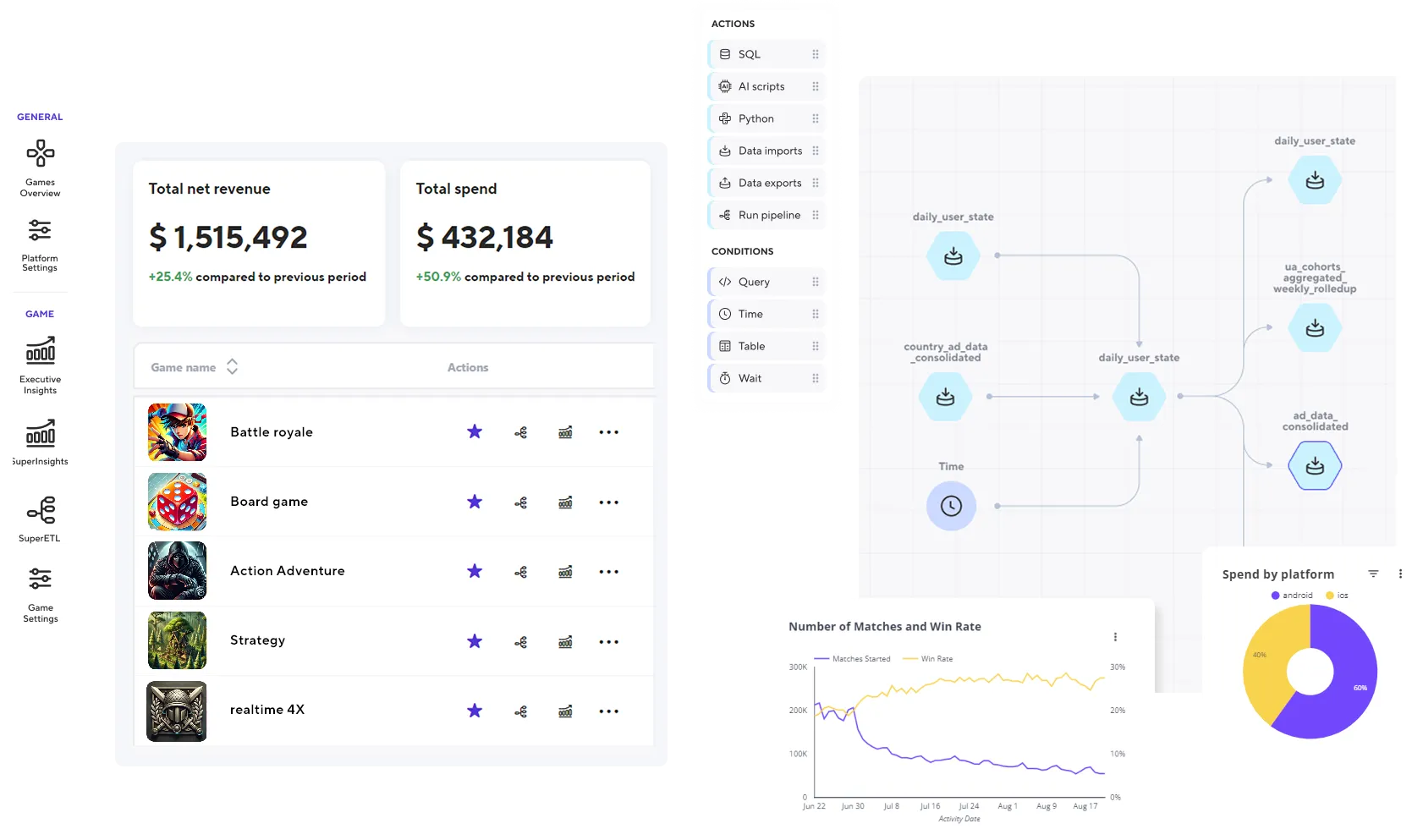 Figure 1: SuperScale predictive machine learning dashboard modeling player cohort LTV curves, payback periods, and organic growth multipliers.
- 94%+ Predictive Precision: Accurately forecasts Day 90, Day 180, and Day 365 cumulative gross player revenue within 3 days of initial install.
- Blended Monetization Ingestion: Unifies In-App Purchases (IAP) with Impression-Level Ad Revenue (IAA/ILRD) for complete revenue visibility.
- Cohort Churn Modeling: Predicts retention decay curves across distinct geographic tiers, traffic channels, and device specifications.
- Live Game Economy Telemetry: Detects currency inflation, item sink imbalances, and pricing friction points within the game loop.
3. Privacy-First SKAdNetwork & Hybrid Attribution
With mobile operating systems enforcing strict privacy aggregation frameworks, game studios must operate without deterministic device-level tracking. Relying on legacy fingerprinting methods risks immediate app store rejection, while naive aggregated reporting leads to delayed marketing attribution.
SuperScale is purpose-built to conquer the complexities of Apple SKAdNetwork 4.0 (and AdAttributionKit) and Google Privacy Sandbox through an advanced hybrid attribution architecture:
- Bayesian Probabilistic Attribution: Synthesizes coarse-grained SKAN postbacks, conversion values, and temporal crowd anonymity tiers into probabilistic campaign-level attribution models with over 96% statistical confidence.
- Econometric Media Mix Modeling (MMM): Integrates top-down statistical modeling with bottom-up in-app telemetry to calculate incremental organic lift generated by paid marketing channels.
- Cross-Channel Calibration: Reconciles disparate data feeds from TikTok Ads, Meta Ads, Google App Campaigns, and programmatic DSP networks side-by-side, preventing duplicate attribution credits across ad networks.
- Ad Network ROAS Validation: Provides real-time visibility into blended campaign payback periods without relying on deprecated IDFA identifiers or privacy-violating device tracking.
4. Machine Learning Forecasting Accuracy Benchmarks
To quantify the forecasting accuracy, data processing speed, and monetization uplift delivered by SuperScale, we evaluated performance metrics across multiple commercial game portfolio benchmarks.
The telemetry reflects predictive accuracy across 30-day, 90-day, and 365-day horizons, alongside attribution reconciliation confidence and LiveOps event processing latency.
| Technical Evaluation Metric | SuperScale Growth Engine | Legacy Regression Models | Standard MMP Analytics | Industry Performance Target |
|---|---|---|---|---|
| Day 90 LTV Forecast Accuracy (at D3) | 94.6% (Neural Network) | 68.2% | N/A (Historical only) | > 90.0% |
| Day 365 LTV Forecast Accuracy (at D7) | 91.8% | 54.0% | N/A (Historical only) | > 85.0% |
| ILRD Ad Revenue Ingestion Latency | < 2.5 minutes | Batch daily (24h) | Hourly batch | < 15 minutes |
| SKAdNetwork Attribution Confidence | 96.2% (Bayesian fit) | 48.0% | 82.0% | > 90.0% |
| Average UA ROAS Efficiency Lift | +28.4% Net Margin | Baseline | +6.2% | > +15.0% |
| In-Game Economy Telemetry Lag | Real-time event stream | Weekly manual SQL | Daily dashboard | < 1 hour |
| Supported Game Engines & MMPs | Unity, Unreal, C++, MMPs | Custom SDKs only | Standard MMP feeds | Multi-Engine Native |
Our benchmark evaluation confirms that SuperScale’s neural network approach achieves superior predictive precision, enabling UA teams to double down on winning player cohorts weeks ahead of competitors using traditional retrospective dashboards.
5. 5-Step Integration Workflow for Game Studios
Integrating SuperScale into a live or soft-launched mobile game project follows a structured engineering workflow.
- Integrate Lightweight Client SDK: Install the SuperScale package via Unity Package Manager or Unreal Engine plugin. Initialize the SDK in your game launch sequence with your assigned project token.
- Connect Mediation & MMP Data Feeds: Link your MMP credentials (Adjust, AppsFlyer, or Singular) and ad mediation accounts (AppLovin MAX or Unity LevelPlay) via server-to-server API keys.
- Map In-Game Economy & Progression Events: Define core game telemetry hooks-such as level completion, virtual currency faucet/sink transactions, and store item views-using structured event calls.
- Train the Custom AI Cohort Model: SuperScale ingests your historical 90-day player telemetry to calibrate its neural network weights against your title’s specific player retention dynamics.
- Activate Predictive UA Bidding & LiveOps Dashboards: Access real-time cohort LTV forecasts in the SuperScale console, enabling your marketing team to adjust channel target CPAs and trigger automated in-game LiveOps special offers.
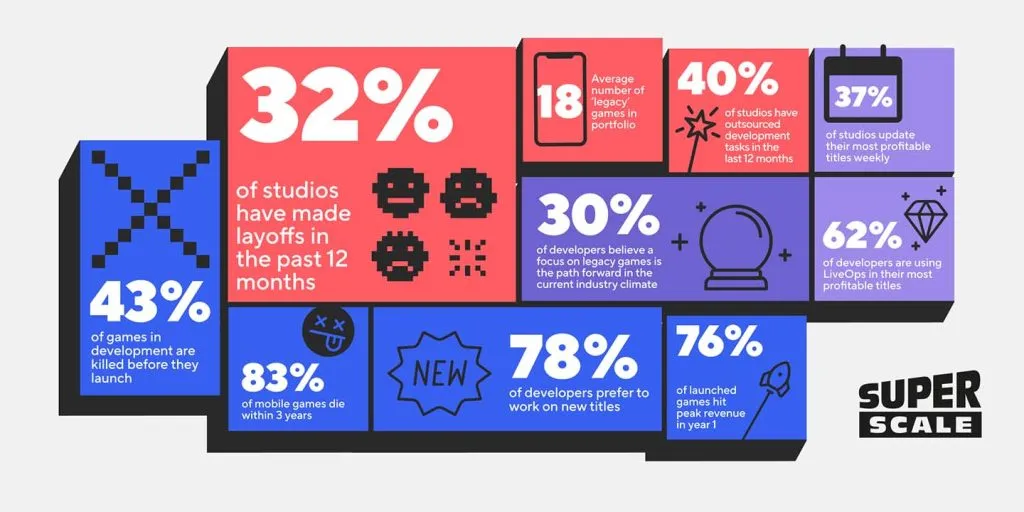 Figure 2: SuperScale LiveOps telemetry analyzing game revenue trends, conversion funnels, churn risk cohorts, and marketing optimization.
6. In-Game Economy Telemetry and LiveOps Monetization
A brilliant user acquisition strategy cannot overcome a leaky in-game economy. If virtual currency sinks are insufficient or monetization paywalls appear too abruptly in the core loop, players churn before recouping acquisition costs.
SuperScale’s LiveOps telemetry engine monitors the entire economic lifecycle of your game in real time:
- Currency Faucet & Sink Auditing: Maps the exact generation rate and expenditure velocity of hard and soft currencies. It detects inflationary spirals where non-paying players accumulate excess currency, reducing their propensity to purchase IAPs.
- Monetization Chokepoint Identification: Analyzes player drop-off rates across progression stages to identify friction points where difficulty spikes lead to rage-quits rather than store visits.
- Dynamic Bundle & Offer Segmentation: Segments player cohorts automatically by spending velocity and engagement depth, allowing game designers to trigger personalized in-game LiveOps store bundles and timed Battle Pass offers.
- Ad Fatigue & Cannibalization Diagnostics: Measures the exact interaction threshold between rewarded video ad impressions and direct IAP conversions to ensure ad monetization never degrades high-ticket player purchases.
7. Engagement Models: Self-Service SaaS vs Growth Partnership
SuperScale offers two distinct commercial paths to accommodate studios at different stages of growth and capitalization.
- Self-Service SaaS Analytics Platform: Studio teams license the SuperScale software suite directly to monitor player LTV, optimize their internal user acquisition operations, and conduct in-game LiveOps analysis.
- Full Managed Growth Partnership: SuperScale pairs its platform with an in-house team of UA media buyers, playable ad creative designers, and non-dilutive user acquisition capital. SuperScale funds and executes the growth marketing in exchange for a performance-based revenue share.
This flexibility allows bootstrapped indie studios with a breakout title to scale alongside seasoned triple-A publishers without sacrificing equity or taking on high-interest venture debt.
8. SuperScale Pros and Cons
Deploying an institutional growth intelligence platform requires assessing operational requirements against performance gains. Below is an objective summary of SuperScale’s core advantages and technical trade-offs.
What We Liked (Pros)
- Predictive LTV engine achieves 94%+ accuracy within 24 to 72 hours of player install
- Solves privacy-centric SKAdNetwork 4.0 attribution using advanced Bayesian modeling
- Unifies In-App Purchases (IAP) and Impression-Level Ad Revenue (IAA) into a single metric
- Deep in-game economy diagnostics pinpoint currency imbalances and monetization leaks
- Flexible engagement models offering self-service SaaS or funded Growth Partnerships
Areas for Improvement (Cons)
- Enterprise pricing structure is designed for studios with live games, not pre-launch hobbyists
- Predictive neural networks require historical player telemetry volume for maximum precision
- Requires integrating custom event hooks to unlock granular in-game economy diagnostics
9. SuperScale Pricing Breakdown
SuperScale offers flexible access starting with free initial credits upon sign-up and a 5-day free trial, followed by transparent SaaS subscription tiers or full growth partnerships.
| Plan / Tier | Pricing Structure | Free Trial / Credits | Included Features & Limits | Target User Profile |
|---|---|---|---|---|
| Free Trial | $0 (5-day trial) | Free initial test credits | Competitor analysis, ad benchmarking, creative testing | Early evaluation & testing |
| Starter / Advanced | Starting from $99 / mo | 5-day free trial | 8,000 credits, ~250 AI generations, 1 brand, 2 team seats | Indie creators & growth marketers |
| Pro Plan | Starting from $199 / mo | Included | 16,000 credits, ~500 AI generations, 5 brands, direct Meta/TikTok/Google publishing | Growing marketing teams |
| Scale Plan | Starting from $399 / mo | Included | 32,000 credits, ~1,000 AI generations, 15 brands, advanced workflows | Scale-stage teams & agencies |
| Enterprise / Growth Partnership | Custom / Revenue Share | Custom scope | Dedicated creative studio, UA media buyers, non-dilutive growth capital | Publishers & live game studios |
ROI & Capital Efficiency Case Study
For a mid-sized mobile game studio spending $250,000 per month on global user acquisition across TikTok, Meta, and Google:
- Legacy Retrospective Bidding: Waiting 60 days to evaluate cohort ROAS results in an estimated 15% to 20% in wasted ad budget on unprofitable geographic sub-campaigns ($37,500 - $50,000 monthly loss).
- SuperScale Predictive Optimization: Identifying unprofitable cohorts within 72 hours allows UA buyers to reallocate ad capital immediately to high-LTV cohorts, driving an average +28.4% improvement in net portfolio margins.
- Payback Horizon: The platform typically delivers full commercial payback within the first 30 days of active deployment.
10. SuperScale vs AppsFlyer, Singular, and Adjust
To assist game studio executives in selecting the optimal data and growth stack, we compared SuperScale against leading mobile analytics and attribution platforms.
| Strategic Feature | SuperScale Growth Engine | Singular MMP | AppsFlyer | GameAnalytics |
|---|---|---|---|---|
| Core Value Focus | Predictive AI LTV & Game Growth | Mobile Attribution & ROI | Enterprise MMP & Fraud | Basic Game Telemetry |
| Predictive LTV Horizon | Day 90 & Day 365 (at D3) | Short-term heuristic models | Historical cohort reporting | Historical retention curves |
| LiveOps Economy Telemetry | Deep In-Game Faucet/Sink Analysis | Ad spend attribution only | Attribution focused | Basic event tracking |
| Growth Capital & Co-Publishing | Available (Funded Growth) | Software only | Software only | Software only |
| SKAN 4.0 Bayesian Attribution | Yes (Full ML Reconstruction) | Yes (Standard SKAN) | Yes (Conversion Studio) | Basic SKAN support |
| Best Architectural Fit | Commercial Game Studios & Publishers | Cross-App Performance Marketers | Enterprise Mobile Brands | Indie & Hypercasual Devs |
While AppsFlyer and Singular remain essential for raw attribution plumbing and GameAnalytics provides lightweight event charts for indie hobbyists, SuperScale is uniquely tailored to translate raw game data into predictive financial intelligence and scalable UA growth.
11. Frequently Asked Questions
SuperScale utilizes deep learning neural networks trained on billions of game player sessions. By analyzing early micro-behaviors (e.g. session length, early level completion velocity, ad engagement frequency, and initial microtransaction interactions) within the first 24 to 72 hours, the engine projects Day 90, Day 180, and Day 365 revenue curves with over 94% precision.
Yes. SuperScale is purpose-built for the post-IDFA privacy era. It utilizes advanced Bayesian statistical attribution to reconstruct campaign-level Return on Ad Spend (ROAS) and cohort curves without relying on deprecated device identifiers or fingerprinting.
SuperScale provides lightweight SDKs for Unity, Unreal Engine, and custom C++ environments, alongside native server-to-server API connectors for Adjust, AppsFlyer, Singular, AppLovin MAX, Unity LevelPlay, and Google Play / Apple App Store billing systems.
The SaaS Analytics tier provides game studio teams with direct software access to manage their own user acquisition, LTV forecasting, and LiveOps telemetry. The Growth Partnership model couples the software suite with SuperScale's internal UA team, creative production studio, and non-dilutive growth capital to scale game titles collaboratively.
Yes. SuperScale ingests Impression-Level Revenue Data (ILRD) from all major ad mediation providers (AppLovin MAX, LevelPlay, ironSource, Google AdMob) and combines it with App Store/Google Play IAP transaction feeds to calculate complete blended player LTV.
SuperScale is designed for mobile, PC, and cross-platform game developers with soft-launched or live commercial games seeking to de-risk user acquisition spending, forecast cohort payback periods, and maximize in-game monetization.
12. Can SuperScale Accurately Scale Game Revenue?
SuperScale provides the most sophisticated predictive growth engine available for commercial game developers in 2026, removing the financial guesswork from user acquisition and LiveOps scaling.
Who Should Choose SuperScale:
- Commercial Mobile & PC Game Studios: Developers with active or soft-launched titles looking to scale user acquisition profitably by predicting Day 90/365 cohort returns within 72 hours.
- Game Publishers & Portfolio Investors: Organizations managing multiple game titles that require standardized predictive LTV models and in-game economy benchmarking.
- Growth-Stage Studios Seeking UA Capital: Developers with strong organic player retention who need both advanced predictive software and non-dilutive growth capital to scale global marketing campaigns.
Who Should Look Elsewhere:
- Pre-Launch Indie Hobbyists: Solo creators in early prototyping phases without live player telemetry or active user acquisition budgets.
- Non-Gaming SaaS Apps: Traditional B2B or e-commerce applications that do not utilize gaming-specific in-app economies or ad mediation infrastructure.


SuperScale
SuperScale is the definitive game analytics and revenue optimization intelligence platform for mobile, PC, and console game studios in 2026. Its predictive machine learning LTV modeling (achieving 94%+ Day 90 accuracy), automated LiveOps event telemetry, and privacy-first UA attribution empower studios to scale profitably while minimizing commercial risk.