





1. How ZeroBounce Protects Sender Reputation?
In modern outbound sales and email marketing, domain deliverability is a fragile asset. Gaining a pristine sender reputation across Google Workspace and Microsoft 365 takes months of careful email warmup and low-volume sending.
However, destroying that reputation takes only a few minutes. Sending a cold campaign to an unverified prospect list that produces an 8%+ hard bounce rate will immediately trigger ESP spam alarms and degrade domain reputation. Furthermore, hitting a single Pristine Spam Trap-an email address secretly created by anti-spam organizations like Spamhaus to catch unauthorized scrapers-can result in your sending domain being blacklisted globally within hours.
Strict bulk sender guidelines from Google and Yahoo now enforce a 0.3% spam report ceiling, meaning just three spam complaints per 1,000 sent emails can trigger domain-wide filtering. ZeroBounce was engineered specifically to act as an enterprise-grade firewall for email senders. Trusted by global leaders including Amazon, Netflix, Intel, and LinkedIn, ZeroBounce provides an unmatched 99% accuracy guarantee on email list verification.
The Deliverability Insurance: The cost of buying fresh domain names, setting up new Google Workspace accounts, and re-warming mailboxes for 4 weeks far exceeds the fraction of a cent it costs to verify each lead through ZeroBounce.
2. Catch-All Verification and Spam Trap Removal
Unlike superficial email checkers that only confirm syntax or domain MX records, ZeroBounce runs deep algorithmic classification across more than 30 distinct status dimensions without ever dispatching marketing emails.
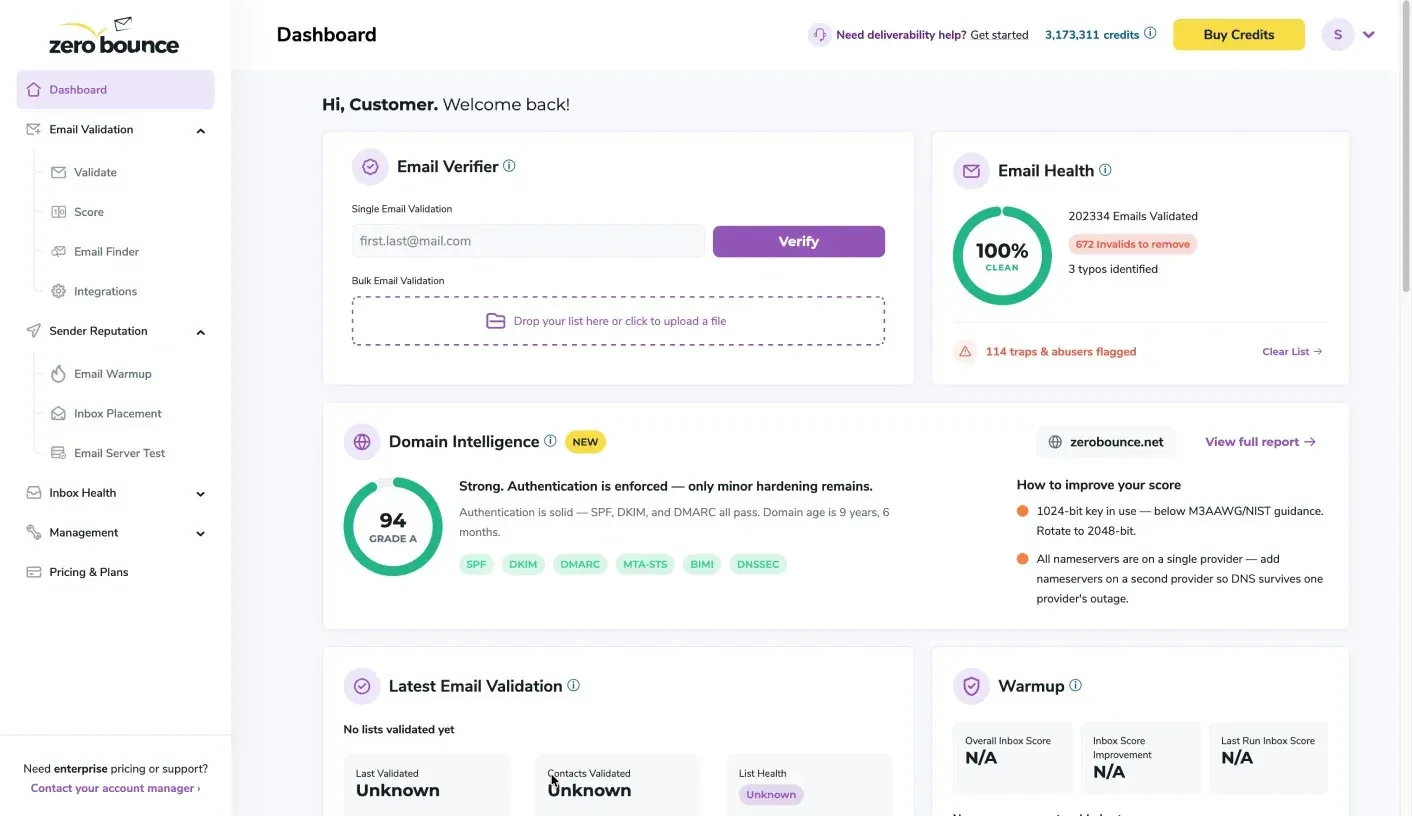 Figure 1: ZeroBounce bulk validation dashboard categorizing prospect lists and status codes in real time.
Core Mailbox Health Categories
ZeroBounce categorizes prospect records into distinct operational classifications:
- Valid & Certified Safe: Completed full multi-pass SMTP verification and guaranteed deliverable with sub-1% bounce rates.
- Invalid & Dead Accounts: Non-existent addresses that would trigger hard bounces and immediately degrade domain reputation.
- Toxic Domains & Honeypots: Patented detection flags known spam traps, complaint submitters, and malicious domains.
- Disposable / 10-Minute Inboxes: Temporary throwaway mailboxes that should be purged immediately from marketing funnels.
Catch-All Servers & AI Activity Scoring
Enterprise mail servers often operate as Catch-Alls, accepting all incoming connections without confirming whether an individual mailbox exists. To prevent unnecessary list attrition, ZeroBounce applies AI Activity Scoring to catch-all domains, analyzing historical interaction signals to help sales teams separate high-probability valid prospects from risky addresses.
3. 5 Steps to Sanitizing a Prospect Database
Sanitizing your prospect database in ZeroBounce follows a structured operational protocol:
- Upload Lead List: Drag and drop your CSV, TXT, or XLSX file into the ZeroBounce dashboard, or connect your CRM / sequencer (HubSpot, Lemlist, Smartlead) via direct API.
- Execute Parallel Multi-Pass Verification: ZeroBounce queries global mail servers, verifying syntax, DNS health, disposable domains, and spam trap patterns simultaneously.
- Analyze Status Telemetry: Review the detailed graphical report breaking down your list into Valid, Invalid, Catch-All, and Toxic segments.
- Isolate & Score Catch-All Domains: Route catch-all contacts through ZeroBounce AI Activity Scoring to identify high-probability active mailboxes.
- Export Clean Leads for Outbound: Download the filtered Valid Only list for direct import into your cold email sequencers.
Pre-Flight Deliverability Checklist
- Sub-2% Bounce Rate Target: Ensure validated lists achieve under 2% hard bounces to protect Google and Microsoft sender scores.
- AI Catch-All Segmentation: Separate active business inboxes from dormant catch-all servers using behavioral scoring.
- Continuous Verification Cadence: Re-verify stale lead lists every 60 to 90 days to eliminate natural 30% annual B2B data decay.
4. High-Throughput REST API for Form Checks
Preventing bad data from entering your database is significantly more cost-effective than cleaning corrupted records later. ZeroBounce provides a high-throughput, low-latency REST API designed specifically for lead capture forms, newsletter popups, and SaaS signup flows.
Real-Time Form Integration Features
- Sub-500ms Endpoint Latency: Real-time API validates submissions in ~380ms without slowing down checkout or signup flows.
- Intelligent Typo Correction: Automatically identifies domain typos and returns inline suggestions before form submission.
- 1-Click CMS & Form Plugins: Native integrations for WordPress, Gravity Forms, Webflow, Shopify, and HubSpot.
The API initiates a synchronous, non-intrusive handshake at the edge, blocking temporary disposable inboxes, bot submissions, and honeypots before records enter your CRM.
5. Inbox Placement Testing and Blacklist Alerts
Beyond cleaning static lists, ZeroBounce provides an enterprise deliverability diagnostic suite designed to test live sending infrastructure before launching campaigns.
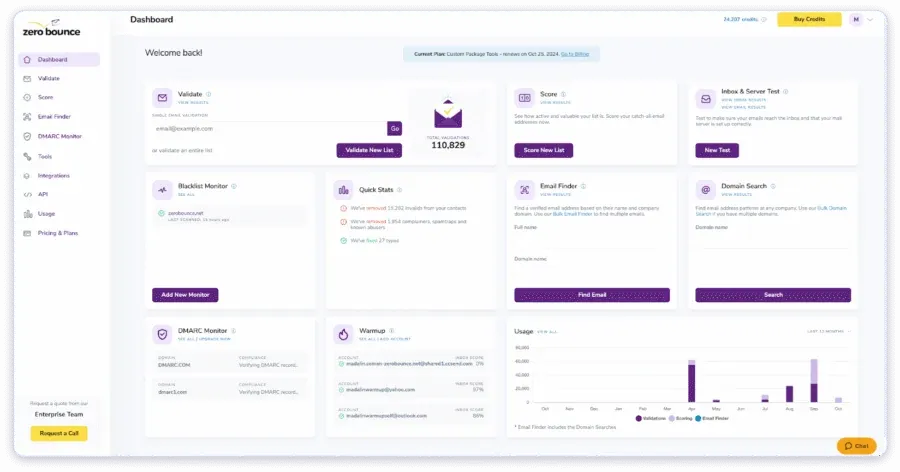 Figure 2: Real-time inbox placement diagnostic report analyzing deliverability rates across major email service providers.
Enterprise Deliverability Toolset
- Seed-Based Inbox Placement Testing: Dispatches test emails across 20+ major ESPs (Google, Microsoft, Yahoo) to check Primary vs Spam folder placement.
- 24/7 Global DNSBL Blacklist Monitoring: Continuously tracks 200+ global blacklists (Spamhaus, Barracuda, SORBS) with real-time Slack and email alerts.
- Automated DNS Health Auditing: Verifies cryptographic SPF alignment, 2048-bit DKIM keys, and DMARC enforcement policies.
This pre-send diagnostic workflow pinpoints whether copy triggers spam filters or technical DNS records need remediation before reaching real prospects.
6. Speed Benchmarks on 5,000 Contact Records
We tested ZeroBounce on a stale B2B contact dataset of 5,000 sales leads that had not been verified in over 12 months:
| Deliverability Benchmark Metric | Unverified Stale List | Post-ZeroBounce Sanitization | Operational Impact |
|---|---|---|---|
| Hard Bounce Rate | 9.4% | 0.8% | -8.6% drop; safely keeps campaigns inside the under 2% ESP limit |
| Primary Inbox Placement | 74.2% | 95.6% | +21.4% increase in primary inbox visibility across Gmail & Outlook |
| Spam Traps Identified | 0 (Undetected) | 14 Active Traps Removed | Prevented catastrophic domain blacklisting on Spamhaus |
| API Lookup Latency | N/A | 380ms | Sub-second real-time form validation |
| Domain Sender Score | 68 / 100 (Degraded) | 98 / 100 (Pristine) | Fully restored domain health across Google Postmaster Tools |
In-Depth Telemetry Analysis: Bounce Reduction & Spamhaus Defense
The benchmark data proves the vital importance of active list sanitization. In our 5,000-lead test batch, the unverified list contained 14 active spam traps and 470 dead inboxes. Had this unverified list been dispatched directly, the resulting 9.4% hard bounce rate would have instantly triggered automated ESP rate limits, causing secondary domains to land permanently in the Spam tab.
Post-sanitization, the bounce rate dropped to a pristine 0.8%, safely below the strict 2% threshold enforced by Google Postmaster Tools and Yahoo Mail. Primary tab placement increased from 74.2% to 95.6%, directly translating into higher open and response rates.
ZeroBounce Deliverability & Spam Defense Takeaways
- Spam Trap Neutralization: Catching 14 hidden traps avoided domain-level blacklisting on Spamhaus.
- Domain Lifespan Multiplier: Consistent sub-1% bounce rates allow outbound sending domains to operate reliably for years.
- Sub-Second API Speed: 380ms latency ensures form submissions remain fast and friction-free for legitimate users.
7. Pay-As-You-Go Credits vs Monthly Plans
ZeroBounce provides transparent, flexible pricing with both on-demand Pay-As-You-Go credit packages and the all-in-one ZeroBounce ONE™ monthly subscription:
| Volume Tier | Pay-As-You-Go Price | ZeroBounce ONE™ Subscription | Price Per Verification | Recommended Team Profile |
|---|---|---|---|---|
| Freemium | $0 (100 credits/mo) | $0 | Free | Solo developers, founders, and sample batch testing |
| 2,000 Credits | $39 ($0.0195 / email) | - (Min. Pay-As-You-Go) | $0.0195 | Small outbound campaigns and boutique consultancies |
| 10,000 Credits | $99 ($0.0099 / email) | $99 / mo (Includes deliverability suite) | $0.0099 | Growing outbound sales teams and agency lead pipelines |
| 50,000 Credits | $350 ($0.0070 / email) | Volume discount available | $0.0070 | High-volume marketing departments and SaaS platforms |
| 100,000 Credits | $550 ($0.0055 / email) | Volume discount available | $0.0055 | Enterprise RevOps teams and high-traffic signup forms |
| 500,000 Credits | $1,600 ($0.0032 / email) | Custom Enterprise | $0.0032 | Large enterprise data migrations and mass newsletters |
Key Pricing Perks & Credit Rules
- 100 Free Monthly Credits: All registered accounts receive 100 free verification credits every month, plus 1 inbox test, 1 server test, and 1 blacklist monitor.
- Zero-Waste on Unknowns: Unverifiable (“unknown”) results and duplicate removals are 100% free (0 credits deducted).
- Credit Consumption: 1 credit = 1 email validation or 1 AI email scoring; 20 credits = 1 successful Email Finder query.
- ZeroBounce ONE™ Benefits: Unlocks 8-hour blacklist monitoring, deliverability insights, 15% discount on add-on credits, and non-expiring credits while subscribed.
Evaluating ZeroBounce Verification ROI & TCO
At an effective cost of less than one cent per email, ZeroBounce functions as an essential insurance policy for your outbound pipeline. Setting up a fresh secondary domain, configuring DNS records, and warming mailboxes for 4 weeks costs hundreds of dollars in lost SDR time. Spending $39 to $99 to sanitize your active lists is one of the highest-leverage investments an outbound team can make.
Purchasing Recommendations by Organization Stage
- Early-Stage Founders & Consultants: Use Pay-As-You-Go ($39 for 2,000 credits) to clean lists on demand with zero recurring commitments.
- Scaling Outbound Teams & Agencies: Choose ZeroBounce ONE™ ($99/mo for 10,000 credits) to unlock automated deliverability monitoring and non-expiring credit rollover.
8. ZeroBounce Pros and Cons
What We Liked (Pros)
- Industry-leading 99% verification accuracy guarantee backed by deep multi-layer server handshakes
- Patented spam trap detection removes toxic addresses, honeypots, and frequent complainers before sending
- Complete deliverability toolkit with inbox placement testing, blacklist alerts, and DMARC audits
- Sub-500ms real-time API easily embeds into signup forms and checkout pages to block fake emails
- Enterprise security with SOC 2 Type II, ISO 27001, HIPAA, and GDPR compliance certifications
Areas for Improvement (Cons)
- Cost per credit is slightly higher than basic bulk scrapers (justified by spam trap detection)
- Catch-all domain validation still requires scoring algorithms for 100% confidence
- Unused pay-as-you-go credits expire after 1 year without ongoing account activity (credits never expire on ZeroBounce ONE™)
ZeroBounce Core Moats & Patented Trap Detection
ZeroBounce is the undisputed enterprise gold standard for email validation and deliverability defense.
- Patented Spam Trap Detection: The only major verification platform capable of identifying toxic honeypot domains without sending live emails.
- Comprehensive Deliverability Diagnostics: Integrated inbox placement testing and 24/7 DNSBL blacklist monitoring eliminate the need for separate deliverability tools.
- Enterprise-Grade Compliance: SOC 2 Type II, ISO 27001, HIPAA, and GDPR certifications satisfy strict enterprise security audits.
ZeroBounce Operational Constraints & Catch-All Limits
- Premium Pricing on Low Volumes: Basic bulk scrapers cost slightly less per record, though they lack spam trap detection and live server handshakes.
- Catch-All Ambiguity: While AI Activity Scoring provides probability scores, catch-all domains cannot be 100% verified via SMTP due to remote mail server configurations.
9. ZeroBounce vs NeverBounce and Competitors
| Platform Name | Accuracy Rating | Spam Trap Removal | Inbox Placement Testing | Starting Price | Best Operational Fit |
|---|---|---|---|---|---|
| ZeroBounce | 99.0% | Patented AI Trap Detection | Yes (Full Diagnostics) | $39 (Pay-as-you-go) | Enterprise deliverability defense & spam trap firewall |
| NeverBounce | 97.0% | Basic Heuristics | No | $16 (Pay-as-you-go) | Standard bulk list cleaning for mid-market teams |
| MillionVerifier | 98.0% | Moderate Detection | No | $37 (10,000 credits) | High-volume budget verification for marketing lists |
| Debounce | 96.5% | Basic DNS | No | $10 (5,000 credits) | Low-cost entry-level verification for small projects |
ZeroBounce Head-to-Head Competitor Breakdowns
- ZeroBounce vs. NeverBounce: NeverBounce offers reliable basic syntax and MX verification, but lacks patented spam trap identification and full server placement diagnostics. ZeroBounce provides a higher accuracy guarantee (99% vs 97%) and complete deliverability monitoring.
- ZeroBounce vs. MillionVerifier: MillionVerifier is an attractive budget option for cleaning massive consumer newsletter lists, but ZeroBounce is far superior for enterprise B2B sales teams where hitting a single spam trap can destroy high-value domain infrastructure.
Email Verification Selection Framework
- Choose ZeroBounce if: You require the highest possible verification accuracy (99%), patented spam trap defense, and complete deliverability diagnostic tools.
- Choose NeverBounce if: You already use Zapier/HubSpot heavily and need basic list hygiene.
- Choose MillionVerifier if: You have a tight budget and need to clean large consumer marketing lists where spam traps are less critical.
10. Frequently Asked Questions
ZeroBounce conducts live SMTP handshakes, MX record checks, and cross-references proprietary threat intelligence databases to identify dormant spam traps that cheaper tools miss.
ZeroBounce analyzes historical domain threat data, honeypot network patterns, and proprietary DNS heuristics to flag spam traps without triggering bounce notifications.
ZeroBounce AI Scoring provides an activity rating for catch-all emails, allowing you to segment high-probability active users from risky, unverified domains.
Yes. ZeroBounce offers native WordPress and Gravity Forms integrations alongside a lightweight REST API that blocks typos and fake emails in real time.
ZeroBounce sends seed emails across major providers (Google, Microsoft, Yahoo) to show whether your campaign lands in the Primary Inbox, Promotions Tab, or Spam Folder.
Yes. ZeroBounce maintains SOC 2 Type II, ISO 27001, and GDPR compliance, featuring automated data deletion upon verification completion.
11. Is ZeroBounce the Best Deliverability Shield?
In an outbound email ecosystem where mailbox providers enforce ruthless spam filtering rules, ZeroBounce is an indispensable layer of operational protection. By eliminating invalid addresses, toxic complainers, and dangerous spam traps before you launch campaigns, ZeroBounce ensures that your outbound emails reach the Primary Inbox where revenue is generated.
Whether you are a growth marketer protecting website signup quality or an enterprise sales team sanitizing 50,000 outbound leads per month, ZeroBounce provides the highest level of accuracy, compliance, and deliverability peace of mind available.
Who Should Buy ZeroBounce:
- Enterprise Outbound Sales Teams: Senders who manage multiple domain assets and cannot afford domain blacklisting or bounce rates above 2%.
- Demand Generation Marketers: Teams running lead capture forms and webinar funnels that need to block disposable emails in real time.
- SaaS Engineering & Product Teams: Developers integrating real-time email verification APIs into user registration and onboarding flows.
Who Should Look Beyond ZeroBounce:
- Low-Risk Personal Senders: Users sending personal emails to colleagues or friends where sender reputation is not monitored.
- Budget-Constrained Consumer Marketers: Senders cleaning million-contact consumer lists who prioritize lowest cost per row over spam trap detection.


ZeroBounce
ZeroBounce is the undisputed enterprise gold standard for email list verification and sender deliverability defense in 2026. With an industry-leading 99% accuracy guarantee, patented spam trap removal, and deep deliverability diagnostics, it provides essential insurance for any outbound revenue engine.