




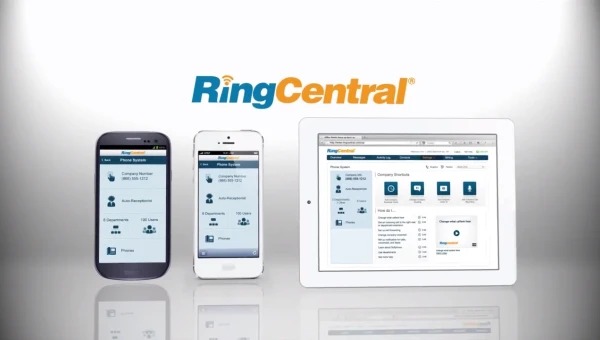
Modern business communications have transitioned far beyond simple dial tones and office copper wiring. Today’s commercial enterprises, multi-location healthcare systems, and hybrid organizations require a unified telecommunications backbone capable of bridging physical IP desk phones, mobile softphones, team messaging, video meetings, and artificial intelligence into a single regulatory-compliant framework.
In 2026, RingCentral represents the undisputed titan of enterprise cloud telephony. Rebranded around its flagship RingEX unified employee experience workspace and powered by RingSense AI, the platform powers millions of business lines across the globe.
1. Enterprise Cloud Telephony on RingCentral
Traditional business telephone systems relied on bulky, on-premise Private Branch Exchange (PBX) hardware cabinets housed in server closets. These legacy systems demanded expensive telecom PRI circuits, ongoing maintenance contracts with local technicians, and manual jumper wire adjustments whenever an employee changed desks.
RingCentral eliminated this hardware burden by pioneering cloud-hosted Unified Communications as a Service (UCaaS). By migrating corporate PBX intelligence into distributed carrier data centers, RingCentral transformed business telephony from a localized hardware utility into an agile, globally accessible cloud service.
Under its modernized RingEX platform, RingCentral unifies four essential business communication channels:
- Enterprise Cloud PBX: Carrier-grade voice calling with global Direct Inward Dialing (DID) numbers, visual voicemail, call recording, and complex auto-attendants.
- Business SMS and MMS: Two-way text messaging allowing employees to send and receive customer text messages from their professional business phone number.
- HD Video Conferencing: Enterprise video meeting rooms supporting up to 200 participants with digital whiteboards, breakout rooms, and live AI transcriptions.
- Team Collaboration: Persistent team messaging channels, direct messaging, file sharing, and integrated task management.
By unifying these channels into a single client interface across desktop, mobile, and web browsers, RingCentral eliminates communication fragmentation and delivers a standardized employee experience across multi-office corporate environments.
2. Global Voice Infrastructure and Uptime SLA
For hospitals, financial trading desks, emergency dispatch centers, and global enterprises, voice communications downtime translates directly into substantial financial loss and severe regulatory liability. When evaluated for enterprise adoption, the most important technical metric is network availability.
RingCentral differentiates itself from smaller VoIP softphone providers through its contractual 99.999% SLA Uptime guarantee, widely known across the telecommunications industry as the “five nines” standard.
The Mathematics of Five Nines Availability
A 99.999% availability SLA guarantees that unscheduled service downtime will not exceed:
- Daily Downtime: Less than 0.86 seconds per day.
- Monthly Downtime: Less than 26.30 seconds per month.
- Annual Downtime: Less than 5.26 minutes across an entire calendar year.
RingCentral achieves this high availability through an active-active geo-redundant infrastructure. The platform operates dozens of dedicated data centers across North America, Europe, Asia, and Australia, directly interconnected with Tier-1 telecommunications carriers.
Automated Border Gateway Protocol (BGP) routing and carrier session monitors continuously evaluate packet latency and jitter. If an upstream carrier experiences fiber cuts or regional routing anomalies, RingCentral’s automated telecom switches reroute live call traffic to alternate transit paths in under 50 milliseconds without dropping active calls.
| Telecom Performance Metric | RingCentral RingEX Engine | Standard Cloud Softphone Provider | Legacy On-Premise PBX System |
|---|---|---|---|
| Contractual Uptime SLA | 99.999% SLA (Five Nines) | 99.9% to 99.95% Best-Effort | Dependent on on-site power & PRIs |
| Maximum Unscheduled Downtime / Year | Under 5.26 minutes | 4.38 to 8.76 hours | Unpredictable (Days if hardware fails) |
| End-to-End Voice Round-Trip Latency | Under 55 ms | 95 to 160 ms | 120 to 220 ms |
| Mean Opinion Score (MOS Voice Quality) | 4.40 / 5.0 (Opus & G.722 HD) | 4.05 / 5.0 (Standard VoIP) | 3.60 / 5.0 (G.711u PSTN Copper) |
| Data Center Architecture | Geo-redundant active-active | Single or dual cloud host | Single physical server rack |
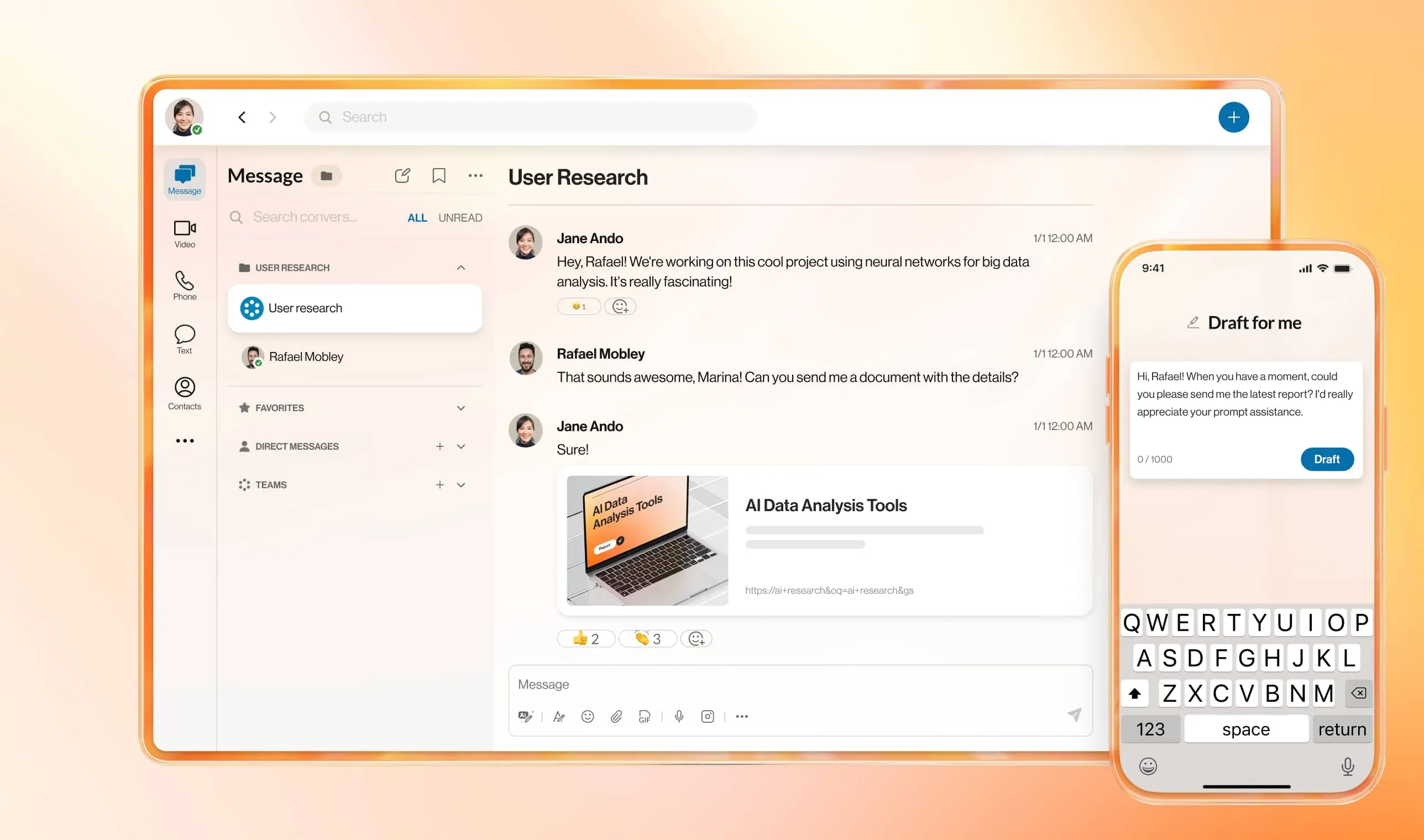 Figure 1: RingCentral RingEX unified desktop application consolidating business voice calling, team messaging, video meetings, and real-time contact history.
3. Physical Desk Phone and Hardware Provisioning
While agile startups frequently operate exclusively on laptops and smartphones, hundreds of thousands of established organizations legally or operationally mandate dedicated physical telephone hardware. Medical clinics require wall-mounted handsets in examination rooms; manufacturing facilities require ruggedized paging devices; and executive suites require physical speakerphones.
RingCentral maintains the most comprehensive certified hardware ecosystem in the telecommunications industry, supporting hundreds of enterprise IP desk phones from leading manufacturers:
- Poly (Polycom): Full firmware integration with Poly Edge B, Edge E, and VVX series desk phones, delivering crystal-clear Acoustic Fence technology that blocks background office noise.
- Yealink: Seamless auto-provisioning for Yealink T3, T4, and T5 series IP phones, alongside ruggedized cordless DECT handsets engineered for warehouse and retail environments.
- Cisco and Mitel: Enterprise multi-line SIP handsets designed for heavy call volumes and executive receptionist consoles.
- Overhead Paging and Intercoms: Compatibility with Algo and CyberData IP speakers and door access intercoms.
- Analog Telephone Adapters (ATAs): Hardware adapters from AudioCodes and Grandstream that allow legacy analog fax machines, postage meters, and elevator emergency phones to connect into the cloud PBX.
Zero-Touch Deployment Workflow
Deploying telephone hardware across dozens of remote branch offices previously required dispatching telecom engineers to manually configure IP addresses and SIP credentials. RingCentral eliminates this overhead through automated zero-touch provisioning:
- MAC Address Assignment: The IT administrator enters the physical phone’s 12-digit MAC address into the RingCentral Admin Portal and assigns it to an employee extension.
- Physical Connection: The phone is unboxed at the branch office and plugged into an Ethernet port with Power over Ethernet (PoE).
- Automated Bootstrapping: Upon receiving power, the phone contacts RingCentral’s secure provisioning redirect servers, downloads its encrypted configuration file, flashes the certified firmware, and configures the user’s line keys in under three minutes without manual configuration.
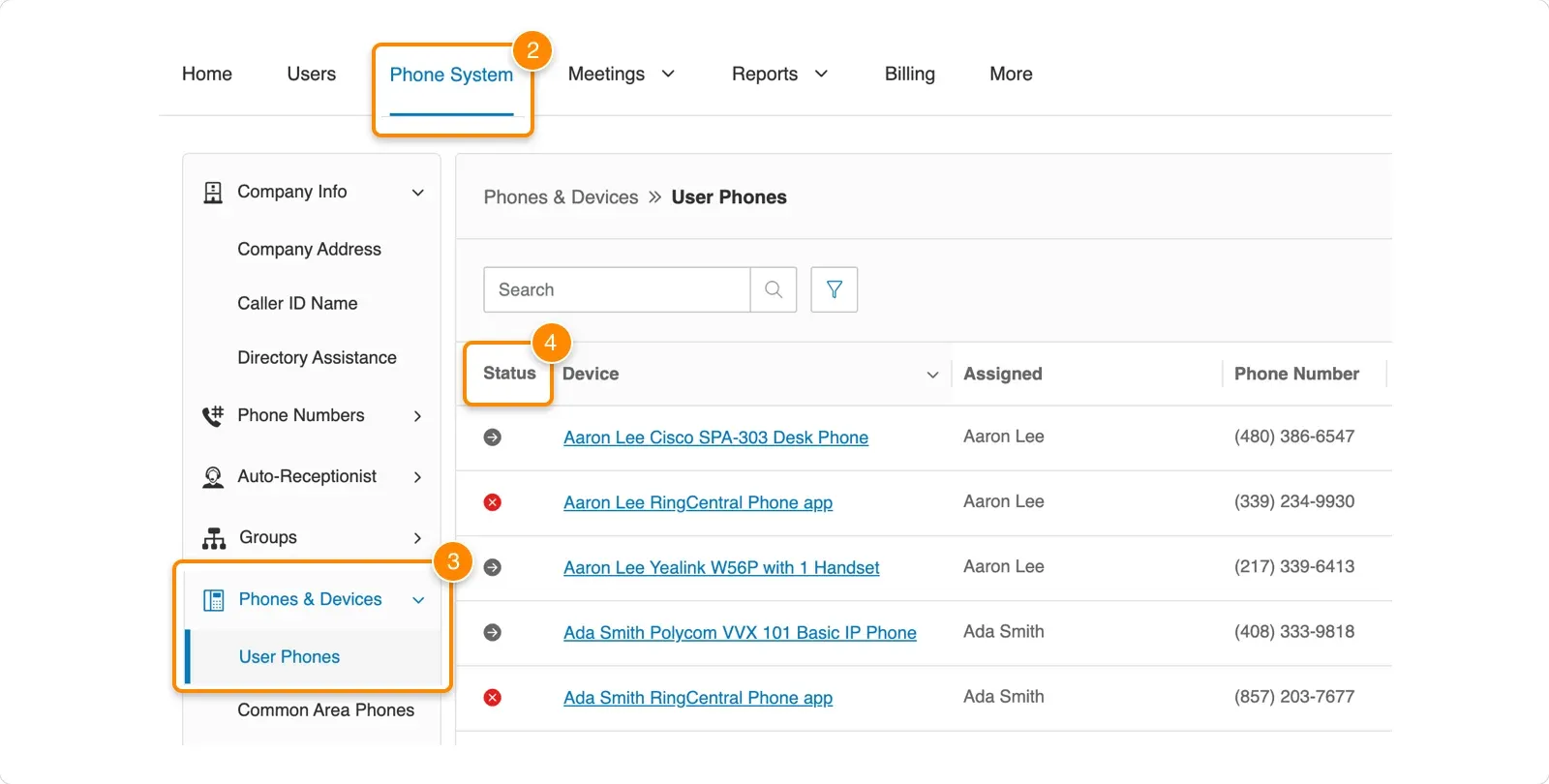 Figure 2: RingCentral administrative console managing zero-touch hardware provisioning for certified Poly, Yealink, and Cisco IP desk phones.
4. Multi-Level Auto-Attendant and Call Routing
The core of RingCentral’s call handling capability is its enterprise auto-attendant and Interactive Voice Response (IVR) engine. Incoming callers rarely reach a dead-end; instead, visual routing trees ensure every customer interaction reaches the correct specialist or departmental queue based on predefined operational rules.
Building Branching IVR Menus
RingCentral provides a visual IVR Studio that allows administrators to build sophisticated, multi-level phone trees without technical coding:
- Multi-Level Branching: Create hierarchical menus such as “Press 1 for Sales, Press 2 for Healthcare Billing, Press 3 for Technical Support,” with each branch routing to dedicated sub-menus, individual extensions, or external numbers.
- Time-of-Day and Holiday Routing: Configure automatic routing adjustments that activate after normal business hours, on weekends, or during national holidays, directing callers to on-call staff or custom voicemail boxes.
- Multi-Site Dial Plans: Manage distinct corporate branch locations under a single umbrella account, enabling 4-digit internal extension dialing between employees located in different cities or countries.
Automatic Call Distribution (ACD) and Call Queuing
For support departments and sales teams experiencing high incoming call volume, RingCentral provides advanced call distribution rules:
- Ring Strategies: Distribute calls via simultaneous ringing, sequential hunt groups, rotating round-robin, or longest-idle routing to equalize agent workloads.
- Queue Overflow Rules: Automatically redirect callers to secondary queues, backup answering services, or voicemail if wait times exceed predefined thresholds.
- Call Monitoring Tools: Supervisors can utilize silent monitor to listen to calls, whisper coaching to provide advice audible only to the agent, and barge-in to take over distressed customer interactions.
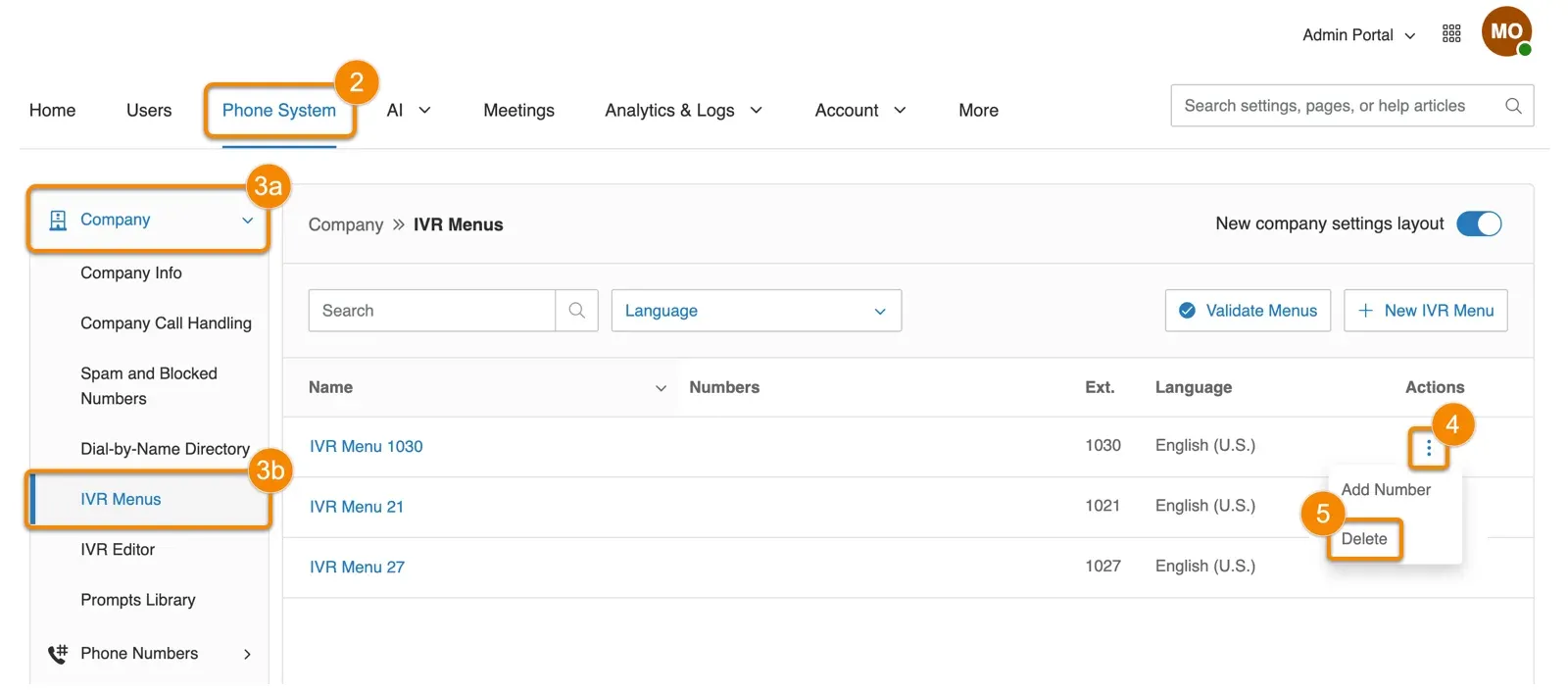 Figure 3: Creating and managing IVR menus in the Admin Portal.
5. RingEX Unified Workspace for Modern Teams
While RingCentral’s administrative backend provides enterprise-grade control, frontline employees interact daily with the RingEX application. Available natively for macOS, Windows, iOS, Android, and modern web browsers, RingEX consolidates daily communications into a clean, modern interface.
Cloud Calling Experience
The RingEX phone interface delivers intuitive call management:
- Click-to-Dial: Click phone numbers within web browsers, CRM platforms, or email clients to initiate calls instantly.
- Call Flip Technology: Transition an active phone call between a physical desk phone, desktop computer, and mobile smartphone in under 180 milliseconds without call interruption or audio dropouts.
- Visual Voicemail: Read speech-to-text voicemail transcriptions directly within the app and listen to audio recordings at variable playback speeds.
HD Video Meetings and Team Collaboration
RingEX includes built-in video conferencing that eliminates the need for standalone Zoom or Google Meet subscriptions for many businesses:
- Participant Capacity: Host up to 100 participants on Core and Advanced plans, and up to 200 participants on the Ultra plan.
- Collaboration Tools: Interactive screen sharing, digital whiteboards, breakout rooms, and live emoji reactions.
- Team Messaging: Direct messaging, public and private departmental channels, file sharing up to 1GB per file, and integrated task assignment boards.
6. RingSense Conversational AI and Sentiment Scoring
Artificial intelligence represents the most significant evolution in enterprise telecommunications. With the launch of RingSense AI, RingCentral transformed standard audio streams into actionable conversational intelligence.
Unlike basic transcription engines that merely convert voice to text, RingSense AI actively analyzes conversational structure, speaker dynamics, and customer sentiment to assist frontline representatives and management.
Real-Time Conversational Insights
RingSense processes audio streams to provide comprehensive post-call intelligence:
- Speaker-Separated Transcriptions: Distinguishes between internal staff and external callers with high linguistic precision, incorporating custom organizational dictionaries for technical terminology and product names.
- Executive 3-Point Summaries: Generates concise executive summaries highlighting core discussion topics, customer objections, and agreed-upon outcomes.
- Action Item Extraction: Identifies explicit commitments and deadlines mentioned during the conversation, compiling an actionable checklist for sales and support representatives.
- Automated CRM Sync: Automatically exports transcripts, recordings, summaries, and action items directly into linked Salesforce, HubSpot, or Zendesk customer records.
Live Sentiment Analysis and Agent Coaching
For sales floors and customer support centers, RingSense provides analytical supervisory tools:
- Sentiment Tracking: Evaluates vocal acoustic patterns, speech tempo, and spoken keywords to track customer satisfaction trends across 100% of calls.
- Scorecards and QA Grading: Evaluates agent adherence to approved call scripts, tracking talk-to-listen ratios, competitor mentions, and question frequency without requiring manual supervisor audits.
- AI Receptionist Voice Routing: Interprets incoming natural language caller intent, directing callers to the correct department without requiring numeric touch-tone keypad input.
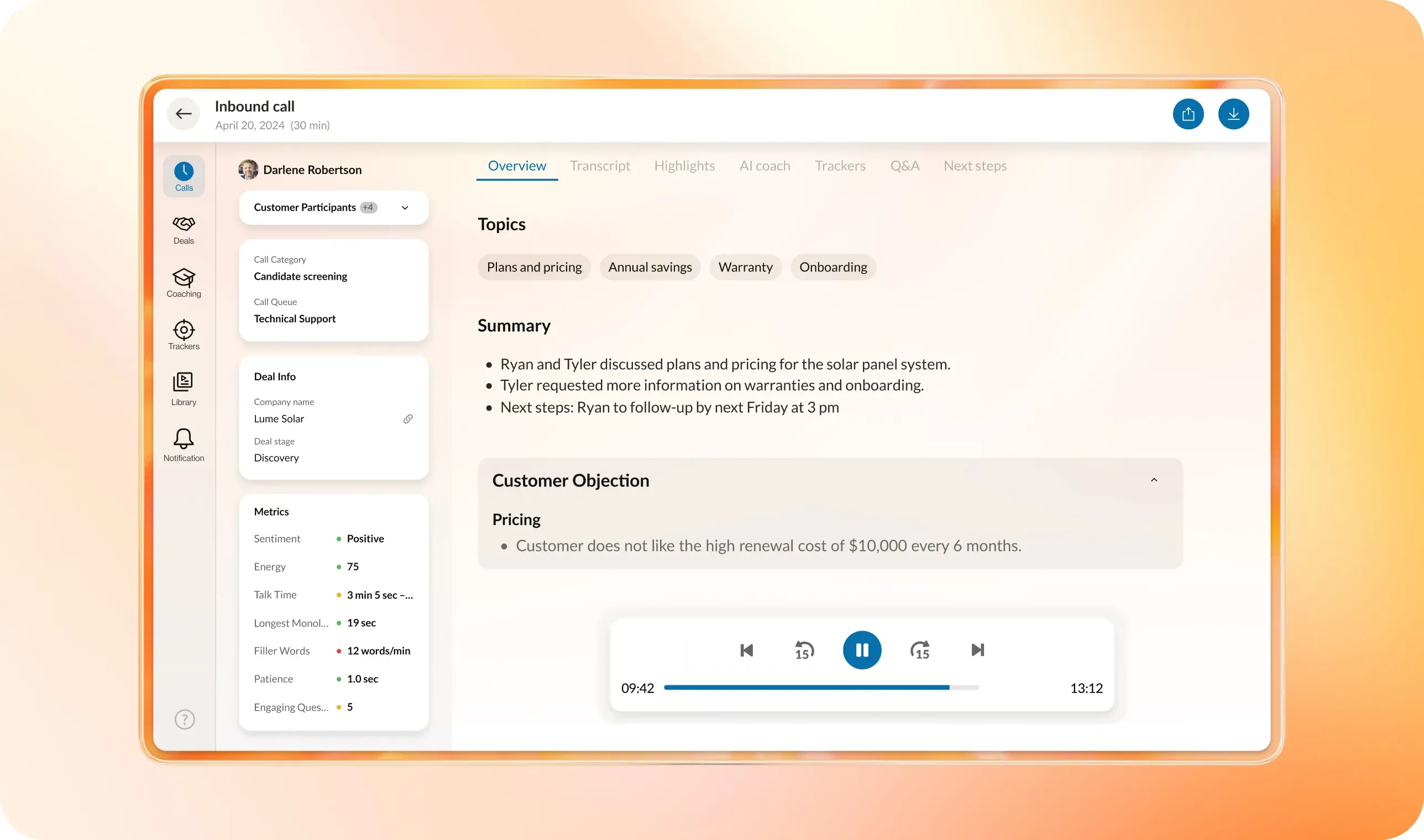 Figure 4: RingSense AI conversational intelligence workspace displaying real-time customer sentiment scoring and automated call recaps.
7. Business SMS Limitations and Messaging Constraints
While RingCentral excels across enterprise voice telephony and hardware management, its business text messaging architecture represents a notable limitation for modern customer-facing teams.
Strict Monthly Per-User SMS Allowances
Unlike lightweight softphone competitors like Quo, which offer unlimited fair-use conversational texting across the US and Canada, RingCentral enforces strict monthly per-user caps:
- Core Plan: 25 SMS messages per user per month.
- Advanced Plan: 100 SMS messages per user per month.
- Ultra Plan: 200 SMS messages per user per month.
For sales development representatives, appointment schedulers, real estate agents, or field technicians who routinely exchange 20 to 50 text messages per day with clients, these baseline caps can trigger significant overage charges.
Siloed Team Messaging vs Collaborative Shared Inboxes
Another key architectural distinction is how RingCentral handles team collaboration around text messages. In Quo, multiple colleagues can share a single phone number and collaborate inside a unified customer thread using internal private @mentions and real-time typing collision detection.
In RingCentral, business SMS messages are routed to individual employee extensions. While team members can forward messages or discuss them within the separate Team Messaging module, RingCentral lacks a native “multiplayer” shared SMS inbox. Organizations whose primary customer communication relies on collaborative business texting will find Quo’s shared inbox architecture significantly more intuitive.
8. RingCentral Pros and Cons
Selecting an enterprise communications provider requires weighing carrier-grade reliability against software complexity and operational overhead. Below is an objective breakdown of RingCentral’s primary architectural strengths and trade-offs.
What We Liked (Pros)
- Carrier-grade 99.999% SLA uptime ensures mission-critical business communications remain active
- Extensive hardware ecosystem supporting zero-touch provisioning for Poly, Yealink, and Cisco phones
- Full regulatory compliance support including signed HIPAA Business Associate Agreements (BAAs)
- Massive third-party directory with over 300 pre-built enterprise integrations and developer APIs
- Advanced call supervision tools including silent monitor, whisper coaching, and call barging
Areas for Improvement (Cons)
- Strict monthly SMS allowances (25 to 200 texts per user) with potential overage surcharges
- Complex, multi-layered administrative portal requires dedicated IT training and management
- Steep 30% to 50% price markup on month-to-month billing alongside telecommunications taxes
9. RingCentral Pricing Plans and Ownership Costs
Evaluating RingCentral’s true cost of ownership requires looking beyond entry-level headline pricing to examine contract terms, month-to-month penalties, and mandatory telecommunications surcharges.
| Plan Tier | Annual Contract (Per User/Mo) | Month-to-Month (Per User/Mo) | Included SMS / User | Pooled Toll-Free Minutes | Ideal Organizational Profile |
|---|---|---|---|---|---|
| Core | $20.00 | $30.00 | 25 Texts | 100 Mins | Small offices replacing basic PBX hardware |
| Advanced | $25.00 | $35.00 | 100 Texts | 1,000 Mins | Growing teams needing CRM sync & call monitoring |
| Ultra | $35.00 | $45.00 | 200 Texts | 10,000 Mins | Enterprises requiring custom analytics & storage |
Understanding the Pricing Fine Print
- Annual Contract Disparity: RingCentral penalizes businesses that require month-to-month billing flexibility with a 30% to 50% price markup ($20 jumps to $30 on Core; $25 jumps to $35 on Advanced). Achieving competitive rates requires committing to 1-year or 3-year enterprise contracts.
- Telecommunications Taxes and Surcharges: Monthly invoices include regulatory recovery fees, carrier universal service fund (USF) fees, and emergency 911 surcharges, which typically add 15% to 25% to the published subscription cost.
- Premium Add-On Modules: Specialized enterprise capabilities, such as advanced RingSense AI licenses, RingCentral Rooms conference software, and full contact center queues (RingCX, starting around $65 per agent per month), require separate subscription tiers.
10. RingCentral vs Quo and Nextiva
To understand where RingCentral fits within the broader commercial landscape, we evaluate it directly against its primary cloud telephony alternatives in 2026:
| Evaluation Criterion | RingCentral RingEX | Quo (OpenPhone) | Nextiva | Dialpad Connect |
|---|---|---|---|---|
| Primary Architectural Focus | Enterprise UCaaS & PBX | Collaborative Team Inbox | Enterprise Voice & Video | AI-Native Telephony & CSAT |
| Physical IP Desk Phone Support | Extensive zero-touch hardware | Softphone only (No SIP phones) | Extensive zero-touch hardware | Certified SIP hardware support |
| Uptime Guarantee (SLA) | 99.999% SLA Uptime | High-availability cloud | 99.999% SLA Uptime | 100% Enterprise SLA |
| Shared Number Collaboration | Ring groups & queues | Multiplayer feed with @mentions | Hunt groups & call queues | Ring groups & shared lines |
| SMS Allowance / Plan Tier | 25 to 200 Texts / User / Mo | Unlimited US & Canada | Metered / Plan specific | Unlimited US & Canada |
| Onboarding & Setup Speed | IT deployment (Days to weeks) | Self-serve in 5 minutes | Guided onboarding (1–3 days) | Guided setup (Hours to days) |
| Starting Annual Rate | $20.00 / user / mo | $15.00 / user / mo | $23.95 / user / mo | $15.00 / user / mo |
Enterprise Integrations and Regulatory Governance
- RingCentral vs Quo: Quo is the superior choice for agile startups, digital marketing agencies, and remote teams (1 to 50 users) that rely on shared phone numbers, collaborative text messaging, and quick self-serve setup. RingCentral is the correct choice for mid-market and enterprise organizations that require physical desk phones, complex multi-branch IVR trees, and contractual 99.999% SLA uptime.
- RingCentral vs Nextiva: Both platforms deliver enterprise-grade 99.999% SLA uptime and extensive hardware support. Nextiva provides an easier visual Call Flow builder and superior hands-on customer onboarding, while RingCentral delivers a broader app integration directory (300+ apps) and deeper global carrier infrastructure across more than 100 countries.
- Enterprise App Ecosystem: RingCentral integrates directly with Salesforce Lightning CTI, HubSpot, Zendesk, Microsoft Dynamics 365, and Oracle NetSuite, alongside native Microsoft Teams Direct Routing.
- Compliance Standards: Certified across HIPAA/HITECH with signed BAAs, SOC 2 Type II, SOC 3, FINRA, SEC Rule 17a-4, and PCI-DSS Level 1.
11. Frequently Asked Questions on RingCentral
RingEX is the rebranded and modernized evolution of RingCentral MVP (Message, Video, Phone). It unifies cloud voice calling, SMS messaging, team chat, and HD video conferencing into a single AI-powered application enhanced with RingSense conversational intelligence.
A 99.999% SLA uptime guarantee, commonly known as 'five nines,' means that unscheduled service downtime will not exceed 5.26 minutes across an entire calendar year. RingCentral achieves this through geographically redundant carrier-grade data centers and automated carrier failover routing.
Yes. RingCentral is an industry leader in enterprise hardware telephony, offering automated zero-touch provisioning for hundreds of certified SIP desk phones, wireless handsets, conference speakerphones, and paging systems from manufacturers such as Poly, Yealink, Cisco, and Mitel.
Yes. RingCentral provides enterprise healthcare compliance and will sign formal Business Associate Agreements (BAAs) with covered medical practices, hospital systems, and healthcare networks to ensure patient communications satisfy HIPAA and HITECH standards.
RingCentral meters business text messaging by plan tier. The Core plan includes 25 SMS messages per user per month, the Advanced plan includes 100 SMS messages, and the Ultra plan includes 200 SMS messages. Additional messages outside your pooled allotment incur standard per-message overage fees.
Yes. RingCentral provides native Direct Routing and embedded dialer apps for Microsoft Teams, enabling enterprise users to place and receive external PSTN telephone calls using RingCentral's global telecom network directly inside the Microsoft Teams desktop and mobile clients.
12. Final Editorial Verdict on RingCentral
RingCentral RingEX is the undisputed enterprise gold standard for cloud business telephony in 2026. Delivering carrier-grade 99.999% SLA uptime, automated provisioning for physical desk phones, multi-tier IVR trees, and advanced RingSense conversational intelligence, it provides unmatched reliability, scalability, and regulatory compliance.
Who Should Choose RingCentral:
- Mid-Market and Enterprise Organizations: Established companies with 50 to 5,000+ employees requiring centralized multi-site management, hierarchical dial plans, and carrier-grade 99.999% SLA uptime.
- Healthcare Practices and Legal Firms: Medical clinics and law firms requiring signed HIPAA Business Associate Agreements (BAAs), tamper-proof call recording storage, and strict regulatory audit trails.
- Offices Requiring Physical Hardware: Organizations operating receptionist consoles, conference room speakerphones, warehouse DECT handsets, overhead paging horns, or analog fax adapters.
- Microsoft Teams Enterprises: Companies wanting to replace expensive Microsoft Calling Plans with RingCentral Direct Routing while keeping the familiar Teams user interface.
Who Should Look Elsewhere:
- Early-Stage Startups and Remote Agencies: Teams under 20 people that operate entirely on laptops and smartphones should choose Quo for its collaborative shared numbers, internal @mentions, and 5-minute self-serve onboarding.
- High-Volume SMS Marketing Teams: Businesses that rely heavily on two-way customer texting should avoid RingCentral’s strict 25 to 200 monthly message limits and select Quo or Dialpad for unlimited conversational texting.
- Budget-Conscious Month-to-Month Teams: Small businesses wanting month-to-month billing flexibility without facing 30% to 50% contract penalty markups.


RingCentral
RingCentral RingEX is the undisputed enterprise gold standard for cloud business telephony in 2026. Delivering carrier-grade 99.999% SLA uptime, automated provisioning for physical desk phones, multi-tier IVR trees, and advanced RingSense conversational intelligence, it provides unmatched reliability, scalability, and regulatory compliance for mid-market and enterprise organizations.