





Table of Contents
Cloud business telephony has evolved into two fundamentally opposed operational models. On one end stands the modern, software-first collaborative communication workspace designed for high-velocity startups and remote agencies. On the other end stands the carrier-grade Unified Communications as a Service (UCaaS) powerhouse engineered to power complex enterprise PBX infrastructures across thousands of physical desk phones.
In 2026, Quo (formerly OpenPhone) and RingCentral (RingEX) serve as the primary flagships for these two distinct paradigms. Quo reimagines business calling and business messaging as a collaborative team inbox, enabling distributed teams to share telephone numbers, tag colleagues internally with invisible mentions, and automate post-call summaries via AI.
1. Quick Overview: Quo vs RingCentral

- Collaborative shared numbers with internal mentions, team threads, and collision detection
- Native automated Sona AI call transcription, concise summaries, and action item extraction
- Modern consumer-grade desktop and mobile applications with 5-minute self-serve setup

- Carrier-grade 99.999% SLA uptime infrastructure across global data centers
- Zero-touch provisioning for physical SIP desk phones (Poly, Yealink, Cisco)
- RingEX unified platform combining cloud PBX, HD video meetings, and RingSense AI
Key Specifications & Architecture Breakdown
| Feature / Metric | Quo (Formerly OpenPhone) | RingCentral (RingEX) | Architectural Advantage |
|---|---|---|---|
| Primary System Type | Collaborative Software-First Phone | Enterprise UCaaS & Cloud PBX | Architectural Focus |
| Shared Team Inboxes | Native multiplayer feeds with @mentions | Traditional call queues & extensions | Quo |
| Typing Collision Detection | Real-time typing indicator & avatars | Not supported | Quo |
| Physical Desk Phone Hardware | Softphone only (Mac, Win, iOS, Android) | Full zero-touch SIP phone provisioning | RingCentral |
| SMS/MMS Allowance (Entry Plan) | Unlimited fair-use US & Canada SMS | Capped at 25 SMS / user / month | Quo |
| Conversational AI Engine | Sona AI (Automated post-call recaps) | RingSense AI (Real-time & sentiment) | Contextual / Real-Time |
| Video Conferencing Suite | Zoom & Google Meet integrations | Built-in HD video (Up to 200 attendees) | RingCentral |
| Carrier SLA Guarantee | High-availability cloud infrastructure | Contractual 99.999% SLA Uptime | RingCentral |
| Onboarding & Setup Speed | Self-serve in under 5 minutes | IT-administered rollout (Days to weeks) | Quo |
| Minimum Seat Restrictions | 1 User on all published tiers | 1 User on Core; add-on minimums apply | Quo |
2. Core Architecture: Shared Inbox vs PBX
Quo: The Multiplayer Communication Hub
Quo dismantles the traditional PBX concept of isolated extensions. Instead of locking a phone number to an individual physical handset or individual user profile, Quo treats business phone numbers as shared collaborative workspaces.
Within Quo, departmental phone numbers such as Sales, Customer Support, or Operations are accessible by multiple authorized team members simultaneously. When an incoming call arrives, team members receive simultaneous rings across their desktop and mobile softphones.
The true breakthrough occurs inside the shared conversation feed. A customer contact record displays a unified chronological timeline containing call recordings, voicemail transcriptions, and SMS/MMS messages. Team members can collaborate directly within this timeline by posting internal comments tagged with @mentions.
These internal notes remain completely invisible to the customer, allowing staff to discuss pricing discounts, confirm inventory, or coordinate handover details without ever leaving the conversation or switching to external messaging tools like Slack.
Furthermore, Quo provides active collision detection. When a colleague begins drafting an SMS reply to a customer inquiry, an animated avatar and typing indicator appear in real time for all other team members, permanently eliminating embarrassing duplicate responses.
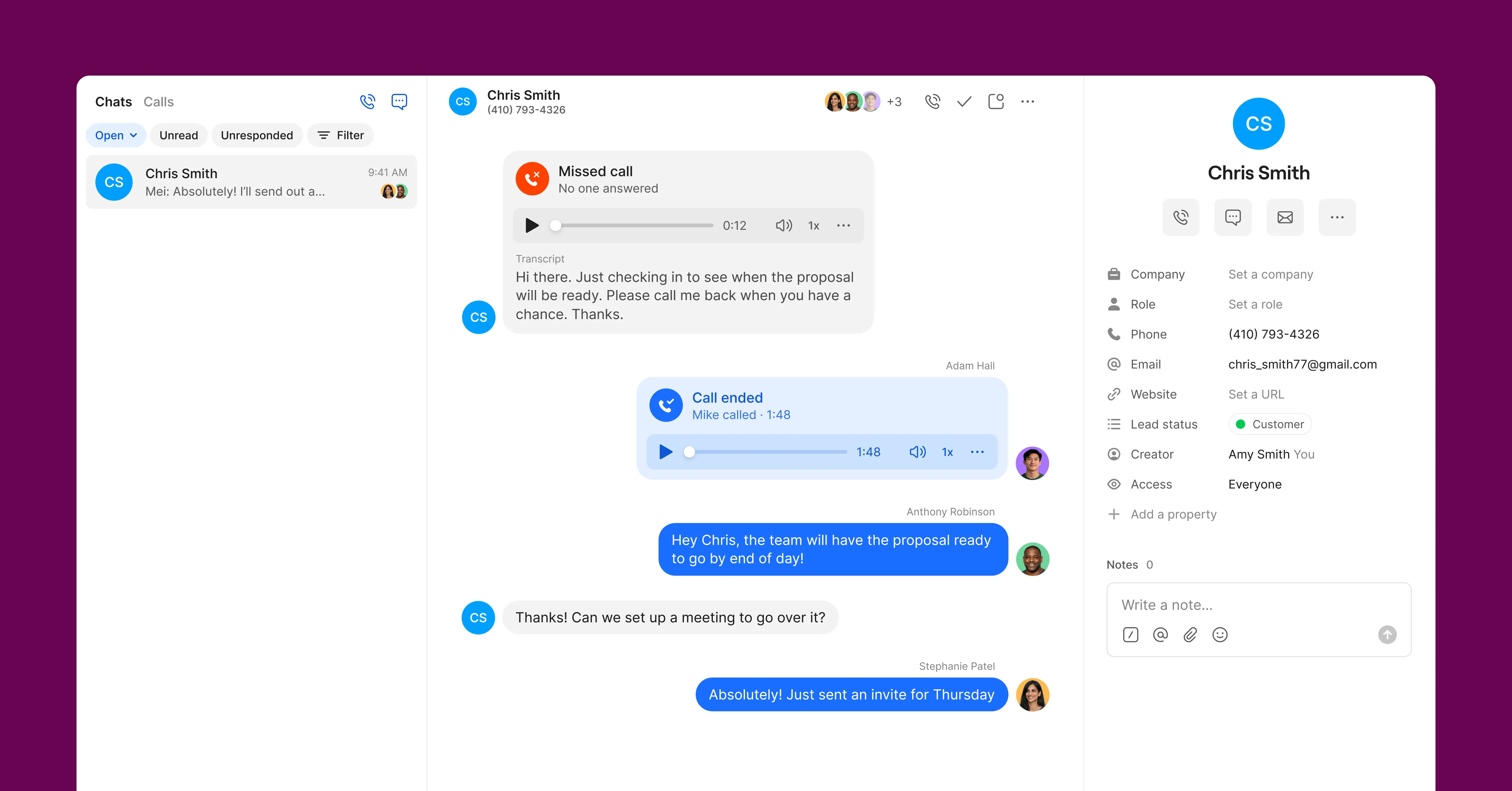 Figure 1: Quo collaborative shared inbox showing team members coordinating customer communications with internal mentions and collision detection.
RingCentral: Enterprise Cloud PBX Infrastructure
RingCentral approaches business communications from an enterprise telecommunications perspective. Built to replace legacy on-premise PBX hardware racks, RingCentral RingEX mirrors the structural hierarchy of corporate enterprise telephony.
Each employee receives an individual digital extension with a dedicated Direct Inward Dialing (DID) number. Organizational call flow is governed by multi-tier Auto-Attendant IVR menus, skill-based Automatic Call Distribution (ACD) queues, and hierarchical hunt groups.
While RingCentral allows multiple agents to belong to shared call queues, it does not provide a native collaborative shared SMS feed. Calls and messages are dispatched to individual extensions. If an agent needs to consult a colleague regarding a customer text message, they must switch to the RingCentral Team Messaging module or initiate an internal transfer.
This architectural framework is purposely engineered for structured organizations with distinct department boundaries, formal supervisor hierarchies, and regulatory mandates where individual employee accountability and strict call flow segmentation take precedence over informal peer-to-peer collaboration.
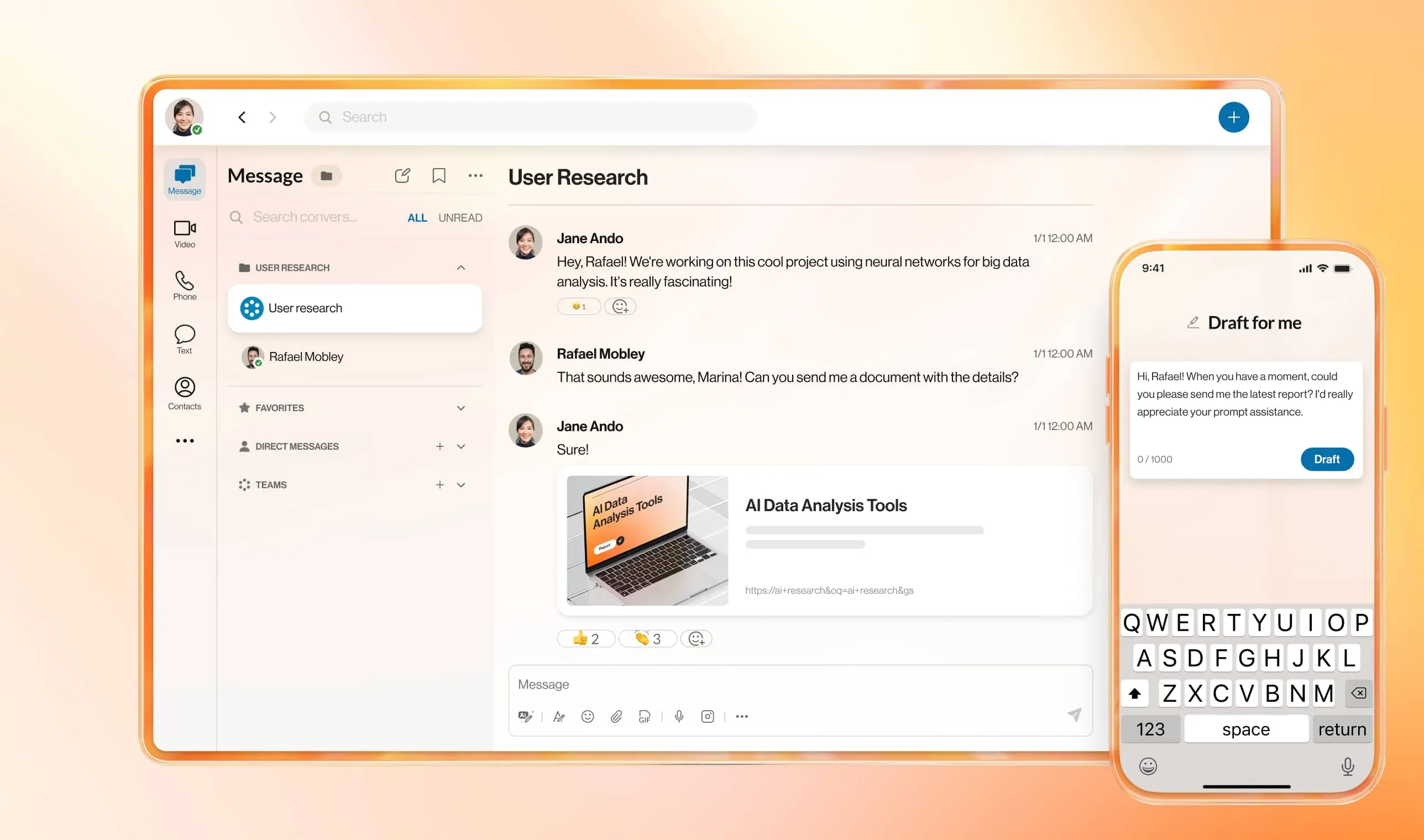 Figure 2: RingCentral RingEX unified desktop workspace displaying enterprise voice calling, team messaging, and corporate directory extensions.
3. Daily Team Collaboration and Messaging
Business Texting and Communication Timelines
In modern customer interactions, business texting has become just as critical as voice calls. Here, the operational differences between Quo and RingCentral become immediately evident.
Quo integrates SMS and MMS directly into its core workflow. Because phone numbers are shared assets, any customer message appears in the shared inbox immediately. Team members can:
- Utilize shared message snippets to quickly insert standardized, approved responses for frequent customer inquiries.
- Schedule outbound text messages to automatically send during the customer’s local business hours.
- Set up automatic text replies triggered by missed calls or off-hours incoming inquiries, reassuring the customer that their request was received.
- View the complete context of previous calls and voicemail recaps within the same scrolling thread as the SMS messages.
The Fine Print on RingCentral SMS Restrictions
One of the most surprising constraints for small businesses adopting RingCentral is its strict monthly SMS messaging caps. Unlike Quo, which offers unlimited fair-use conversational texting across the US and Canada on all plans, RingCentral imposes rigid monthly per-user limits:
- Core Plan: 25 SMS messages per user per month.
- Advanced Plan: 100 SMS messages per user per month.
- Ultra Plan: 200 SMS messages per user per month.
For customer-facing teams such as sales representatives, service dispatchers, or support agents who routinely exchange dozens of text messages per day, RingCentral’s caps can trigger unexpected overage charges.
While RingCentral provides a capable standalone Team Messaging app for internal employee chatting and file sharing, its external SMS architecture remains tied to traditional telecommunications metering.
4. Hardware Support and Desk Phones
Quo: Pure Cloud Softphone for Modern Workspaces
Quo operates entirely as a modern cloud software solution. It intentionally offers zero support for physical SIP/IP desk phones or analog telephone adapters.
Instead, Quo provides consumer-grade native softphone applications engineered for:
- macOS and Windows Desktop: Keyboard shortcuts, native OS notifications, system tray integration, and background audio processing.
- iOS and Android Mobile: Battery-optimized push notifications, native dialer integration, and seamless call answering from the lock screen.
- Modern Web Browsers: Full WebRTC client accessibility from Chrome, Safari, and Edge without installing desktop binaries.
By eliminating physical desk phones, Quo frees businesses from equipment leasing contracts, Ethernet cabling drops, PoE network switches, and hardware firmware patching. Remote employees can begin making and receiving professional business calls immediately using their existing laptops or smartphones.
However, this architecture represents a non-negotiable barrier for organizations that legally or operationally mandate physical telephone hardware on premises.
RingCentral: Carrier-Grade Hardware Provisioning
RingCentral excels in environments where physical hardware is indispensable. The platform supports automated zero-touch provisioning for hundreds of certified enterprise SIP desk phones, conference room speakerphones, and paging systems:
- Enterprise Desk Phones: Deep firmware integration with leading hardware manufacturers including Poly (Polycom), Yealink, Cisco, Mitel, and AudioCodes.
- Zero-Touch Deployment: Administrators enter the device MAC address into the RingCentral Admin Portal, connect the phone to an office Power over Ethernet (PoE) port, and the device automatically downloads its dial plan and user profile within minutes.
- Paging and Analog Adapters (ATA): Full compatibility with overhead paging horns for manufacturing plants, door intercom buzzers, warehouse terminals, and analog fax lines.
For medical clinics, hotel front desks, retail stores, and corporate headquarters with dedicated receptionist consoles, RingCentral’s extensive hardware ecosystem provides an enterprise standard that software-only tools cannot match.
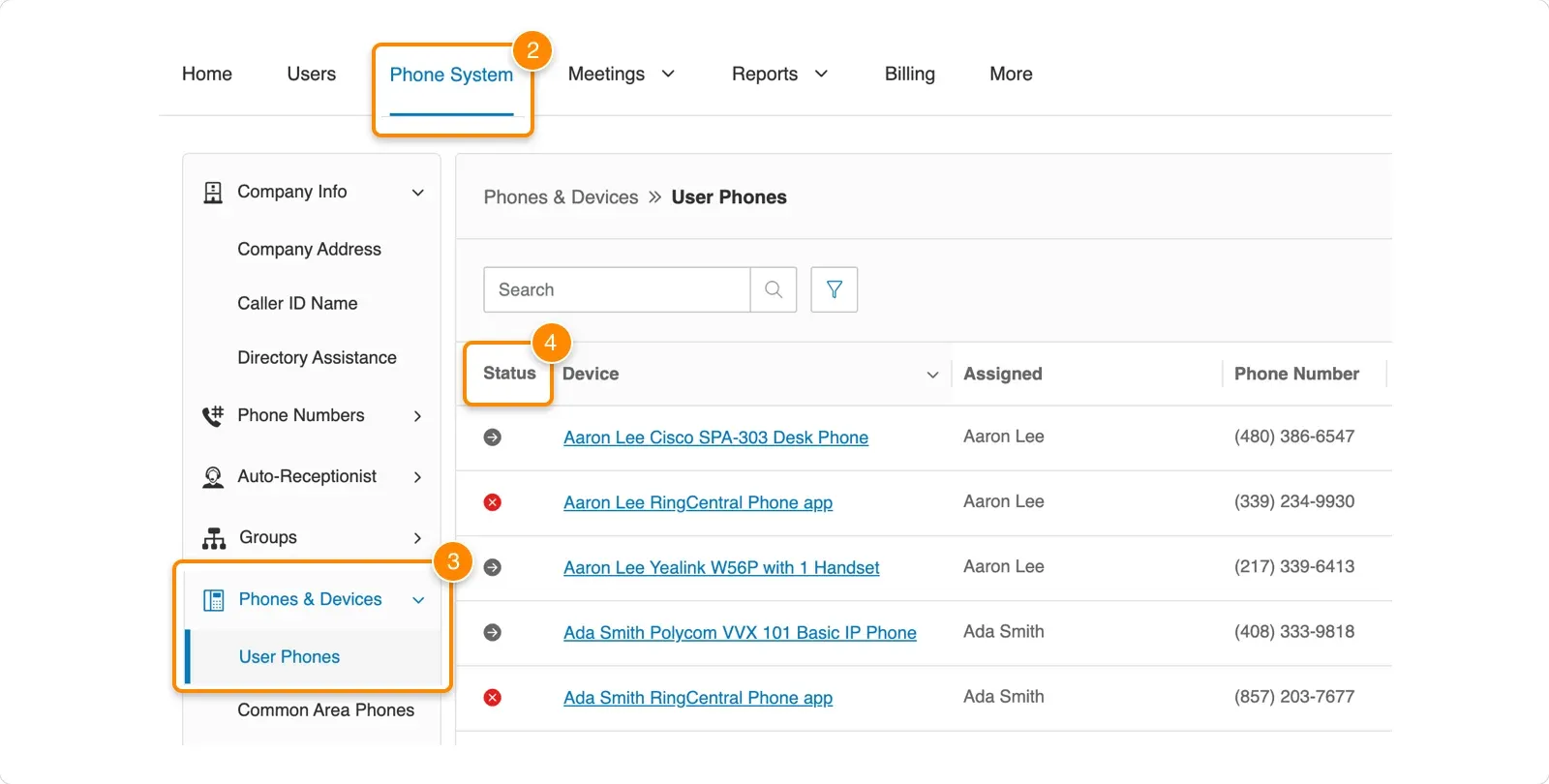 Figure 3: RingCentral administrative portal managing zero-touch hardware provisioning for certified Poly, Yealink, and Cisco IP desk phones.
5. Artificial Intelligence and Voice Productivity
Quo: Sona AI for Post-Call Intelligence
Quo concentrates its artificial intelligence capabilities on post-call workflow automation through its proprietary Sona AI engine. Recognizing that account executives and support agents spend hours manually transcribing calls and logging CRM notes, Quo automates the entire recap process.
Following the conclusion of every recorded conversation, Sona AI processes the audio file within seconds to deliver:
- Speaker-Separated Transcriptions: High-accuracy transcripts that clearly distinguish between internal team members and external customers.
- Executive Summaries: A structured, three-bullet distillation highlighting key discussion topics, customer objections, and overall sentiment.
- Extracted Action Items: An automated checklist isolating explicit commitments, deadlines, and follow-up tasks mentioned during the conversation.
These AI summaries automatically sync into linked CRM platforms such as HubSpot and Salesforce, eliminating administrative overhead and ensuring management maintains complete visibility over account status.
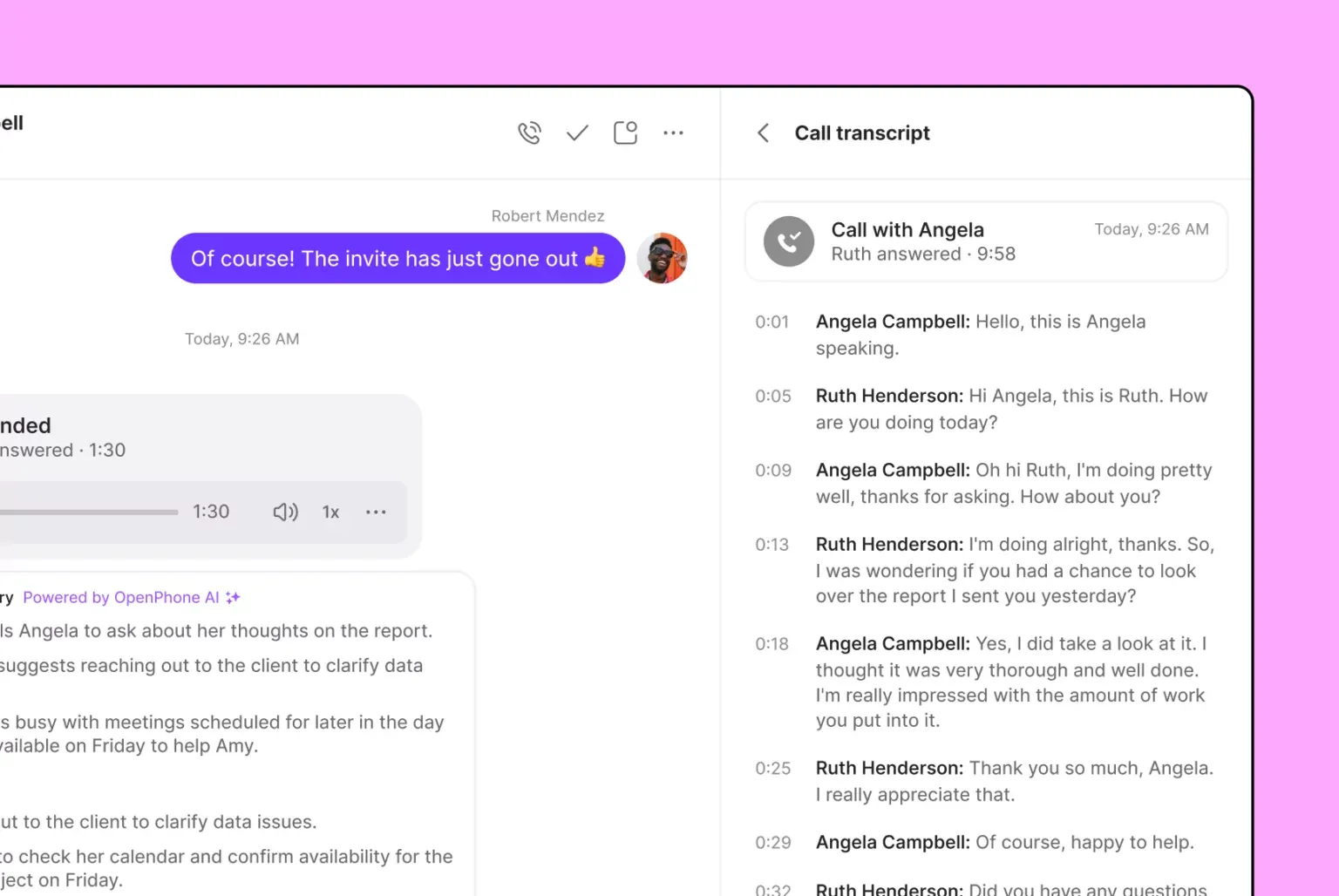 Figure 4: Quo Sona AI automated post-call summary extracting key bullet points and action items for CRM synchronization.
RingCentral: RingSense AI for Conversational Intelligence
RingCentral takes a real-time, analytical approach to artificial intelligence through RingSense AI. Rather than focusing solely on post-call notes, RingSense is engineered to evaluate conversational dynamics across large sales and customer support organizations.
RingSense AI capabilities include:
- Live In-Call Sentiment Analysis: Monitors acoustic patterns, speech pacing, and spoken keywords to gauge customer sentiment as the call progresses.
- Automated Agent Performance Scoring: Grades representatives based on script adherence, talk-to-listen ratios, competitor mentions, and question frequency.
- AI Receptionist Routing: Leverages natural language understanding to interpret incoming caller requests and intelligently route them to the appropriate department without requiring numeric touch-tone keypad input.
While RingSense AI delivers unmatched analytical power for enterprise sales floors and quality assurance managers, it is frequently gated behind higher-tier packages or sold as a premium add-on license, increasing the platform’s total cost of ownership.
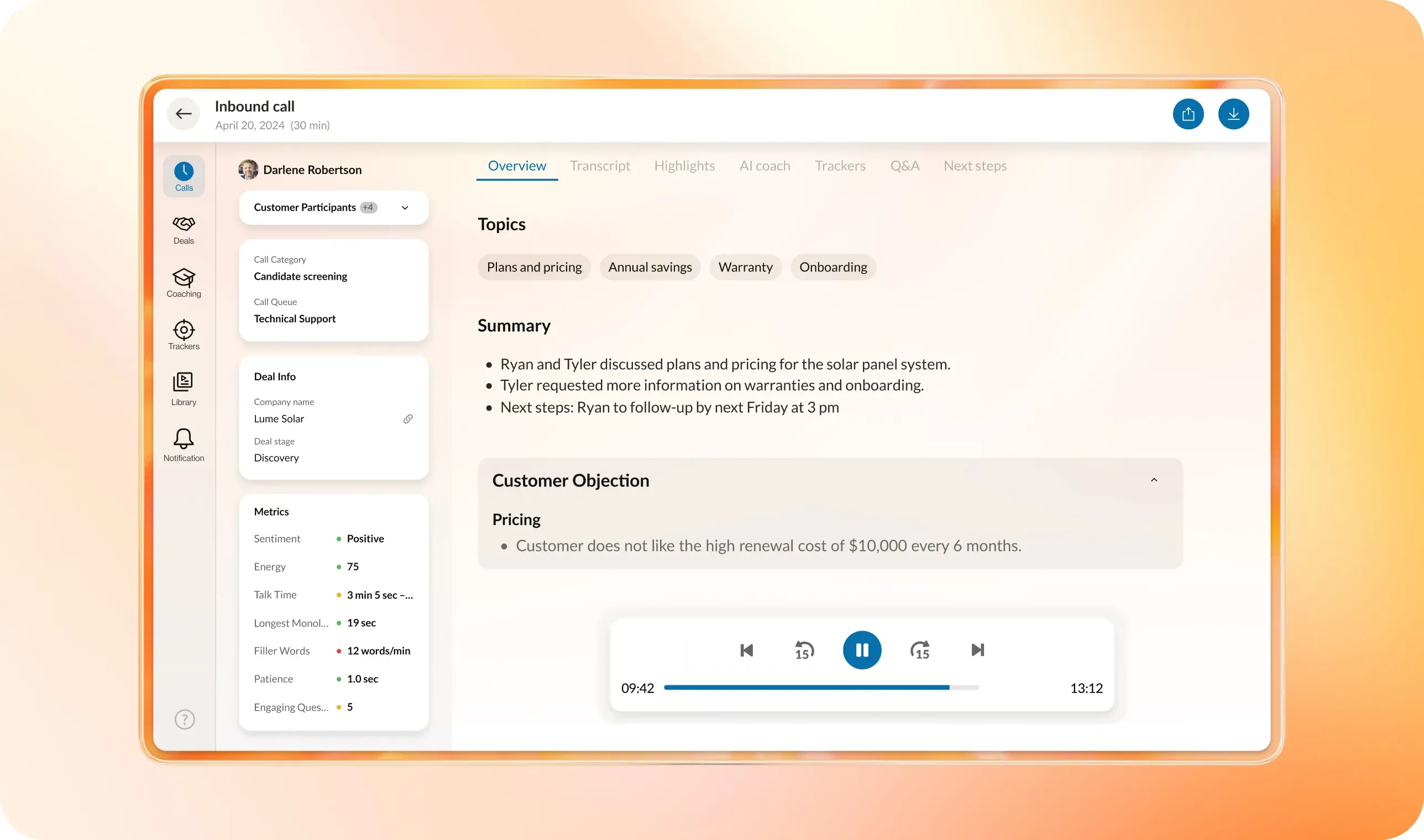 Figure 5: RingSense AI conversational intelligence workspace displaying real-time customer sentiment scoring and agent QA analytics.
6. Real-World Team Workflow Scenarios
Scenario A: Remote Marketing Agency with Quo
A 14-person remote digital advertising agency manages 40 corporate client accounts:
- The agency maintains a centralized client hotline number accessible by four account managers.
- When a client sends an urgent text message regarding an active campaign, all four account managers receive a real-time desktop notification simultaneously.
- Account Manager Sarah opens the thread and sees her colleague Alex is already looking at it. Sarah types an internal note: “@alex are we ready to launch the new creative set before I reply?”
- Alex responds in the internal thread: “Yes, approved five minutes ago.” Sarah replies to the client directly via SMS.
- Quo’s typing indicator prevents Alex from sending a duplicate reply. The entire conversation, including the internal notes, is permanently preserved in the client’s history.
Scenario B: Multi-Location Healthcare Practice with RingCentral
A regional medical practice operates five outpatient clinic locations with 75 healthcare workers and administrative staff:
- Patients call a centralized toll-free telephone number and encounter a HIPAA-compliant multi-tier IVR: “Press 1 for Cardiology, Press 2 for Pediatrics, Press 3 for Billing.”
- Calls route to physical Yealink desk phones stationed at the reception desks of the respective clinic branches.
- If a patient calls pediatric triage after hours, RingCentral’s schedule-based routing automatically redirects the call to the mobile smartphone of the on-call physician.
- Medical administrative staff leverage signed Business Associate Agreements (BAAs) and secure, encrypted call logs to ensure total regulatory compliance with federal patient privacy mandates.
7. Cost of Ownership and 2026 Pricing
Understanding the true cost of ownership requires looking beyond entry-level headline prices to examine month-to-month penalties, messaging overages, and feature gating.
| Subscription Tier | Quo Annual Rate | Quo Monthly Rate | RingCentral RingEX Annual | RingCentral RingEX Monthly |
|---|---|---|---|---|
| Starter / Core Plan | $15.00 / user / mo | $19.00 / user / mo | $20.00 / user / mo | $30.00 / user / mo |
| Business / Advanced Plan | $23.00 / user / mo | $33.00 / user / mo | $25.00 / user / mo | $35.00 / user / mo |
| Scale / Ultra Plan | $35.00 / user / mo | $47.00 / user / mo | $35.00 / user / mo | $45.00 / user / mo |
| SMS Allowance / User | Unlimited (Fair Use) | Unlimited (Fair Use) | 25 / 100 / 200 Texts | 25 / 100 / 200 Texts |
| Toll-Free Minutes Included | Standard per-minute rates | Standard per-minute rates | 100 / 1,000 / 10,000 Mins | 100 / 1,000 / 10,000 Mins |
| Additional Phone Numbers | +$5.00 / number / mo | +$5.00 / number / mo | Custom carrier pricing | Custom carrier pricing |
Dissecting the Pricing Fine Print
- Month-to-Month Premiums: RingCentral penalizes businesses choosing monthly flexibility with a 30% to 50% price markup ($20 jumps to $30 on Core; $25 jumps to $35 on Advanced). Quo maintains more modest monthly premiums ($15 jumps to $19 on Starter).
- Seat Minimums and CRM Synchronization: Accessing enterprise CRM integration in Quo requires the Business plan ($23/user/month), which can be purchased for a single user. RingCentral requires its Advanced tier ($25/user/month billed annually) for Salesforce or HubSpot access.
- SMS and Carrier Fees: In addition to strict text caps, RingCentral invoices include regulatory recovery fees, carrier universal service fund (USF) surcharges, and emergency 911 fees that can add 15% to 25% to the final monthly invoice. Quo pricing remains straightforward and transparent, with standard one-time A2P 10DLC campaign registration fees passed through directly from carriers.
8. Enterprise Reliability and Regulatory Compliance
RingCentral: The Gold Standard in Enterprise Telecom
For publicly traded corporations, financial institutions, and healthcare providers, system reliability and legal compliance supersede user interface aesthetics:
- 99.999% SLA Uptime: RingCentral contractually guarantees “five nines” of availability, representing less than 5.26 minutes of unscheduled downtime across an entire calendar year. This is backed by geographically redundant carrier switches and automated traffic failovers.
- Healthcare Compliance (HIPAA): RingCentral provides comprehensive Business Associate Agreements (BAAs) covering voice calls, video meetings, and team chat, ensuring medical practices remain fully compliant with protected health information (PHI) regulations.
- Financial and Security Certifications: Fully certified across SOC 2 Type II, SOC 3, ISO 27001, PCI-DSS Level 1, and FINRA compliance frameworks.
Quo: Modern Security for High-Growth Startups
While Quo does not offer specialized HIPAA Business Associate Agreements on standard tiers, it implements rigorous security standards tailored to SaaS businesses and digital agencies:
- SOC 2 Type II Certification: Independent third-party audits verify that customer data is securely encrypted in transit using TLS 1.3 and at rest using AES-256 encryption.
- Automated A2P 10DLC Compliance Wizard: Quo provides an in-app verification workflow that guides small businesses through US carrier registration via The Campaign Registry (TCR), ensuring outbound customer SMS messages are verified and protected against carrier spam blocking.
9. CRM Integrations and Automation Ecosystem
Quo: Streamlined SaaS Integrations
Quo is intentionally architected to connect with modern cloud productivity tools:
- HubSpot and Salesforce: Automatically logs inbound and outbound calls, call recordings, voicemail links, and bidirectional SMS/MMS conversations directly into matching contact and deal timelines.
- Slack: Broadcasts missed calls, voicemails, and incoming client messages into designated Slack channels, allowing entire departments to stay informed.
- Gong Integration: Automatically transfers recorded audio files into Gong for revenue intelligence modeling and sales rep coaching.
- Zapier and Webhooks: Enables teams to build custom multi-step automations triggered when a text is received, a call ends, or a new voicemail is recorded.
RingCentral: Deep Enterprise App Ecosystem
RingCentral boasts one of the largest integration directories in the telecommunications industry, containing more than 300 pre-built enterprise connectors:
- Salesforce Lightning CTI: Embeds a fully featured software dialer directly inside Salesforce, offering automated caller ID screen pops, instant contact lookup, and automated call disposition logging.
- Microsoft Teams Direct Routing: Allows enterprise organizations to replace Microsoft Teams Phone infrastructure with RingCentral’s carrier network, enabling users to make and receive external telephone calls natively within Teams.
- Enterprise ERP and Helpdesks: Pre-built native integrations for Zendesk, Microsoft Dynamics 365, Oracle NetSuite, ServiceNow, and Zoho CRM.
- Open Developer APIs: Comprehensive REST APIs and SDKs allowing corporate IT departments to build custom dialers, automated call logging bots, and telephony data export pipelines.
10. Detailed Pros and Cons Breakdown
 Quo Pros & Cons
Why Choose Quo (Pros)
- Collaborative shared phone numbers with internal @mentions and team discussion threads
- Real-time typing collision indicators prevent duplicate responses to customer inquiries
- Automated post-call Sona AI summaries and action items save hours of manual CRM logging
- Unlimited conversational business SMS/MMS texting across the US and Canada on all tiers
- Intuitive, consumer-grade softphone applications with 5-minute self-serve onboarding
Where Quo Falls Short (Cons)
- Zero support for physical SIP/IP hardware desk phones or analog telephone adapters
- Lacks live in-call supervisor monitoring features such as silent whisper and call barging
- Video conferencing requires integration with third-party tools like Zoom or Google Meet
 RingCentral Pros & Cons
Why Choose RingCentral (Pros)
- Contractual 99.999% SLA carrier uptime backed by redundant global telecommunications centers
- Full zero-touch auto-provisioning for certified IP desk phones from Poly, Yealink, and Cisco
- Comprehensive cloud PBX suite featuring multi-level IVR, call whisper, and barge-in monitoring
- Built-in HD video conferencing supporting up to 200 participants with whiteboards and breakout rooms
- Full HIPAA BAA compliance support for medical practices, healthcare networks, and legal firms
Where RingCentral Falls Short (Cons)
- Extremely restrictive SMS messaging limits (25 to 200 texts/user/mo) leading to potential overages
- Complex, multi-layered administrative portal requires dedicated IT management and training
- Substantial 30% to 50% price surcharge on month-to-month billing alongside telecommunications surcharges
11. Which Business Phone Wins Our Verdict?
- ✓Your team operates remotely on laptops and smartphones without physical desk phones.
- ✓Multiple staff members need to view, share, and reply to customer calls and SMS threads from a single number.
- ✓You want team members to collaborate on customer inquiries using internal private @mentions.
- ✓You want automated post-call AI summaries and action items synced directly into HubSpot or Salesforce.
- ✓You need high-volume business texting without worrying about 25-message monthly plan caps.
- ✓Your office, clinic, or receptionist desk requires physical SIP/IP hardware desk phones.
- ✓Your organization requires a contractual 99.999% SLA uptime guarantee and signed HIPAA BAAs.
- ✓You require complex multi-tier auto-attendants (IVR), call queues, and supervisor whisper/barge-in tools.
- ✓You want an all-in-one UCaaS platform that unifies cloud telephony, team messaging, and HD video meetings.
- ✓You need native Direct Routing to power external PSTN telephone calling inside Microsoft Teams.

 VS
VS
Final Verdict: Quo vs RingCentral (2026)
Choose Quo if you operate an agile startup, agency, or distributed team that values collaborative shared customer inboxes, internal team mentions, transparent per-user pricing, and consumer-grade softphone apps. Choose RingCentral if you manage an established enterprise, healthcare clinic, or multi-location facility that demands physical SIP desk phone hardware, 99.999% SLA uptime, multi-level IVR call queues, and comprehensive HIPAA compliance.


For deeper individual platform evaluations, read our comprehensive Quo review and our detailed Dialpad review. Teams also exploring carrier-grade multi-location telephony can compare Nextiva vs Quo to evaluate enterprise PBX alternatives.
12. Frequently Asked Questions and Answers
Yes, but they function fundamentally differently. Quo provides a true multiplayer shared inbox where all team members can read incoming SMS threads, see who is currently typing a reply via collision detection, and tag colleagues internally with invisible @mentions. RingCentral supports shared numbers through ring groups and call queues, but handles interactions as individual employee assignments rather than a collaborative team inbox.
Quo was intentionally architected from the ground up as a cloud-native software solution. By focusing exclusively on desktop, mobile, and web softphones, Quo eliminates complex SIP hardware provisioning, on-premise cabling, and firmware maintenance. If your organization legally or operationally requires physical desk phone hardware, RingCentral is the recommended solution.
Quo includes unlimited conversational business SMS and MMS messaging to US and Canadian numbers across all plans, subject only to fair-use policies and standard carrier A2P 10DLC compliance. In contrast, RingCentral strictly meters business texting, offering only 25 SMS per user per month on Core, 100 on Advanced, and 200 on Ultra, with additional messages incurring per-text overage fees.
Quo's Sona AI focuses primarily on post-call workflow automation, generating high-accuracy transcripts, concise 3-bullet executive recaps, and extracted action items that automatically sync to your CRM. RingCentral's RingSense AI is an enterprise conversational intelligence engine that evaluates live call sentiment, tracks keyword mentions, scores agent performance, and provides AI receptionist voice routing.
Yes. Both Quo and RingCentral support standard Local Number Portability (LNP) across local, toll-free, and Canadian phone numbers. Transferring numbers between carriers typically takes one to two weeks, during which your existing phone service remains active with zero downtime until the porting cutover is completed.
For a 5-person team, Quo is substantially more cost-effective and flexible. On annual billing, 5 users on Quo Starter cost $75/month total, including unlimited US/Canada texting and AI call summaries. RingCentral Core costs $100/month, restricts texting to 125 total messages across the team, and charges significantly higher rates if billed on a month-to-month basis.